

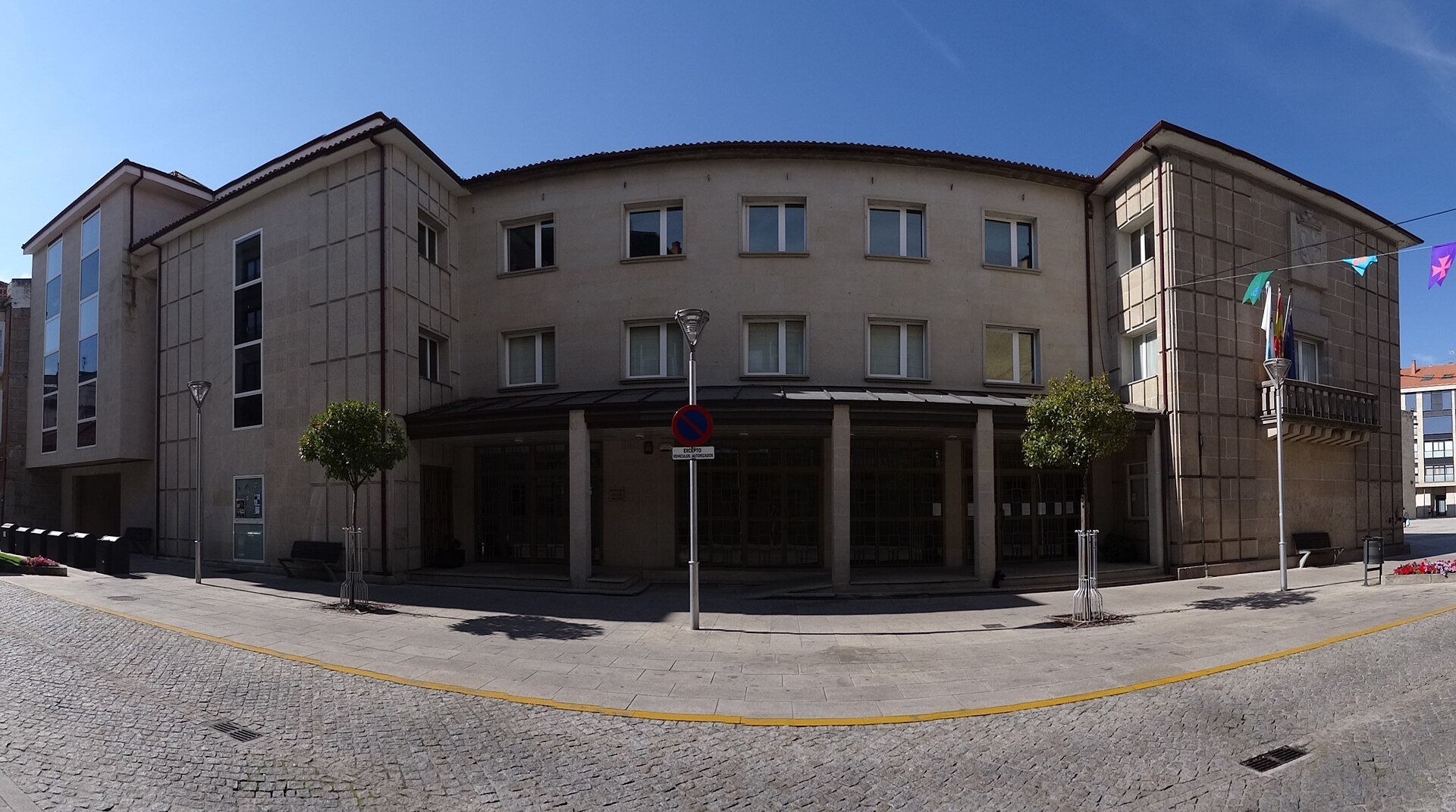
José Antonio Nieto Luis, Doctor and Local Francoist Leader in Xinzo
José Antonio Nieto Luis (Xinzo de Limia, 1894–1983), «don Pepe Nieto», was a doctor in A Limia from 1923 and, after the 1936 coup, a Requeté, local head of FET and the JONS and mayor of Xinzo for a few months in 1943.
- Born
- Xinzo de Limia, 1894
- Died
- Xinzo de Limia, 3 October 1983
- Profession
- doctor (qualified 1920; practising in A Limia from 1923)
- Office
- mayor of Xinzo from April to September 1943
José Antonio Nieto Luis, popularly «don Pepe Nieto», was born in Xinzo de Limia in 1894 and died in the town on 3 October 1983, aged 89. He was a doctor and a local political figure. This entry records only the public and documentary facts of his career, following the profile devoted to him by Edelmiro Martínez Cerredelo [1].
Doctor of A Limia
The son of merchants and landowners, he obtained his degree in Medicine and Surgery on 21 October 1920 and practised in the area from 1923 in various municipalities —Trasmiras, Vilar de Santos, Os Blancos— and finally in Xinzo de Limia from 1951 until retirement. Some neighbours still remember him making house calls on horseback [1].
Local Francoist leader
According to Cerredelo, he was among the people «of civil order» who helped the 1936 coup d’état succeed in Xinzo: first as a Requeté militant (he had earlier been a member of the Juventudes de Acción Popular) and, after the unification decree of April 1937 that created FET and the JONS, as local head of that party and member of the council’s first civil caretaker committee in 1938, with Honorio Peleteiro as mayor and Nieto as first deputy mayor [1]. A file of the local Falange’s Investigation and Information Service described him as a right-wing leader who, to win the leadership of the Falange, «became a furious Falangist» (quote) [1].
The unification decree provoked clashes in Xinzo between Nieto and former Requeté comrades over the obligation to wear the red beret and blue shirt, with complaints to the provincial authorities and proposals for expulsion [1].
Mayor in 1943
After Peleteiro was dismissed for celebrating Carnival in 1943 —with fines and neighbours jailed— the civil governor appointed Nieto mayor; he served from 1 April to 15 September 1943, when he was replaced by Antonio González Garrido, local head of the Falange [1]. See History of the Xinzo Carnival.
Frequently asked questions
When was he mayor of Xinzo? From 1 April to 15 September 1943, by appointment of the civil governor [1].
Links
Sources
- Edelmiro Martínez Cerredelo, «José Antonio Nieto Luis, (Xinzo de Limia, 1894-1983). Médico e político local», Historia de Xinzo, 31-07-2025. https://historiadexinzo.wordpress.com/2025/07/31/jose-antonio-nieto-luis-xinzo-de-limia-1894-1983-medico-e-politico-local/
You may also like
 Notable personOlimpia Valencia López, the First Woman in Galicia to Graduate in MedicineBorn in Baltar in 1898, Olimpia Valencia was the first Galician woman to graduate in Medicine (1925) and in 1928 opened a general medicine…
 People of A LimiaHistorical Figures of A Limia: A TimelineTimeline of historical figures linked to A Limia, from Roman times to the 20th century: Limicians of Rome, Hidatius, counts, medieval…
People of A LimiaPoliticians and Public Officials of A LimiaDirectory of people from A Limia who held public office: Restoration-era deputies for the Xinzo district, Galician parliamentarians,…
 Notable personInés de Castro, the Queen Tradition Says Was Born in A LimiaInés de Castro (c. 1320 – Coimbra, 1355), natural daughter of a Galician nobleman, loved Prince Pedro of Portugal, was executed on Afonso…
 Notable personMartín de Ginzo, the Minstrel of Xinzo de Limia Who Sang the PilgrimageMartín de Ginzo was a 13th-century Galician minstrel, born in Xinzo de Limia, of whom eight cantigas de amigo survive, seven of them…
Notable personMarcus Flavius Sabinus, the Limician Who Became a Priest of the Imperial CultMarcus Flavius Sabinus, of the Civitas Limicorum, was duumvir of his city and provincial flamen of Hispania Citerior in the 2nd century; he…
