


Xinzo in 1905 according to Fialho de Almeida
The stagecoach journey from Allariz to Xinzo and Verín in June 1905 told by the Portuguese writer Fialho de Almeida in "Galiza, 1905": the Lagoa de Antela, the entrance avenue, the market, the houses and the church of the town.
- Year of the journey
- 1905
- Work
- Galiza, 1905, by Fialho de Almeida
- Route
- Ourense, Allariz, Lagoa de Antela, Xinzo de Limia, Verín
- Transport
- six-horse stagecoach
In June 1905 the Portuguese writer José Valentim Fialho de Almeida travelled through Galicia and left the journey recounted in the book Galiza, 1905. The stretch passing through A Limia, translated into Galician and published in Historia de Xinzo in 2014, is one of the few first-hand descriptions of the Lagoa de Antela and the town of Xinzo just before the complete draining and the change the 20th century would bring [1]. This page summarises and contextualises the text, without reproducing it in full.
The stagecoach journey
The traveller left Ourense on the night of 15 June 1905 in the stagecoach that went via Allariz and Xinzo towards Verín, with four priests, a lame man and a five-year-old girl travelling alone. It stopped to change horses (six, three abreast) and spent the night in Allariz. The journey resumed on the morning of the 16th, misty, rainy and cold. He describes "splendid, well-kept" roads and carts loaded with five beasts, the carters in berets, blankets and clean-shaven; the coachmen urged the horses on with shouts and got down on the climbs [1].
From the hills to the Lagoa de Antela
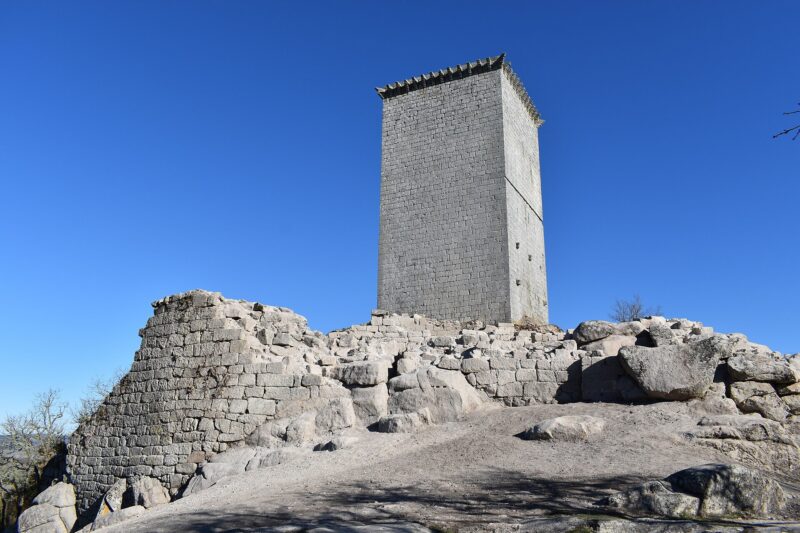
Descending towards A Limia, he sees in the distance an immense valley, with large woods, ploughed fields and lean livestock. To the left of the road, on a hillock, a broken tower (the Torre do Castro, in Sandiás) and, further on, another (the Torre da Pena). He then crosses the Lagoa de Antela on a bridge, and describes it as "a vast accursed expanse", without trees or shrubs, with rushes and pools, with a silted bank in the middle, and it takes about 40 minutes to cross. He notes that in rainy winters the land gives splendid grass for livestock, but that year everything was dry, and that peasants are seen with black cattle and the "palhota" (the straw cape) over their shoulder [1].
Entering Xinzo and the market
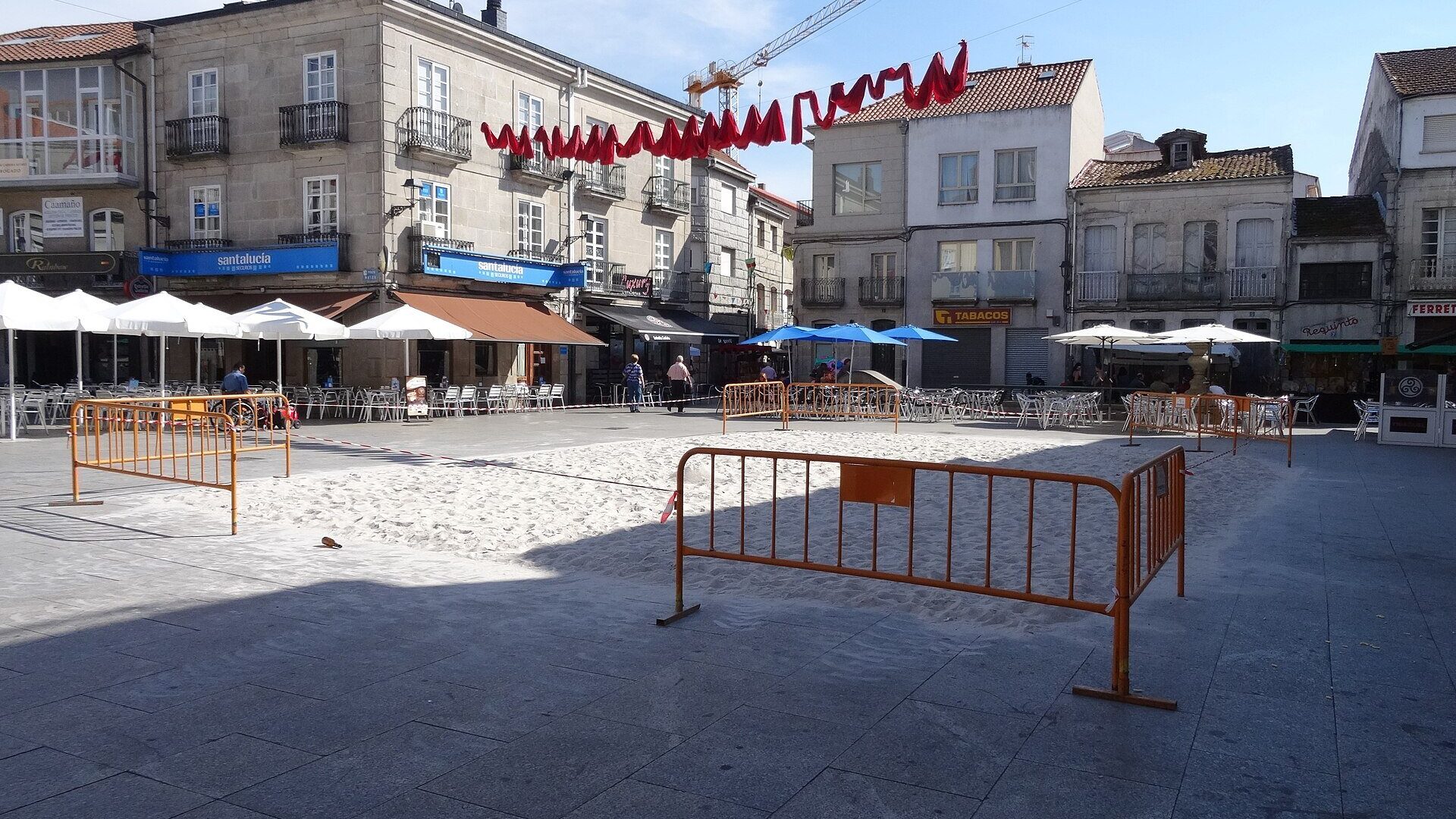
The road enters Xinzo along a "magnificent" tree-lined avenue, between potato patches and rye fields. From the left the Celanova road converges, with creaking carts, cattle and colts. Of the town he notes that it is large, with the church tower high, of two storeys, and that it strikes twelve. On the day of the visit there was a market in the corner square of the two streets, around the fountain: people from the surrounding area buying cloth, enamelled iron and clay crockery, filling prescriptions at the pharmacies and shoeing animals; vegetables, fruit, kids and white and black pigs were sold, mingling with the crowd. He describes Galicians on mules and ponies, in capes or blankets, and many houses serving meals, with cabbage broth and meat, roast kid "tender as veal" and a sharp, light wine. It rained all day and night, and the mud and ox dung reached the flagstone walkways [1].
The town
Fialho finds nothing notable in the settlement: long streets, dark yellow granite houses, some with coats of arms, modern houses with wooden balconies, a flagged pavement with side walks and a 17th-century church with a two-storey tower with balconies and a half-orange dome. He highlights, however, the beauty of the avenue leaving towards Verín, of plane trees and immense mulberries whose foliage enters the windows of the houses, and the noise of clogs and bargaining. The editor recalls that, in the photograph of Santa Mariña church in Pedro Ferrer’s Portfolio de Galicia (1904), the churchyard was smaller than today’s because a wall separated it from the parish house [1].
What it teaches today
Today, the Lagoa is drained and the town is very different from the one Fialho saw. The text is a starting-point portrait: the agrarian economy (potatoes, rye, flax), the importance of the market, the stagecoach as the main transport and the lagoon as a space valued for livestock even in silted terrain. Compare with what the pages on The Lagoa de Antela and Xinzo: industry and services in the 20th century tell [1].
Frequently asked questions
Who was Fialho de Almeida? A Portuguese writer who in 1905 recorded his journey through Galicia in Galiza, 1905 [1].
How did he cross the Lagoa de Antela? By a bridge on the Allariz–Xinzo road, in about 40 minutes [1].
Links
- History of A Limia
- Xinzo: industry and services in the 20th century
- Praza Maior, Ladeira and Toural
- Portuguese monarchists in A Limia
Sources
- «Galicia vista por un portugués. Interesante visión de Xinzo en 1905», Historia de Xinzo, 05/06/2014, tradución ao galego de textos de Fialho de Almeida, Galiza, 1905. https://historiadexinzo.wordpress.com/2014/06/05/galicia-vista-por-un-portugues-interesante-vision-de-xinzo-en-1905/
You may also like
 History of A LimiaPrehistory and castros of A LimiaFrom the Pedra Alta de Antela to the castro of Bóveda: megaliths, the Roufeiro weapons, the Outeiro de Baltar and the gold earring of Vilar…
 History of A LimiaThe Limici in Roman inscriptions: Celer’s gladiatorial tessera and Corellius LimicusTwo epigraphic pieces outside A Limia that mention a "Limicus": the bronze gladiatorial tessera from Niebla (Huelva), of the 1st century,…
History of A LimiaThe Limici and Romanisation: Civitas, Forum Limicorum and Via NovaWhat is known of the Limici and Roman Limia: the Civitas Limicorum, the debate over where the Forum Limicorum stood (A Cidá of Nocelo da…
 History of A LimiaThe Praza Maior, the Ladeira and the Toural: history of Xinzo’s central placesHistory of the Praza Maior (fairs since the 16th century, the 1907 Espolón, the fountain), the Ladeira and the Toural (the lagoon, the…
History of A LimiaLight, chocolate, fizzy drinks and roads: the industrial and service Xinzo of the 20th centuryHow electricity (1911), the printing press, chocolate and soda factories, the Rubio Cold-Storage Slaughterhouse and buses to Ourense and…
 History of A LimiaCinemas, café, radio, school and library: Xinzo’s cultural life from 1948 to the 1970sThe cinemas Los Molinos (1948) and Antelano (1954), the Café Ideal and the Ideal 6 disco, the 1950 radio, the Colegio Santa Marina, the…
