


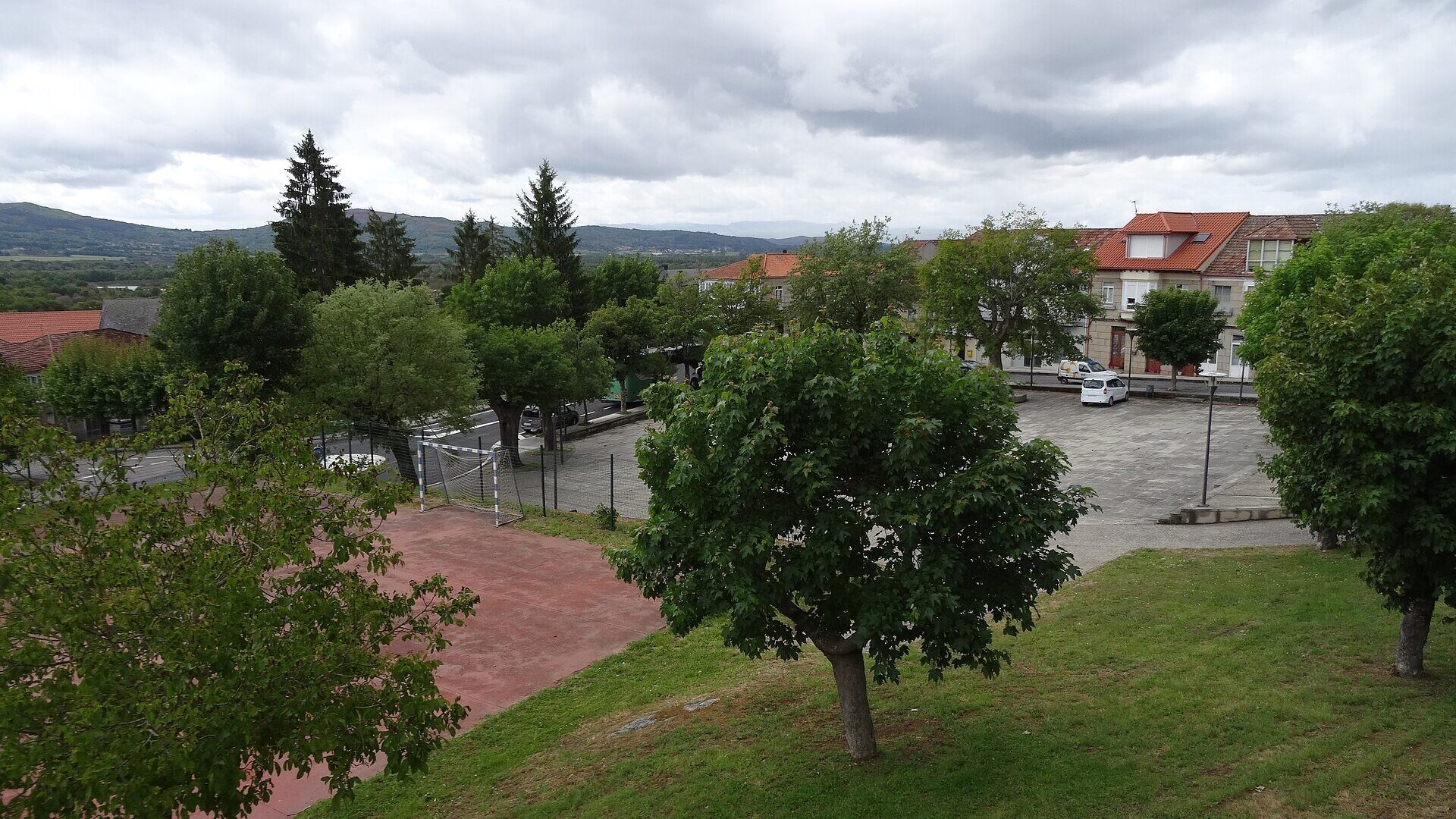
Origins of Limia place names: Escornabois, Faramontaos, O Vieiro, Lobás, Castelaus and Cortegada
Origin of A Limia's place names according to the Toponymy Commission: the legend of the oxen of Escornabois and its etymology of "stone", Faramontaos, O Vieiro, Lobás, Castelaus and Cortegada.
The Xunta’s "Toponimízate" section explains the origin of place names across Galicia. These are the ones that belong to A Limia, with a summary of what each article says and of the specialists’ hypotheses [1]–[6].
Escornabois (Trasmiras)
In Trasmiras they still say that two oxen fought until they broke their horns and that is why the village is called Escornabois ("horn-ox"). It is a "folk etymology", hardly credible [1]. The Toponymy Commission also rules out the insect escornabois (stag beetle) and proposes two more hypotheses: the plant name escornabois (the tree Sorbus aucuparia, or rowan) and, as most likely, a "bithematic" place name with two pre-Roman roots meaning "stone": boi (as in Boimorto, Boipardo or Penaboi, places with large granite boulders) and korn- ("stony place", as in Corme or Cornado). This fits the reality: most houses in Escornabois sit on an enormous rock mass emerging in the plain, and there are crags among the oldest houses [1]. (See also The Escornabois plague.)
Faramontaos (Xinzo de Limia, Porqueira)
There are Faramontaos in Xinzo de Limia, Porqueira, A Merca, Cea and Portugal (Fermentãos, Fermentões), and Faramontanos in Zamora and Salamanca [2]. The hypotheses: Antón Palacio, a prefix (IN)FRA with MONTANUS, "those who come from behind the mountains"; José Carlos Sánchez Pardo, FORAMONTANUS, from "outside the mountains", perhaps from Trás-os-Montes; and Gonzalo Navaza, who considers it controversial but thinks it may come from the medieval legal term FORUM MONTANUM, the hunting or mountain lease paid by settlers, or people licensed to hunt in reserved areas [2].
O Vieiro (Vilar de Santos)
The 21 places called Vieiro or Vieiros in Galicia may come from vieiro, "narrow path" (from Latin VIARIUM), but Bascuas and Navaza also propose a hypothetical VENARIUM, from VENA ("vein of iron or water"). To decide, one must see whether there was iron mining, water veins or a track. The presence of other very close road-related place names (Parada, A Venda, A Ponte) and that the Museo Etnográfico da Limia was a pilgrims’ hospital incline the Commission towards the idea of an ancient road, perhaps a vanished variant of the Camino route [3]. See Museo Etnográfico da Limia.
Lobás (Calvos de Randín)
Lobás is a parish of Calvos de Randín (and also of O Carballiño, and there is Os Lobás in Vilalba). The simplest explanation is "place with many wolves" (from Latin LUPALES), but the old forms in documents (Lobanes, 1227; Lobaens, 1238) point to an etymon in -ANES: perhaps a personal name LUPANIS, from Lupus, or a Germanic Leuvanis. The Commission concluded that the simplest explanation is not always the most likely [4].
Castelaus (Vilar de Santos, Calvos de Randín)
The places called Castelaus in Vilar de Santos and Calvos could, according to the hypothesis studied, derive from "Castilians" who came from Castile. But the author, citing Cabeza Quiles, warns that Casteláns (O Covelo) does not come from Castile and León but from the archdeaconry of Castela, within Galicia, a territory that Sarmiento extended to about a hundred parishes [5]. The article also recalls the verse "Castellanos de Castilla, tratade ben ós galegos" and the temporary migrations of Galician reapers to Castile [5].
Cortegada (Sarreaus)
Cortegada names three parishes in Sarreaus, Silleda and Cortegada, besides six villages and an island in Arousa, which appears in Pliny as "insula Corticata"; from the 10th century it appears in its present form. Specialists proposed three origins: a participle of CORTICARE (fenced land), an adjective CORTICATUM (house covered with bark or straw) or the medieval verb CORTICARE "to strip bark" from the cork oak [6]. See The Pedra Alta, in Cortegada.
A business that names its rooms with place names
After a Toponimízate talk in Trasmiras (2023), Roberto Montero and Rosa Losada named the rooms of their hospitality business with local names: apartments "O Recanto" and "O Curro", kitchen "Fornelo", patio "Rexidora" [7].
Links
Sources
- «É Escornabois un zootopónimo, un fitotopónimo ou un litotopónimo?», Toponimia de Galicia, Xunta de Galicia. https://toponimia.xunta.gal/gl/video/e-escornabois-un-zootoponimo-un-fitotoponimo-ou-un-litotoponimo
- «A debatida orixe do topónimo Faramontaos». https://toponimia.xunta.gal/gl/video/debatida-orixe-do-toponimo-faramontaos
- «O Vieiro: un topónimo relacionado cos camiños ou coa minaría?». https://toponimia.xunta.gal/gl/video/o-vieiro-un-toponimo-relacionado-cos-caminos-ou-coa-minaria
- «Habería moitos lobos en Lobás?». https://toponimia.xunta.gal/gl/video/haberia-moitos-lobos-en-lobas
- «Casteláns de Castela?». https://toponimia.xunta.gal/gl/video/castelans-de-castela
- «Comparten Cortegada e Cortizada a mesma orixe?». https://toponimia.xunta.gal/gl/video/comparten-cortegada-e-cortizada-mesma-orixe
- «O Campiño Turístico pon en valor a toponimia de Trasmiras». https://toponimia.xunta.gal/gl/nova/o-campino-turistico-pon-en-valor-toponimia-de-trasmiras
You may also like
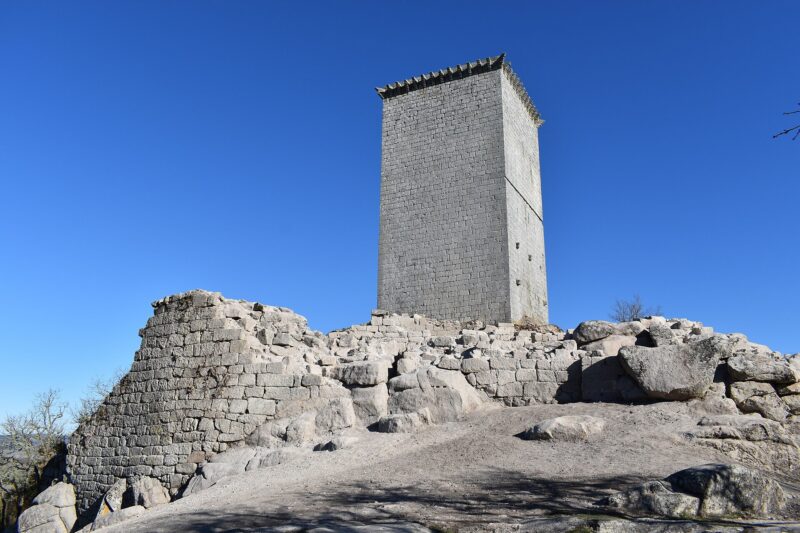 History of A LimiaPrehistory and castros of A LimiaFrom the Pedra Alta de Antela to the castro of Bóveda: megaliths, the Roufeiro weapons, the Outeiro de Baltar and the gold earring of Vilar…
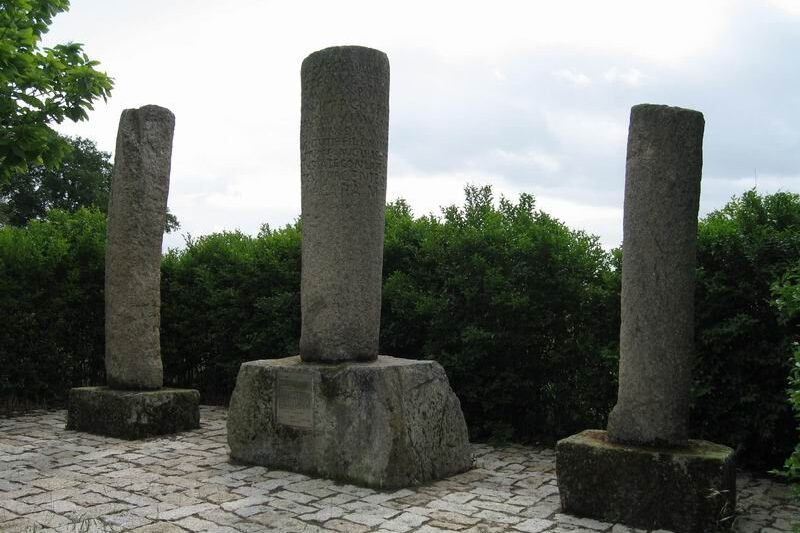 History of A LimiaThe Limici in Roman inscriptions: Celer’s gladiatorial tessera and Corellius LimicusTwo epigraphic pieces outside A Limia that mention a "Limicus": the bronze gladiatorial tessera from Niebla (Huelva), of the 1st century,…
History of A LimiaThe Limici and Romanisation: Civitas, Forum Limicorum and Via NovaWhat is known of the Limici and Roman Limia: the Civitas Limicorum, the debate over where the Forum Limicorum stood (A Cidá of Nocelo da…
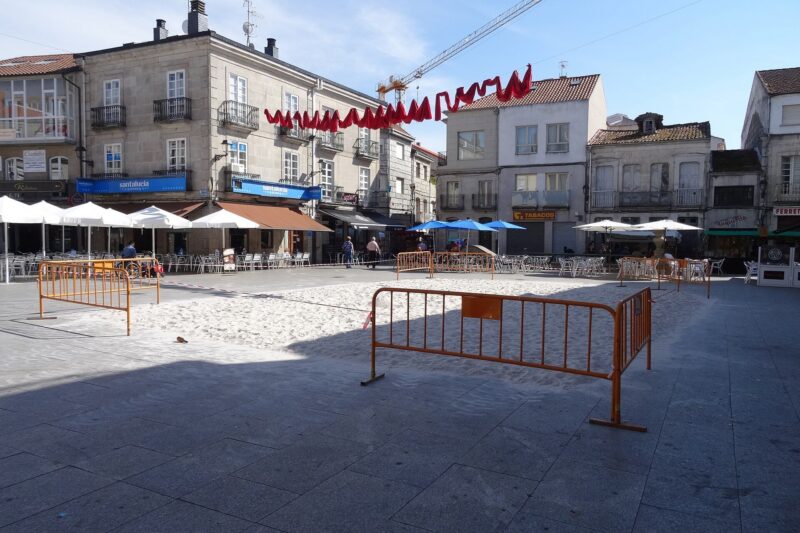 History of A LimiaThe Praza Maior, the Ladeira and the Toural: history of Xinzo’s central placesHistory of the Praza Maior (fairs since the 16th century, the 1907 Espolón, the fountain), the Ladeira and the Toural (the lagoon, the…
History of A LimiaLight, chocolate, fizzy drinks and roads: the industrial and service Xinzo of the 20th centuryHow electricity (1911), the printing press, chocolate and soda factories, the Rubio Cold-Storage Slaughterhouse and buses to Ourense and…
 History of A LimiaCinemas, café, radio, school and library: Xinzo’s cultural life from 1948 to the 1970sThe cinemas Los Molinos (1948) and Antelano (1954), the Café Ideal and the Ideal 6 disco, the 1950 radio, the Colegio Santa Marina, the…
