


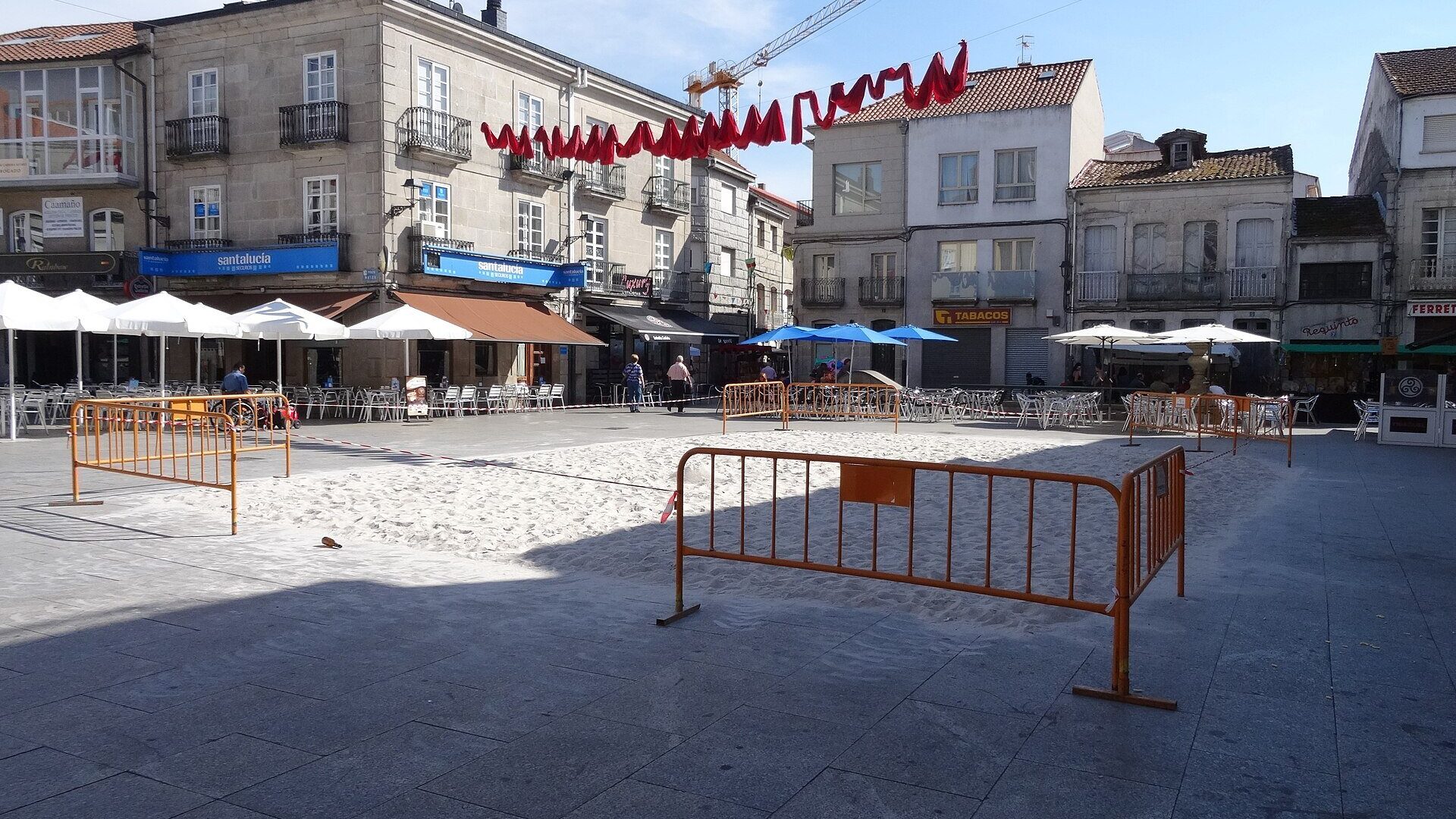
Memories of the Xinzo of the past: children, taverns, the Riscas, doors and popular figures
Memories of everyday life in postwar Xinzo: children's games, Benito's tavern, Marucho's bar, the Riscas, doors and knockers, old stamps and Quinito Peláez.
The "memory" entries by Edelmiro Martínez Cerredelo record details of everyday life in Xinzo de Limia that do not survive in official documents. This page gathers the clearest [1].
Postwar children
Those born in the harsh postwar grew up with many shortages: schools without equipment and cold winters eased with braziers made from sardine tins; the "American friend" handed out in schools cups of powdered milk and rations of tinned cheese, and the tins ended up as kitchen utensils after passing through the tinsmith. Toys were handmade: wooden swords and pistols, bows with umbrella ribs, lorries made from cigar boxes and cotton-reel wheels, soapbox carts, catapults, spinning tops and sticks for the billarda game at the Pombal. The egg square served for marbles and tops; the games of cops and robbers, swordsmen and cowboys came from the films at the Los Molinos and Antelano cinemas. A specialist was Carlos Casares when he came on holiday from the seminary, who always played the policeman. They also played in the Ladeira when it dried up, on the main road (the "fish" lorries sped by towards Castile) and were afraid of the municipal guard Saturnino Bolaño, the "Sarillo" [1].
Benito’s tavern
Benito opened his business in 1945, in the "wine street" of the Barrio de Abaixo, and stayed open until his retirement in the 1980s. It was a small place with a short counter on the right, where he served white or red Monterrei wine in the typical bowls, sometimes straight from the barrels; the handrail-less staircase went up to the dwelling and under it a pig was more than once fattened for the family. In the plaza de Oriente the last night owls of the wine district took refuge [2].
Marucho’s bar (Cafetería Pompeya)
Opened around 1963-1964 and open until the early years of this century, on the corner of Avenida de Ourense and Rúa do Peto. The buses to the Basque Country and Catalonia stopped there, so it was well known to emigrants for trips and parcel sending, and it was the refuge of fans who came to watch football on television; the author recalls watching on black-and-white TV the Euro final in which Spain won for the first time. Marucho advertised the tapas on the blackboard with irony: "lo que puede ser cualquiera" ("what could be anything"; empanada) or "lo normal entre matrimonios" ("the usual between married couples"; pork snout) [3].
The Riscas, the river’s spa
Before the Toural swimming pools, Xinzo had several bathing spots on the river: Barreiros, O Mato and the busiest, As Riscas, between the Limia and Nocedo rivers, upstream of the Baltar road bridge, with deep pools, banks for diving, sandbanks and tree-lined shores, where trout were also caught by hand. They disappeared in the early 1970s with land consolidation and the canalisation of the Limia, Faramontaos and Nocedo rivers [4]. At Os Cobos, another area near the Riscas, the Joga Barge family of Baronzás mowed grass with the scythe: it was sharpened in June, the grass spread out to dry for several days and gathered with the ox cart [5].
Doors and knockers
Cerredelo admires the wooden doors that cabinetmakers and carpenters made for the town’s houses, of one or two leaves, or "Dutch" (divided into two sections). Their decline began in the 1960s, when they were replaced by iron and later aluminium doors; many ended up in the fire [6]. Knockers, a metal piece of copper or iron for calling, range from the classic hand shape to modern designs; they faded with electric bells in the 1960s, entry phones and video door phones. Knocking on doors and running away was a children’s prank [7].
Stamps and letterheads
The author also gathered photos of stamps and letterheads used by the Concello and other bodies now vanished, from those of the 19th century (one from 1865 with a symbol hard to identify) to those used after 1936 by the concello, Civil Guard, Falange or police [8].
Quinito Peláez and the "Cine Pipa Verde"
Carlos Casares recalled in his A Marxe columns Quinito Peláez Carril, "a solitary, music-loving and imaginative young man" who invented a cinema on San Roque street, the "Cine Pipa Verde", with imaginary films with witty titles. He lived on the second floor above Doña Adela’s pharmacy, played guitar and harmonica at once, bought vinyl records of Mexican bands and rancheras and played them at full volume; Antón Riveiro Coello cites him in A ferida do vento [9].
Links
Sources
- Edelmiro Martínez Cerredelo, «Lembranzas de nenos en Xinzo», Historia de Xinzo, 24/02/2014. https://historiadexinzo.wordpress.com/2014/02/24/lembranzas-de-nenos-en-xinzo/
- «A taberna do Benito», 05/02/2016. https://historiadexinzo.wordpress.com/2016/02/05/a-taberna-do-benito/
- «Cafetería Pompeya (o bar do Marucho)», 04/07/2016. https://historiadexinzo.wordpress.com/2016/07/04/cafeteria-pompeya-o-bar-do-marucho/
- «As Riscas, o antigo balneario de Xinzo», 07/05/2016. https://historiadexinzo.wordpress.com/2016/05/07/as-riscas-o-antigo-balneario-de-xinzo/
- «Segando a herba nos Cobos (As Riscas, Xinzo)», 26/10/2016. https://historiadexinzo.wordpress.com/2016/10/26/segando-a-herba-nos-cobos-as-riscas-xinzo/
- «Portas de madeira en Xinzo de Limia», 24/06/2020. https://historiadexinzo.wordpress.com/2020/06/24/portas-de-madeira-en-xinzo-de-limia/
- «Os petadores das portas de Xinzo de Limia», 02/07/2023. https://historiadexinzo.wordpress.com/2023/07/02/os-petadores-das-portas-de-xinzo-de-limia/
- «Os selos e membretes utilizados en Xinzo ao longo dos anos», 31/03/2016. https://historiadexinzo.wordpress.com/2016/03/31/os-selos-e-membretes-utilizados-en-xinzo-ao-longo-dos-anos/
- «Lembranzas de Quinito Peláez Carril», 08/06/2022. https://historiadexinzo.wordpress.com/2022/06/08/lembranzas-de-quinito-pelaez-carril/
You may also like
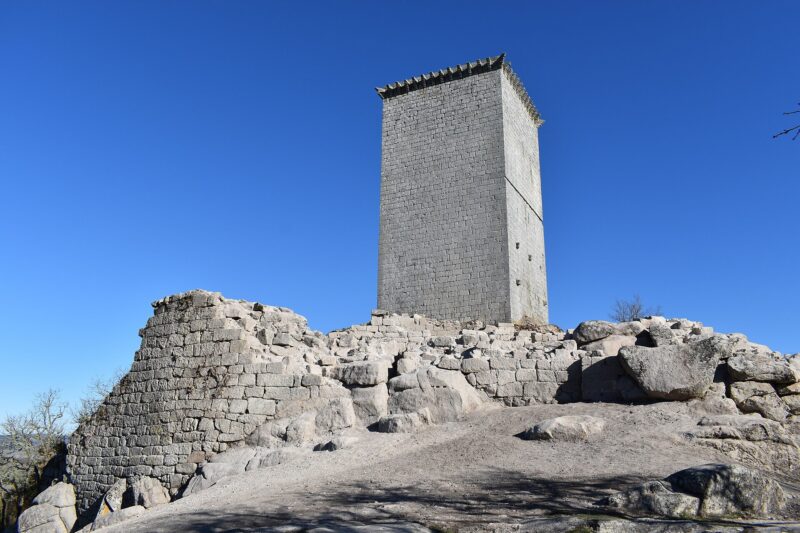 History of A LimiaPrehistory and castros of A LimiaFrom the Pedra Alta de Antela to the castro of Bóveda: megaliths, the Roufeiro weapons, the Outeiro de Baltar and the gold earring of Vilar…
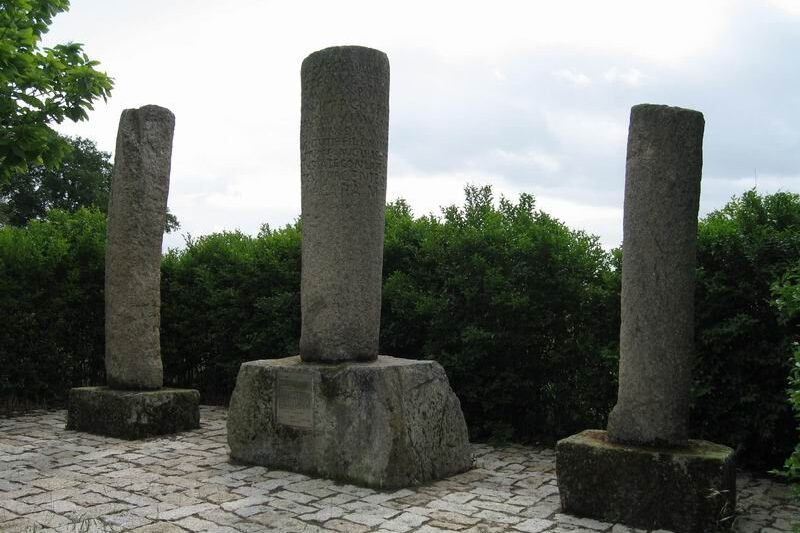 History of A LimiaThe Limici in Roman inscriptions: Celer’s gladiatorial tessera and Corellius LimicusTwo epigraphic pieces outside A Limia that mention a "Limicus": the bronze gladiatorial tessera from Niebla (Huelva), of the 1st century,…
History of A LimiaThe Limici and Romanisation: Civitas, Forum Limicorum and Via NovaWhat is known of the Limici and Roman Limia: the Civitas Limicorum, the debate over where the Forum Limicorum stood (A Cidá of Nocelo da…
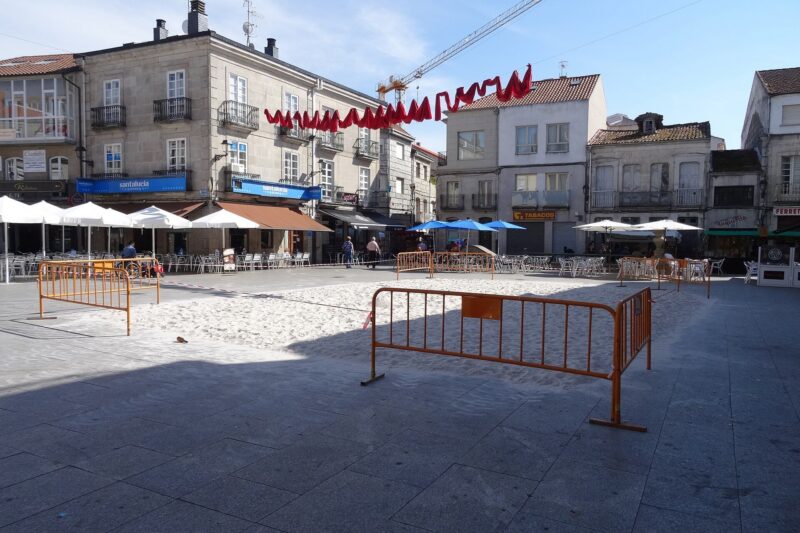 History of A LimiaThe Praza Maior, the Ladeira and the Toural: history of Xinzo’s central placesHistory of the Praza Maior (fairs since the 16th century, the 1907 Espolón, the fountain), the Ladeira and the Toural (the lagoon, the…
History of A LimiaLight, chocolate, fizzy drinks and roads: the industrial and service Xinzo of the 20th centuryHow electricity (1911), the printing press, chocolate and soda factories, the Rubio Cold-Storage Slaughterhouse and buses to Ourense and…
 History of A LimiaCinemas, café, radio, school and library: Xinzo’s cultural life from 1948 to the 1970sThe cinemas Los Molinos (1948) and Antelano (1954), the Café Ideal and the Ideal 6 disco, the 1950 radio, the Colegio Santa Marina, the…
