


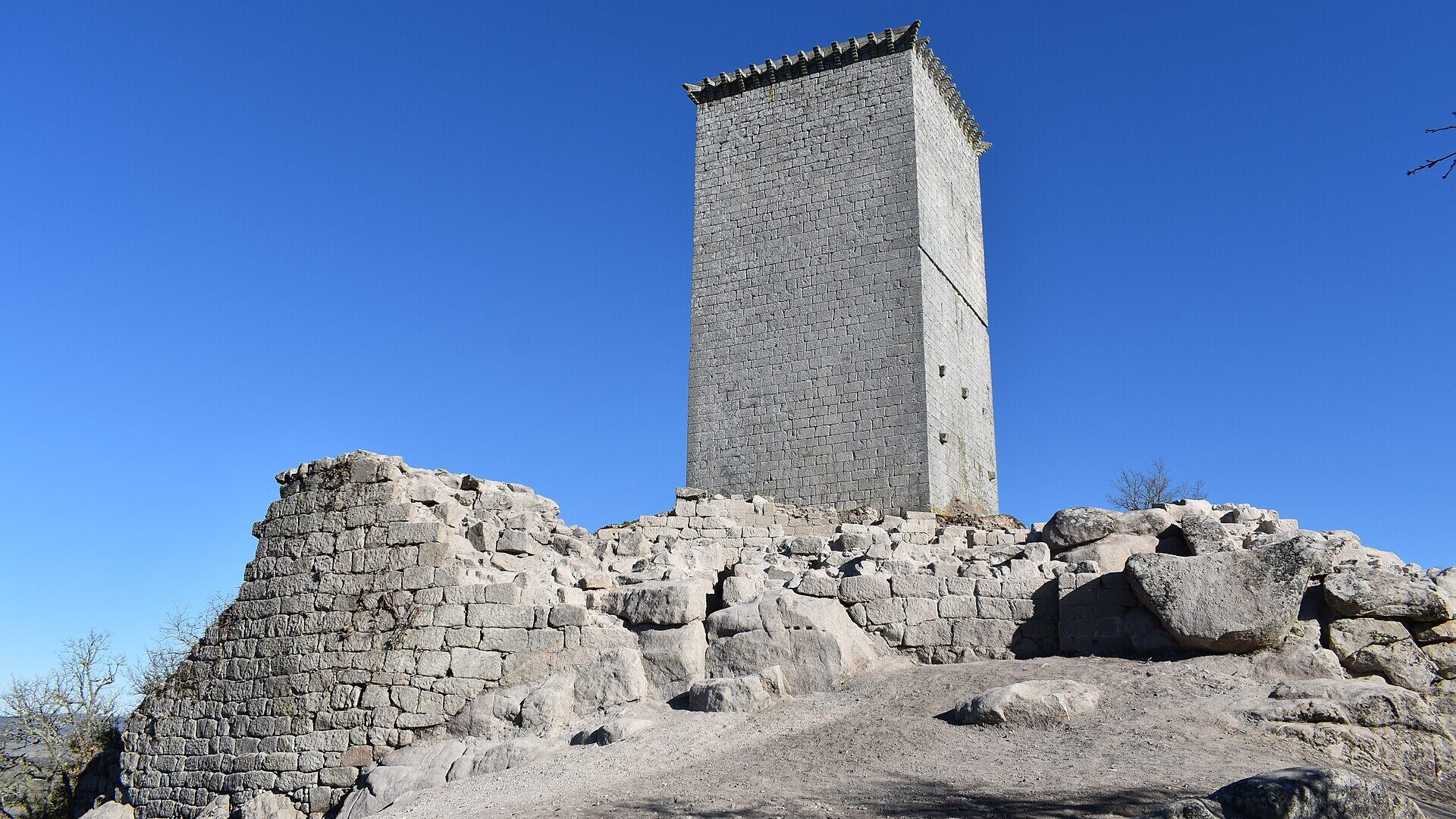
The counts of Gimonde in A Limia: rents, leases and a chapel in Santa Mariña
The counts of Gimonde, a Compostela family who inherited the house of Xinzo, collected rye rents in 11 parishes of A Limia; the rent book, Countess Jacoba Cisneros and the Rosary chapel in Santa Mariña.
The counts of Gimonde were a family of Compostela hidalgos who inherited the house of Xinzo de Limia and the jurisdiction of Mosteiro, Novás and Queiroganes. Edelmiro Martínez Cerredelo reconstructs their presence in A Limia from a rent book and notarial records [1].
Origin of the house
Antonio Ramón Cisneros de Castro, lord of Maindo, was perpetual councillor of the partido of Santiago between 1720 and 1749. His heir Juan Antonio Bernaldino Cisneros de Castro Figueroa (1747–1798), also a Compostela councillor, was recognised as first Count of Gimonde by the Bourbon monarchy. He married Manuela de Ulloa, descended from a family of Vila de Cruces and of several Ourense comarcas, daughter of Lorenzo Ulloa Pardo and Rosa Luisa Cadórniga, neighbours of Congostro, where they had their ancestral house. Through this line the house of Xinzo and the jurisdictions of Mosteiro, Novás and Queiroganes entered the county’s estate [1].
The rent book
The "Libro Cobrador de las Rentas" of the counts of Gimonde in the partido of A Limia, by the notary Vicente Díaz Teixeiro, indicates where they collected tributes: Santa Mariña de Xinzo, San Miguel de Cima de Ribeira, San Salvador de Damil, San Bartolomeu de Ganade, San Miguel de Gudín, San Xoán de Guntimil, Santa María das Lamas, San Pedro de Laroá, San Pedro Fiz de Solbeira, San Salvador de Parada de Ribeira and Santa María de Ribeira, besides the lordships of Queiroganes, Mosteiro and Novás. They also held rights in Baltar, Os Blancos, Porqueira and Leiro. The house in Xinzo was the centre where the tribute produce was gathered [1].
Countess Jacoba Cisneros
Jacoba Cisneros, third Countess of Gimonde and Viscountess of Soar, was one of the largest landowners in A Limia. She granted leases and rented out her properties, which kept the notaries busy for days when her representative came to Xinzo. The conditions were harsh: the rye had to be delivered clean, dry and measured in the granary of the countess’s main house in Xinzo, in August and September, and payment could not be avoided because of hail, frost or any unforeseen event [1].
In August 1843 she put her rents up for auction: 1,901 ferrados and seven copelos of rye, five of them of wheat, plus 800 reals and 13 maravedís. The best bid was that of Francisco Losada, of Ganade, with 15,000 reales de vellón to be paid in two instalments. In 1849 she collected 19,975 reals and four maravedís from the administrator of the judicial district’s property, corresponding to 1844. When the third counts died without descendants, the estate was divided among relatives: Ramón María Bermúdez de Acevedo and the Pugas [1].
The Rosary chapel in Santa Mariña
The counts had in the church of Santa Mariña de Xinzo a collative chapel, on the Gospel side, dedicated to Our Lady of the Rosary; half, with six graves, was theirs. They paid the church fabric seven and a half ferrados of rye for the endowment and had the burden of a weekly Mass on Saturdays and some more each year, although in June 1831 they did not know since when it had not been fully met and ten Masses were left unsaid each year [1].
As an anecdote, in 1973 the lawyer Nicandro García Sánchez, of Lugo, redeemed on behalf of his brothers that pious charge that encumbered estates that had belonged to the countess: capitalising 90 years of arrears (1883–1973), he handed over 5,000 pesetas and another 30,000 for the definitive redemption, with which a foundation (no. 620 of the bishopric) was set up that celebrated said Masses in the church of Xinzo and ceased to be active in January 1989 [1].
Links
- History of A Limia
- Xinzo de Limia
- Churches and religiosity of Xinzo
- Xinzo: street layout, buildings and the 1856 plan
Sources
- «Os condes de Gimonde na Limia», Historia de Xinzo, 4 de maio de 2020 (de Xinzo de Limia na memoria; con datos de Héitor Picallo Fuentes). https://historiadexinzo.wordpress.com/2020/05/04/os-condes-de-gimonde-na-limia/
You may also like
 Antela Football Club (1919): the oldest club in OurenseAntela Football Club, founded in Xinzo de Limia in June 1919, is the oldest club in the province of Ourense: the statutes, the Toural…
 Archpriestship of A Limia: parishes and dedicationsThe Archpriestship of A Limia in the diocese of Ourense: 82 villages, 33 chapels and a list of parishes with their dedication, from Santa…
 History of A LimiaCinemas, café, radio, school and library: Xinzo’s cultural life from 1948 to the 1970sThe cinemas Los Molinos (1948) and Antelano (1954), the Café Ideal and the Ideal 6 disco, the 1950 radio, the Colegio Santa Marina, the…
 Emigration of the Limia people: from the 1950s diaspora to personal itinerariesHow the Limia people emigrated: destinations and phases (America from 1920, Venezuela, Brazil, the Basque Country and Catalonia in the…
 Ethnography of A Limia: canastros, houses, limewash, finger guards, stonemasons, blind singers’ verses and the GerinaldoEthnographic studies by Pepe Calleja on A Limia: the canastros of Fontemoura and Faramiñás, the houses of Xinzo, the limewash of Solbeira…
From the Republic to the coup: Xinzo and A Limia between 1931 and 1936How the proclamation of the Republic (1931), 1 May 1936 and the preparation and success of the military coup of 17 to 20 July 1936 were…
