
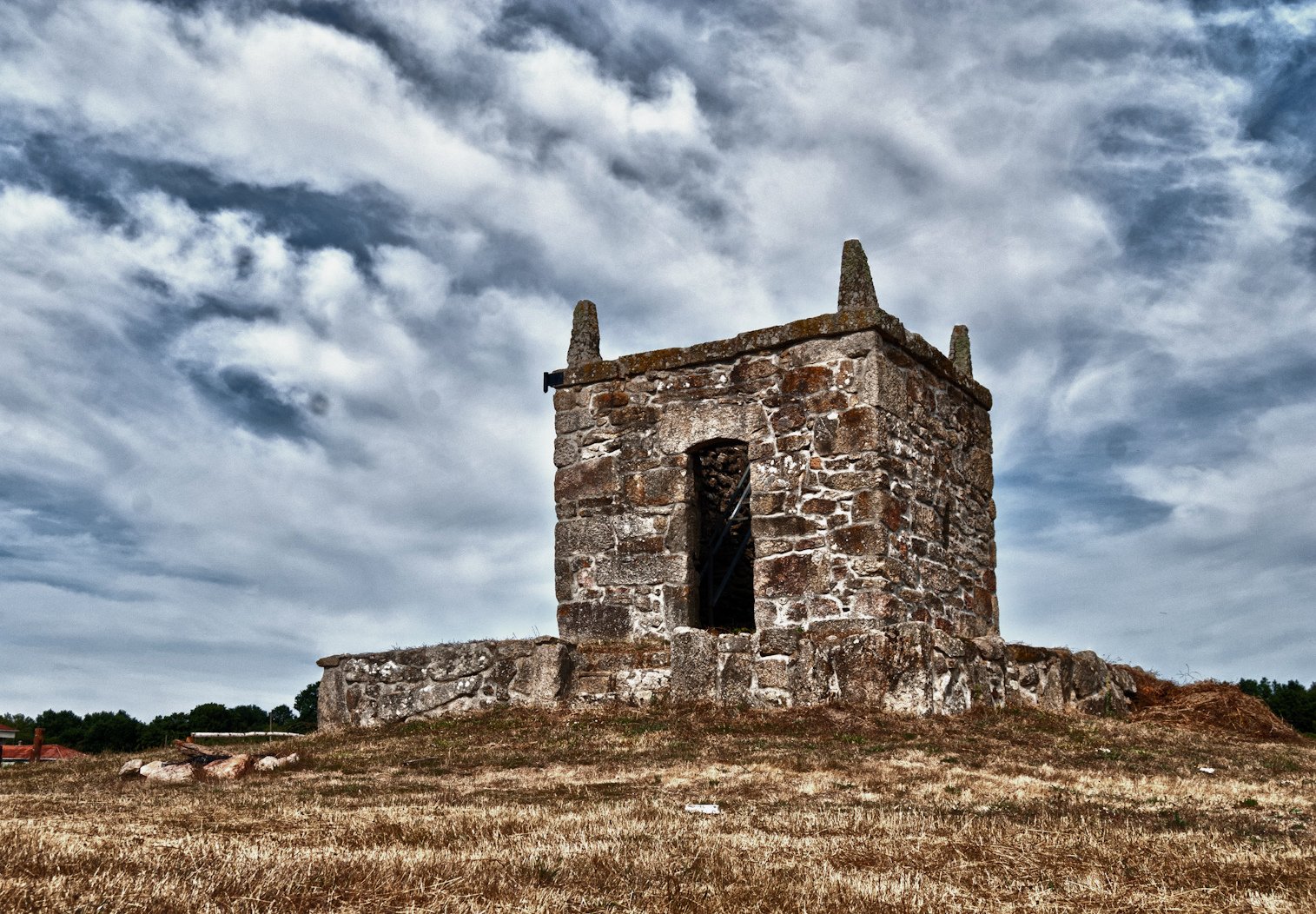
Romaría da Saínza
Around 24 September, thousands of pilgrims fill the field of A Saínza, in Rairiz de Veiga, to watch the Christians storm the castle held by the Moors until it goes up in flames.
- When
- Around 24 September, feast of Our Lady of Mercy
- Where
- Field and castle of A Saínza, Rairiz de Veiga
- Origins
- Mass and procession since 1721; mock battle since about 1840
- Status
- Festival of Galician Tourist Interest (2001)
The Romaría da Saínza is A Limia’s great September romaría (traditional pilgrimage festival): every year, around 24 September, feast of Our Lady of Mercy, thousands of pilgrims fill the field of A Saínza, in Rairiz de Veiga, to watch a Christian army storm the small castle defended by the Moorish side until the fortress burns [1][5]. The Concello de Rairiz de Veiga describes it as a festival "with a strong sense of identity for the people of A Limia" [1], and since 2001 it has been declared a Festival of Galician Tourist Interest [6].
This page covers the essentials of the pilgrimage and leads to five more detailed pages: the history of the romaría, the battle of Moors and Christians, the tribute of the Hundred Maidens and the legends linked to it, devotion to Our Lady of Mercy and the festival’s setting, the castle and oak grove of A Saínza.
Where it takes place
A Saínza is a small settlement in the parish of San Xoán de Rairiz de Veiga, in the municipality of the same name, split into two places: A Saínza de Abaixo and A Saínza de Arriba [7]. The parish contains the castle of A Saínza, listed as a Site of Cultural Interest in the Galician heritage catalogue [7][11]. The festival is held in a field shaded by old oaks below that castle [5], and in the same grove grows the Carballa da Rocha, a natural monument since 2007 [8].
The site lies on the edge of the meadows that were once part of the Lagoa de Antela, a wet landscape of pasture and oak woods closely bound up with the festival itself: in 1929 an old man told a journalist there were so many horses there because the animals grazed for free on the lagoon when it dried out [3]. More about the municipality on the Rairiz de Veiga page.
A festival with three centuries of history
The documented history of A Saínza has two key dates. The first is 1721, when the abbot of San Bartolomé de Ganade, Pedro González Gándara, built the A Saínza church; mass and a procession have been held there ever since [2][9]. The second is 1840: according to the priest and researcher Florencio Gándara, that is the likely year of the first battle of Moors and Christians, and it is also the date given by the Concello [1][2].
Tradition attributes the performance to a vow made by the priest Manuel Alonso Dorado, a native of Rairiz de Veiga and later a canon of Ourense cathedral, who commended himself to Our Lady of Mercy when he feared for his life outside Galicia [2][4]. In 1929 the magazine Vida Gallega published a long report on the festival by Jaime Solá, recovered in 2016 by Alexander de los Ríos Conde and one of the best early accounts of the pilgrimage [3][4]. This whole story, with the official declarations, is told on the history of the romaría page.
The battle of Moors and Christians
The central moment is the Ataque: a staged battle between the two sides, which the Concello presents as the fight "of good against evil" and which ends with the Christians’ victory and the burning of the rebel castle [1]. Before the fight, the captains parley and challenge each other from some rocks that Vicente Risco called "the parliament rocks"; then war is declared, the troops charge and the castle burns [2][4]. It ends with the Christians paying homage to the Virgin and the conversion of the repentant Moors [2].
Solá reported in 1929 that the two armies numbered only "eighteen or twenty men", while around the castle there gathered, by his count, "twenty-five thousand people and five or six thousand animals" [3][4]. He also noted that the speeches were delivered in Spanish, though old people remembered them being spoken in Galician [4]. The characters, dialogue and course of the battle are explained on the Moors and Christians page.
Our Lady of Mercy and the procession
Above all, the pilgrimage is a religious festival in honour of Our Lady of Mercy [5][9]. While the battle is staged, the procession leaves the chapel, and the armed Moors guard the fortress where they hold Christians prisoner and demand the tribute of the "hundred maidens" [2]. In 1929 the Virgin rode in a small white cart decked with garlands, and the victorious captain stood before her to give thanks for the victory [4]. The ethnographer Antón Fraguas devoted a section to the celebration of Our Lady of Mercy at A Saínza in his book Romarías e Santuarios (1988) [15]. More details on the Our Lady of Mercy page.
Legends and explanations
The origin of the battle is unclear, since the Muslim presence in Galicia and northern Portugal was slight [2]. Some link it to a local episode of the Reconquest in which the villagers defeated the Moors, a victory credited to Our Lady of Mercy [2]. Antonio Doval Adán wrote that the battle commemorates "the episode of the tribute of the Hundred Maidens and legends of the ransoming of captives" [5], and Solá connected it with the Mercedarian Order and the ransoming of Christian captives in Algiers [4]. These explanations are gathered on the page on the tribute of the Hundred Maidens and the legends.
Date of the pilgrimage
The rule is simple: the pilgrimage is held around 24 September, feast of Our Lady of Mercy. The Concello places the gathering on the Sunday nearest that date [1]; Doval Adán gives 24 September itself [5], and in 1929 Solá said it took place on the 23rd [3]. In recent editions the festival runs for several days around the 24th, with the main battle on the Sunday [9][10]. The 2026 programme, for example, had processions on Thursday and Saturday, the 19th Noite Moura (Moorish Night) with a night assault on the castle, and on Sunday a solemn mass on the battlefield and the battle of Moors and Christians [9].
A pilgrimage for all of A Limia
Although it is held in Rairiz de Veiga, people in Xinzo de Limia also feel A Saínza is theirs: the old xinzodelimia.eu website explained that many of the town’s residents go and that it is seen as one more Xinzo celebration [13]. Edelmiro Martínez Cerredelo recalls that the photographer Xosé Vázquez Arias, o Rizo, never missed the A Saínza pilgrimage, just as he never missed the fairs and the Entroido of Xinzo [14]. The same field hosts the A Saínza fair on the 23rd of every month, with octopus cooks and farriers [12].
Eating in the field is part of the festival: in 1929 octopus was "the obligatory dish" of the day, and families ate in the shade of the oak grove [4]. The Carballa da Rocha, an oak 33 metres tall [8], and the castle are the two landmarks of the festival landscape; both are described on the castle and oak grove of A Saínza page.
Recognition
The pilgrimage has been a Festival of Galician Tourist Interest since 2001 [6][7]. According to the Festivales de España website, in 2026 an application for National Tourist Interest status was under way [10].
FAQ
When is the Romaría da Saínza?
Around 24 September, feast of Our Lady of Mercy. The festival lasts several days, and the battle of Moors and Christians takes place on the Sunday nearest that date [1][9].
Where is A Saínza?
In the parish of San Xoán de Rairiz de Veiga, in the municipality of Rairiz de Veiga (Ourense), in the A Limia district. The pilgrimage is held in the oak-grove field below the castle of A Saínza [5][7].
Since when has the battle of Moors and Christians been performed?
The A Saínza church dates from 1721, but the battle began around 1840, according to Florencio Gándara and the Concello [1][2].
What happens in the battle?
A challenge exchanged between the captains, the declaration of war, the assault with horses and gunpowder, the freeing of the prisoners and the burning of the castle, ending in Christian victory [1][2][4].
Does it have any official status?
Yes: it has been a Festival of Galician Tourist Interest since 2001 [6]. The castle of A Saínza is a Site of Cultural Interest [11], and the Carballa da Rocha a natural monument [8].
Sources
- Concello de Rairiz de Veiga, "Romaría da Sainza". https://rairizdeveiga.es/gl/feiras-festas/romaria-da-sainza
- Fronteira Esquecida, "Romaría da Saínza" (bibliography: Delfín Caseiro Nogueiras, A Romaría da Saínza: mouros e cristiáns, Ourense, 2003; Enrique Bande Rodríguez, Moros y Cristianos en la Sainza). https://fronteiraesquecida.eu/gl/fichas/romaria-da-sainza/
- Alexander de los Ríos Conde, "La romería de A Saínza en un reportaje de 1929 (Primera Parte)", Vía Lethes, 25-09-2016 (reproducing Jaime Solá, Vida Gallega, no. 431, Vigo, 20-11-1929). https://vialethes.es/romeria-sainza-1929
- Alexander de los Ríos Conde, "La romería de A Saínza en un reportaje de 1929 (Segunda Parte)", Vía Lethes, 02-10-2016. https://vialethes.es/romeria-sainza-1929-ii
- Antonio Doval Adán, "Rairiz de Veiga", in Galicia pueblo a pueblo (ed. Andrés Precedo Ledo), pp. 1167–1168. Digital copy in Minerva (USC). https://minerva.usc.gal/bitstreams/f7db627e-8867-4e17-b14c-f908758002ab/download
- Galician Wikipedia, "Festas de interese turístico de Galicia", CC BY-SA 4.0. https://gl.wikipedia.org/wiki/Festas_de_interese_turístico_de_Galicia
- Galician Wikipedia, "Rairiz de Veiga, Rairiz de Veiga", CC BY-SA 4.0. https://gl.wikipedia.org/wiki/Rairiz_de_Veiga,_Rairiz_de_Veiga
- Galician Wikipedia, "Carballa da Rocha", CC BY-SA 4.0. https://gl.wikipedia.org/wiki/Carballa_da_Rocha
- Páxinas Galegas, "Romería da Saínza e Nosa Señora da Mercé" (2026 programme). https://www.paxinasgalegas.es/fiestas/romeria-da-sainza-e-nosa-señora-da-merce-rairiz-de-veiga-574.html
- Festivales de España, "Romaría da Saínza e Nosa Señora da Mercé" (accessed 22-10-2026). https://www.festivalesdeespana.com/festival/romaria-da-sainza-e-nosa-senora-da-merce-rairiz-de-veiga
- Xunta de Galicia, Plan Básico Autonómico, BIC catalogue: "Castelo da Saínza" (BIC.000.525). https://ideg.xunta.gal/servizos/rest/services/PBA/Afeccions_PatrimonioCultural/MapServer
- Concello de Rairiz de Veiga, "Feiras e festas". https://rairizdeveiga.es/gl/feiras-festas
- xinzodelimia.eu, "Antonio Sánchez Rodríguez". http://www.xinzodelimia.eu/antonio_sanchez_rodriguez.htm (Wayback, 22-01-2010: https://web.archive.org/web/20100122051454/http://www.xinzodelimia.eu:80/antonio_sanchez_rodriguez.htm)
- Edelmiro Martínez Cerredelo, "Xosé Vázquez Arias, o Rizo. A cara amable dunha época", Historia de Xinzo, 06-04-2017. https://historiadexinzo.wordpress.com/2017/04/06/xose-vazquez-ariaso-rizo-a-cara-amable-dunha-epoca/
- Museo da Limia, "Fraguas e A Limia". https://museodalimia.com/fraguas-e-a-limia/
© OpenStreetMap contributors
In this topic
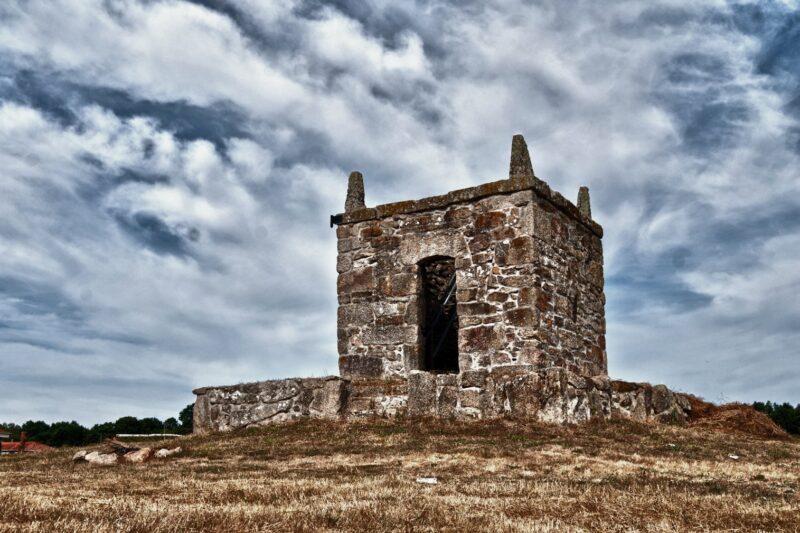 Romaría da SaínzaMoors and Christians at A SaínzaThe Attack: the captains' parley, the cavalry charge, the gunpowder and the burning of the castle in one of the few Moors and Christians…
Romaría da SaínzaOur Lady of Mercy at A SaínzaThe devotion behind the A Saínza pilgrimage: the chapel, the processions, the Mass on the battlefield and the date rule, around 24…
You may also like
 FestivalEntroido of Xinzo de LimiaThe Entroido of Xinzo de Limia lasts five weeks, has the Pantalla as its emblematic mask and has been a Festival of International Tourist…
 A Limia, a district of OurenseXinzo de LimiaThe capital of A Limia, in southern Ourense: home of the Entroido carnival, the Festa do Esquecemento, the Torre da Pena and the Bon Xesús…
 A Limia, a district of OurenseBaltarA concello on the 'dry border' with Portugal, between the plain of A Limia and the Larouco range: heir to part of the Couto Mixto, with…
 FestivalFesta do EsquecementoEvery August Xinzo de Limia relives the arrival of Decimus Junius Brutus's legions at the river Limia, the Lethes that, legend said, made…
 A Limia, a district of OurenseOs BlancosA small concello between the plain of A Limia and the southern hills, home to the 4th–5th century Christian oratory of Ouvigo and,…
 A Limia, a district of OurenseCalvos de RandínA mountain concello on the Portuguese border, home to the capital of the Couto Mixto, Santiago de Rubiás, and to the Portuguese castle of A…
