


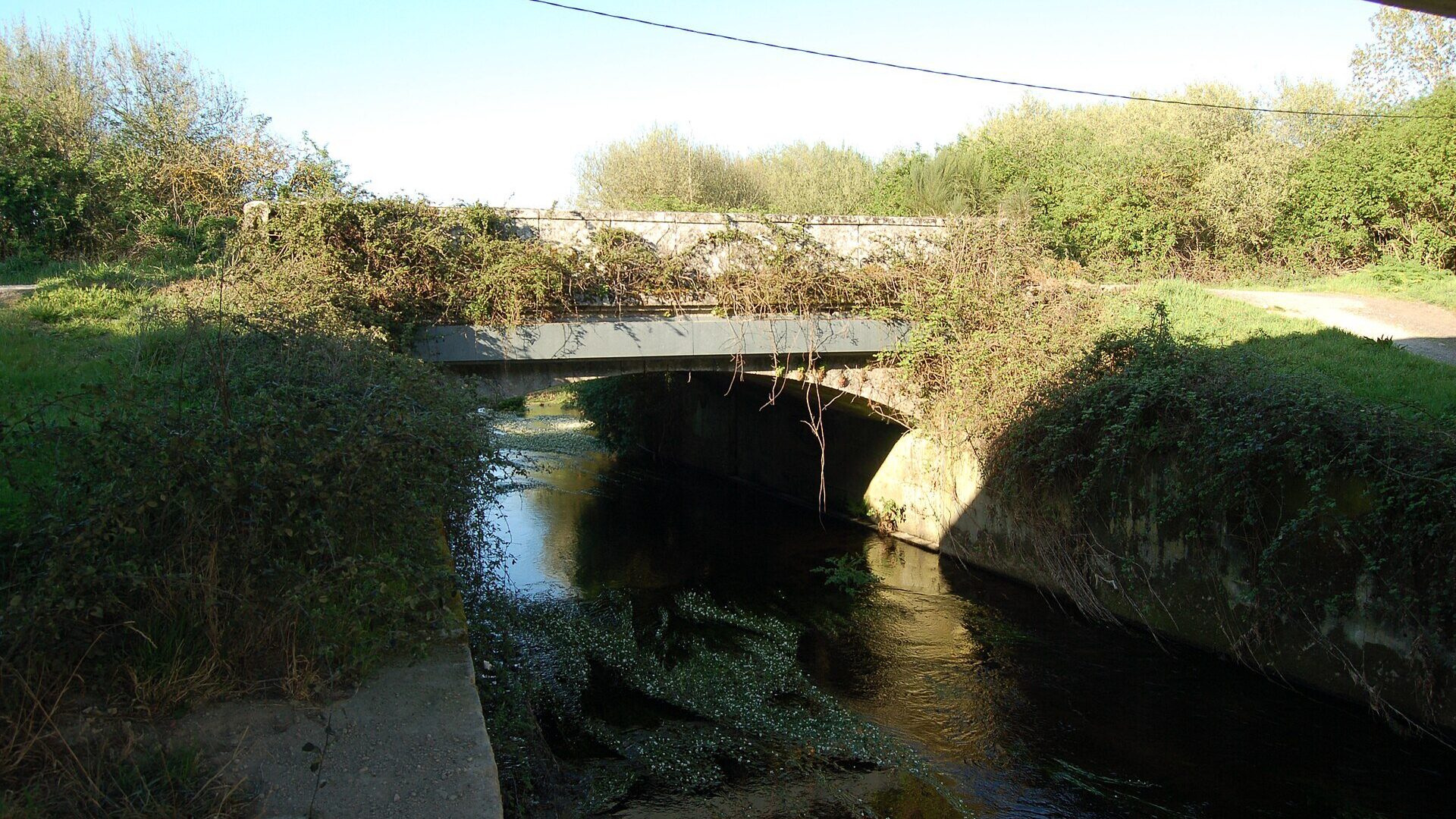
The Liñares bridge and the Feira Nova: a crossroads of A Limia
The Liñares bridge, over the Limia river, a crossing of the Via Nova and the Via Límica, where the Feira Nova was held on the 22nd: its Roman and modern history, the takings of 1755 and 1767, Soult's troops in 1809 and popular verses.
The Liñares bridge crosses the Limia river on the boundary between Bande and the historic jurisdiction of Xinzo. The source describes a Roman bridge of medieval design, humpbacked, replacing an earlier one of the Roman road; a photo shows the bridge with the main channel finished, and another similar bridge was demolished because of the river’s canalisation to drain the Lagoa de Antela [1].
A crossing of roads
According to Rodríguez Colmenero (1977), the Via Nova crossed the Limia and followed the river and the Lagoa de Antela to the north towards Astorga. Another road left the Via Nova at Ponte Liñares towards the Forum Limicorum (Xinzo), called the Via Límica: it went up the Limia by A Forxa, Sabucedo, Ganade and As Lamas and, from Xinzo, skirted the lagoon on the east via Morgade, Pena, Folgoso and Cortegada towards Vilar de Barrio. Between Morgade and Pena an honorary milestone dedicated to Valerius Maximianus appeared [1]. See Prehistory and castros.
The Feira Nova
That strategic crossing gave rise to one of the comarca’s biggest fairs: the fair of the Bridge, or Feira Nova, on the 22nd of each month, in the parish of Santiago de Güín, although it belonged to Bande and depended on the jurisdiction of Xinzo [1]. In 1755 the Ponte Liñares fair, annexed to that of Xinzo, yielded 4,630 reals and that of Xinzo 12,020; in 1767, 6,300 and 11,200. The charges were two reals per ox, one and a half per cow and one per calf or heifer. Later Bande wanted to seize the alcabalas and in 1842 the concello of Xinzo appointed a representative to defend its rights at a meeting in Ourense; the source did not find the result and assumes the rights were lost [1].
Soult in 1809
Soult’s French troops passed through Ponte Liñares, retreating from Portugal towards Ourense, on 17 to 19 May 1809: they crossed the Limia here, went through Porqueira, the Rairiz plains and the hills of San Cibrao and Penamá to Allariz. The militia of the Lobeira Junta, with Lieutenant Colonel García de Barrio, exchanged fire with their rearguard on 17 May at the bridge; according to its chronicle, Soult came with 9,000 infantry and 2,000 cavalry [1]. See also The battle of the Xinzo bridge.
Verses
The popular songbook records the fair: "Indo prá feira da Ponte / atopei un carballiño" (going to the Bridge fair I found a little oak), "O río da Feira Nova / pasa por baixo da ponte; / as mozas de Paradela / deixan o gado no monte" (the river of the Feira Nova passes beneath the bridge; the girls of Paradela leave the cattle on the hill) and "Un veciño do lugar / ten unha vaca marela / que mercou na Feira Nova / por seis pesetas e media" (a neighbour of the place has a fawn cow he bought at the Feira Nova for six and a half pesetas) (Xaquín Lorenzo, Cantigueiro popular da Limia Baixa) [1].
Links
Sources
- «A Ponte de Liñares», Historia de Xinzo, 9 de outubro de 2018. https://historiadexinzo.wordpress.com/2018/10/09/a-ponte-de-linares/
- «PRIVILEGIO DE LA FERIA DE PONTE LIÑARES (Güin. Ourense) 1696.». https://historiadexinzo.wordpress.com/2019/03/12/privilegio-de-la-feria-de-ponte-linares-guin-ourense-1696/
You may also like
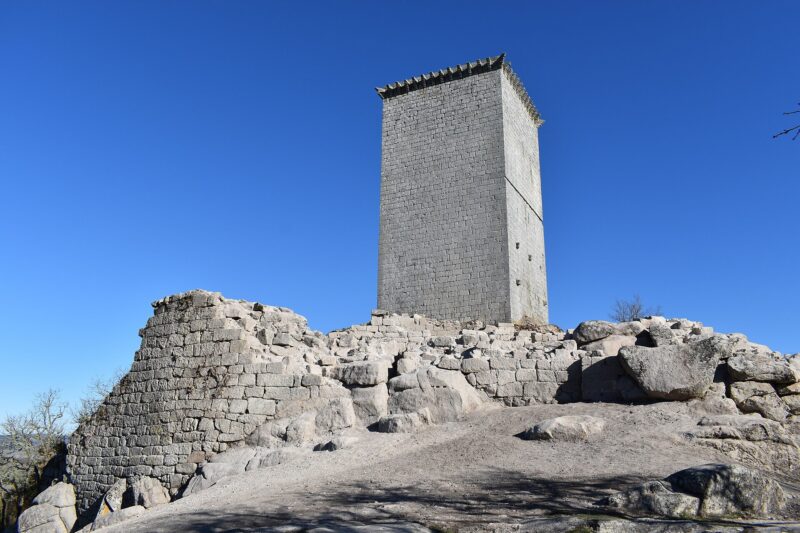 History of A LimiaPrehistory and castros of A LimiaFrom the Pedra Alta de Antela to the castro of Bóveda: megaliths, the Roufeiro weapons, the Outeiro de Baltar and the gold earring of Vilar…
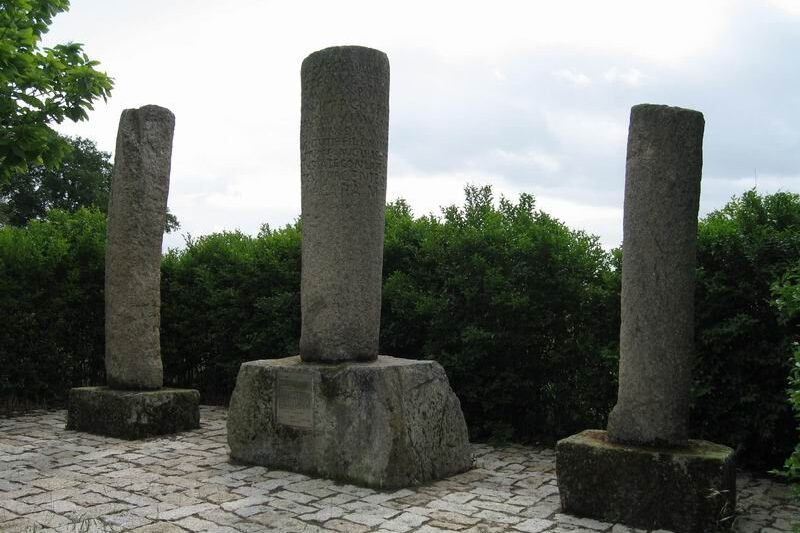 History of A LimiaThe Limici in Roman inscriptions: Celer’s gladiatorial tessera and Corellius LimicusTwo epigraphic pieces outside A Limia that mention a "Limicus": the bronze gladiatorial tessera from Niebla (Huelva), of the 1st century,…
History of A LimiaThe Limici and Romanisation: Civitas, Forum Limicorum and Via NovaWhat is known of the Limici and Roman Limia: the Civitas Limicorum, the debate over where the Forum Limicorum stood (A Cidá of Nocelo da…
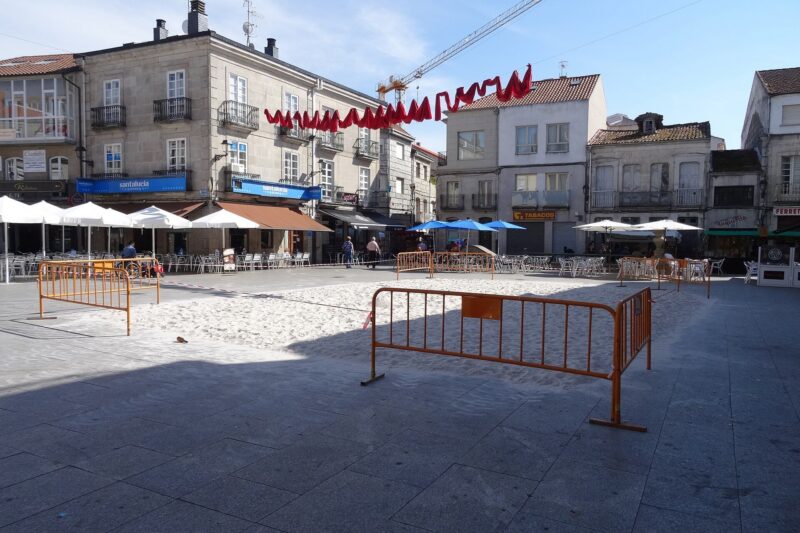 History of A LimiaThe Praza Maior, the Ladeira and the Toural: history of Xinzo’s central placesHistory of the Praza Maior (fairs since the 16th century, the 1907 Espolón, the fountain), the Ladeira and the Toural (the lagoon, the…
History of A LimiaLight, chocolate, fizzy drinks and roads: the industrial and service Xinzo of the 20th centuryHow electricity (1911), the printing press, chocolate and soda factories, the Rubio Cold-Storage Slaughterhouse and buses to Ourense and…
 History of A LimiaCinemas, café, radio, school and library: Xinzo’s cultural life from 1948 to the 1970sThe cinemas Los Molinos (1948) and Antelano (1954), the Café Ideal and the Ideal 6 disco, the 1950 radio, the Colegio Santa Marina, the…
