


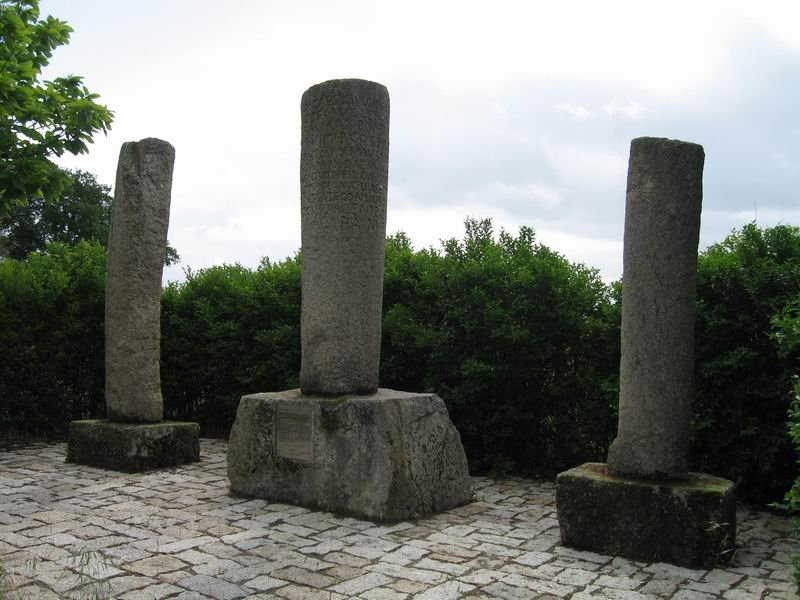
The Limici and Romanisation: Civitas, Forum Limicorum and Via Nova
What is known of the Limici and Roman Limia: the Civitas Limicorum, the debate over where the Forum Limicorum stood (A Cidá of Nocelo da Pena or Xinzo), the Via Nova, milestones and epigraphic finds.
- People
- the Limici (Limici)
- Civitas
- Civitas Limicorum (tablets CIL II 2516 and 2517)
- Forum candidates
- A Cidá (Nocelo da Pena, Sarreaus) or Xinzo de Limia
- Road
- Via Nova (Via XVIII of the Antonine Itinerary)
Before Rome, the lands of the Limia valley were inhabited by a castro-dwelling population that classical authors called Limici (Limici). This page summarises what is known of their integration into the Roman world and of the debates still open. For the castros and the Iron Age, see Prehistory and castros.
The Civitas Limicorum
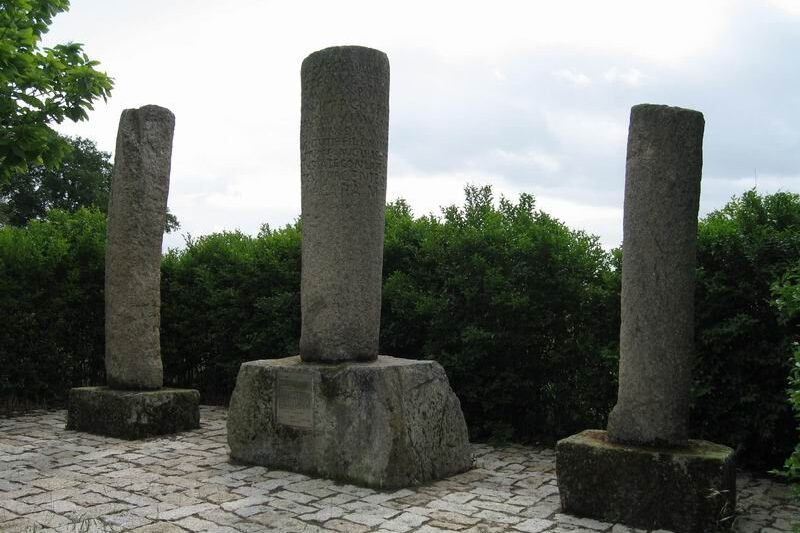
In the Archaeological Museum of Ourense several tablets datable to the early 2nd century AD are kept that mention the Civitas Limicorum (CIL II 2516 and 2517); this same civitas is identified with the Lemica civitas of Hydatius’s chronicle [2]. The Galipedia says it was "a probable Roman settlement" that covered the present town of Xinzo de Limia [2], although the exact location of the core is under debate (see below). The Limici appear named in inscriptions far from A Limia: a gladiatorial tessera from Niebla and a tablet from Complutum, dealt with in The Limici in Roman inscriptions.
Where was the Forum Limicorum?
It is the great open question of the comarca’s ancient history [1][3][5]:
- A Cidá (or A Cerca), on Monte do Viso (Nocelo da Pena, Sarreaus): an Iron Age settlement with walls that may have exceeded 4 metres. Since 1898, when Marcelo Macías suggested it, it has been linked to the Civitas and the Forum on the basis of four 18th-century epigraphic pieces, set into the vanished hermitage of San Pedro, about 200 metres from the castro; two of them mention the civitas of the Limici [1].
- Xinzo de Limia: the excavations and finds of recent years in the town led to proposing Xinzo as the site of the Forum, and the Fronteira Esquecida entry notes that the link with Nocelo is "being ruled out" [1].
- García Valdeiras’s position in Minius IX is more nuanced: Nocelo da Pena "continues to offer the best possibilities" and the Xinzo results "are not at all conclusive"; he also mentions other candidates, such as the Roman villa of Parada de Outeiro or the castro of Morgade (Vilar de Santos) [3].
The debate was the subject of the book Tres puntos de vista sobre el «Forum Limicorum», presented at the Museo da Limia in September 2025 with Juan Manuel Abascal, Xulio Rodríguez, Manuel Xusto Rodríguez and Manuel García Valdeiras [5].
The Viso tin mine
Around the Viso there are four groups of tin mines and two streams that served as washing places; a new reading of an altar attributes it to Ulpius, an imperial freedman and procurator of metals in the 2nd century, and nine inscriptions have appeared on the Viso, including one dedicated to Nabia and another to Jupiter, according to García Valdeiras [3].
The Via Nova
A Limia was crossed by the Via Nova or Via XVIII of the Antonine Itinerary, the road linking Bracara Augusta (Braga) with Asturica Augusta (Astorga). It is called "nova" because it was built in the Flavian period, as opposed to earlier roads of the Augustan era [6]. A recent symposium of the Grupo Arqueolóxico Larouco recalled that 309 milestones of the Via Nova were known when a new one, of Emperor Nerva, was made public in Valdeorras [7]. In A Limia, the concello of Rairiz places the crossing of the Limia river at the Ponte Pedriña, after which the road entered the Antela depression along the right bank [8]; in Sandiás, the milestones of Vilariño das Poldras and Zadagós are dedicated to Emperor Maximinus, and in Vilariño three appeared in 1995 in the Lama field, one without letters and the largest dedicated to Maximinus and his son Maximus [9].
The myth of the Lethe
Strabo linked the river Limia with the Lethe, the river of forgetfulness, and Pomponius Mela called it Flumen Oblivionis; the scene of Decimus Junius Brutus crossing the river to encourage his soldiers comes, according to Cerredelo, from the Enlightenment writer Lucas Labrada and not from a classical source [4]. See The myth of the Lethe and the Festival of Forgetting.
Frequently asked questions
Who were the Limici? The pre-Roman and Romanised people of the Limia valley, named on the tablets of the Civitas Limicorum [2].
Where was the Forum Limicorum? It is not known for certain; the main candidates are A Cidá, in Nocelo da Pena (Sarreaus), and Xinzo de Limia [1][3].
What was the Via Nova? The Roman road Braga–Astorga, Via XVIII of the Antonine Itinerary, which crossed A Limia [6].
Links
- History of A Limia
- The Civitas Limicorum (Festival of Forgetting)
- Roman Xinzo: seated statues and ivory piece
- Marcus Flavius Sabinus
- Middle Ages and towers
Sources
- «Forum Limicorum», Fronteira Esquecida. https://fronteiraesquecida.eu/gl/fichas/forum-limicorum-2/
- «Civitas Limicorum», Galipedia (CC BY-SA 4.0). https://gl.wikipedia.org/wiki/Civitas_Limicorum
- Manuel García Valdeiras, «O Forum Limicorum», Minius IX, pp. 39–50. https://revistas.uvigo.es/index.php/mns/article/download/2984/2773/5946
- Edelmiro Martínez Cerredelo, «Informe histórico en que se fundamenta a orixe e motivo da celebración da Festa do Esquecemento», Historia de Xinzo, 01-07-2026. https://historiadexinzo.wordpress.com/2026/07/01/informe-historico-en-que-se-fundamenta-a-orixe-e-motivo-da-celebracion-da-festa-do-esquecemento-na-vila-de-xinzo-de-limia/
- Museo Etnográfico da Limia, «Presentación do libro Tres puntos de vista sobre el "Forum Limicorum"», 19-09-2025. https://museodalimia.com/presentacion-do-libro-tres-puntos-de-vista-sobre-el-forum-limicorum
- Manuel Xusto Rodríguez, «Peza do mes: A Vía Nova», Museo Arqueolóxico Provincial de Ourense, xaneiro de 2009. https://musarqourense.xunta.gal/sites/default/files/doc/peza_mes/2009/1/pm_2009_01esp.pdf
- Vía Lethes, «Simposio sobre la Vía Nova Romana en el Centro de Interpretación de Aquis Querquennis (Bande)» (cita), 17-11-2021. https://vialethes.es/simposio-via-nova-romana-aquis-querquennis-bande
- Concello de Rairiz de Veiga, «Historia». https://www.rairizdeveiga.es/gl/concello/historia
- Concello de Sandiás, «Coñece Sandiás». https://www.sandias.es/conece-sandias/
You may also like
 History of A LimiaPrehistory and castros of A LimiaFrom the Pedra Alta de Antela to the castro of Bóveda: megaliths, the Roufeiro weapons, the Outeiro de Baltar and the gold earring of Vilar…
 History of A LimiaThe Limici in Roman inscriptions: Celer’s gladiatorial tessera and Corellius LimicusTwo epigraphic pieces outside A Limia that mention a "Limicus": the bronze gladiatorial tessera from Niebla (Huelva), of the 1st century,…
 History of A LimiaThe Praza Maior, the Ladeira and the Toural: history of Xinzo’s central placesHistory of the Praza Maior (fairs since the 16th century, the 1907 Espolón, the fountain), the Ladeira and the Toural (the lagoon, the…
History of A LimiaLight, chocolate, fizzy drinks and roads: the industrial and service Xinzo of the 20th centuryHow electricity (1911), the printing press, chocolate and soda factories, the Rubio Cold-Storage Slaughterhouse and buses to Ourense and…
 History of A LimiaCinemas, café, radio, school and library: Xinzo’s cultural life from 1948 to the 1970sThe cinemas Los Molinos (1948) and Antelano (1954), the Café Ideal and the Ideal 6 disco, the 1950 radio, the Colegio Santa Marina, the…
History of A LimiaMemories of the Xinzo of the past: children, taverns, the Riscas, doors and popular figuresMemories of everyday life in postwar Xinzo: children's games, Benito's tavern, Marucho's bar, the Riscas, doors and knockers, old stamps…
