

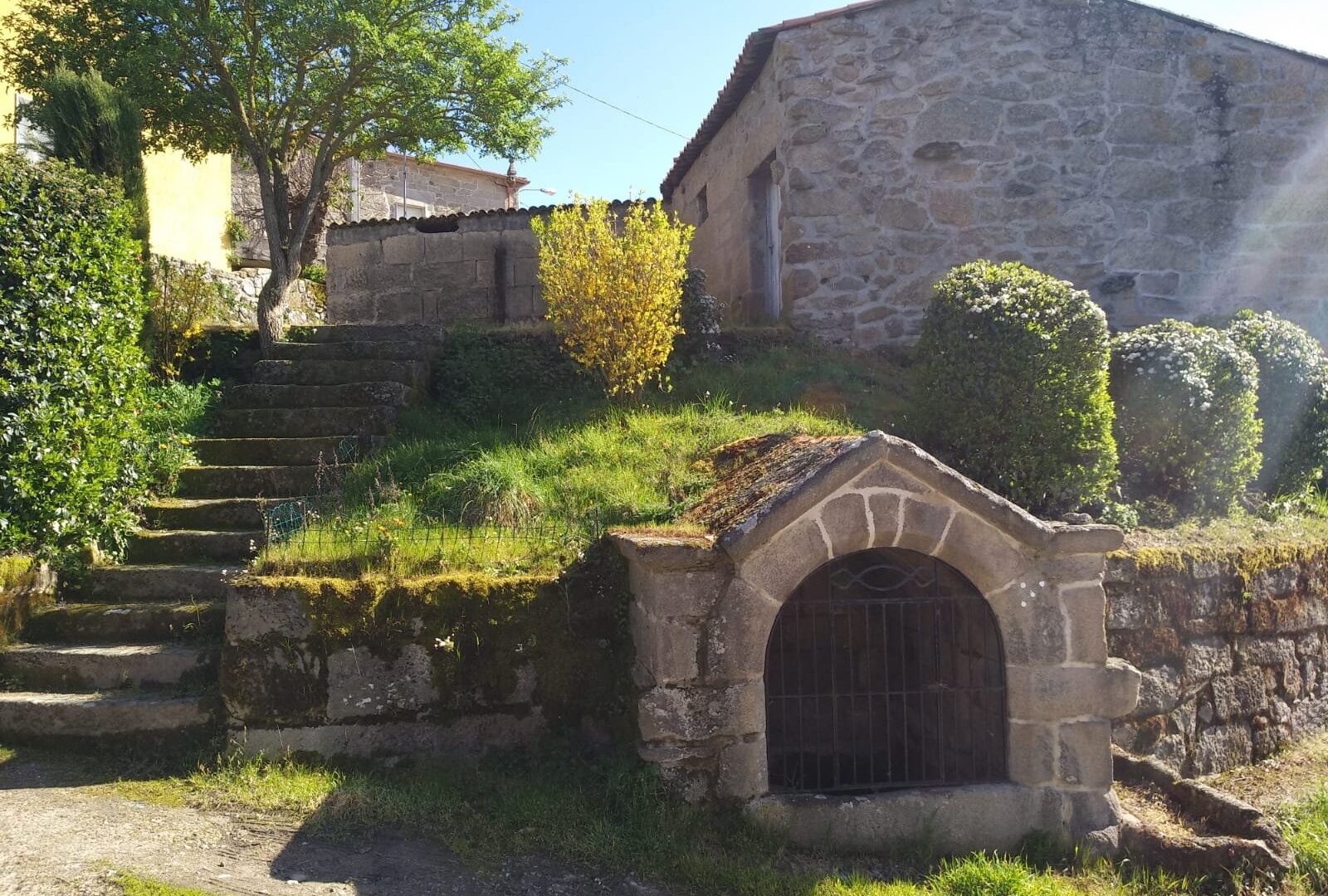
Xinzo’s ovens and the bread cycle
How bread was made in the traditional ovens of Xinzo de Limia, from the sourdough starter to home delivery in DKW vans and Land Rovers, and what the 1753 Ensenada Cadastre said about the town's three communal ovens.
Edelmiro Martínez Cerredelo recalls that A Limia, thanks to the wheat and rye it produced, always had a reputation as the granary of Galicia. In the past, the norm was to bake bread at home, in a private oven or, more often, in the communal oven of the parish; in households it was mostly rye bread [1].
How bread was made
- The baker puts the flour in the trough, shaping it like a volcano; in the centre he adds water, salt and the sourdough starter prepared beforehand.
- It is kneaded and left to rest covered with a cloth. Each re-kneading with its rest is called a tenda; the process takes two or three.
- The oven is heated with firewood or plant material that leaves no smell or taste. When done, the fire is put out by removing the embers and the oven is swept with a broom of broom-plant or bracken.
- The dough is divided by hand into portions the weight of the loaves; they are placed on a floured wooden peel and shaped, with a few cuts on top.
- It is put into the oven in several stages, redistributing the loaves to keep them away from the heat source. The oven is closed and baked for two hours, opening it from time to time to check.
- They are taken out with a peel and left to mature on wooden shelves. The result is a tender, spongy bread that stayed fresh for several days [1].
In the traditional wood-fired ovens that remain, from dawn until well into the afternoon, the street and surroundings "breathe a scent that transports" you to the flavours of bread from times past [1].
Selling the bread
In the past, in towns bread was bought directly at the ovens; later shops opened in several parts of the town and home delivery began, first in trailers and cargo tricycles, then in motor-tricycles and, in the 1960s, in vans, mostly of the DKW make, through the villages of A Limia, and finally in Land Rover off-road vehicles that reached the most isolated hamlets. Home delivery meant the custom of baking bread at home or in communal ovens was lost; not long ago many villages restored those ovens and in some they hold bakes of bread, empanadas and roast lamb and kid, mainly at patron-saint festivals [1].
Xinzo’s ovens
Cerredelo did not find the baker’s trade as a commercial activity until the 20th century. The Cadastre of the Marquis of Ensenada (1753) does not record the trade, but does record the three communal ovens in the parish of Santa Mariña and the town of Xinzo [1].
Links
Sources
- Edelmiro Martínez Cerredelo, «Os fornos de Xinzo. O ciclo da elaboración e venda do pan», Historia de Xinzo, 06/06/2016. https://historiadexinzo.wordpress.com/2016/06/06/os-fornos-de-xinzo-o-ciclo-da-elaboracion-e-venda-do-pan/
You may also like
 A Limia, a district of OurenseAssociations and organisations of A LimiaAssociations and organisations of A Limia with an entry on this website: Civitas Limicorum, A Pantalla, the Board of the Museo da Limia,…
 A Limia, a district of OurenseEconomy of A LimiaThe economy of A Limia: the weight of the potato and livestock, the food industry, trade and construction, and Xinzo's industrial history…
Economy of A LimiaFlax in A Limia in the 18th and 19th centuries: land, weavers and tradeFlax growing and industry in A Limia according to the Ensenada Cadastre and Madoz: the best land, rotations, weavers by concello, the linen…
 Gasosas Berardo Méndez (Sandiás): 80 years of a Limia factoryGasosas Berardo Méndez, a soft-drinks factory in Sandiás founded in 1945, honoured in 2025 at the Museo da Limia: a talk, a collection of…
 Economy of A LimiaGastronomy of A LimiaThe gastronomy of A Limia: the potato as the star product and its designation, the bread from Xinzo's ovens, the pig slaughter and the…
 Economy of A LimiaPropasi, AGA and the Feculera of Xinzo: the potato industry in the 20th centuryThe history of Propasi and Agrícola Ganadera Antelana (seed potatoes, from the late 1940s) and the Feculera of Xinzo (starch, c.…
