

Hidatius of Limia, the Bishop of Chaves Who Wrote the Chronicle of His Age
Hidatius (Idacio) was born in A Limia, probably in or near Xinzo, in the late 4th century; he was Bishop of Chaves (Aquae Flaviae) and author of the Chronicle, the main source for Hispanic history between 418 and 468.
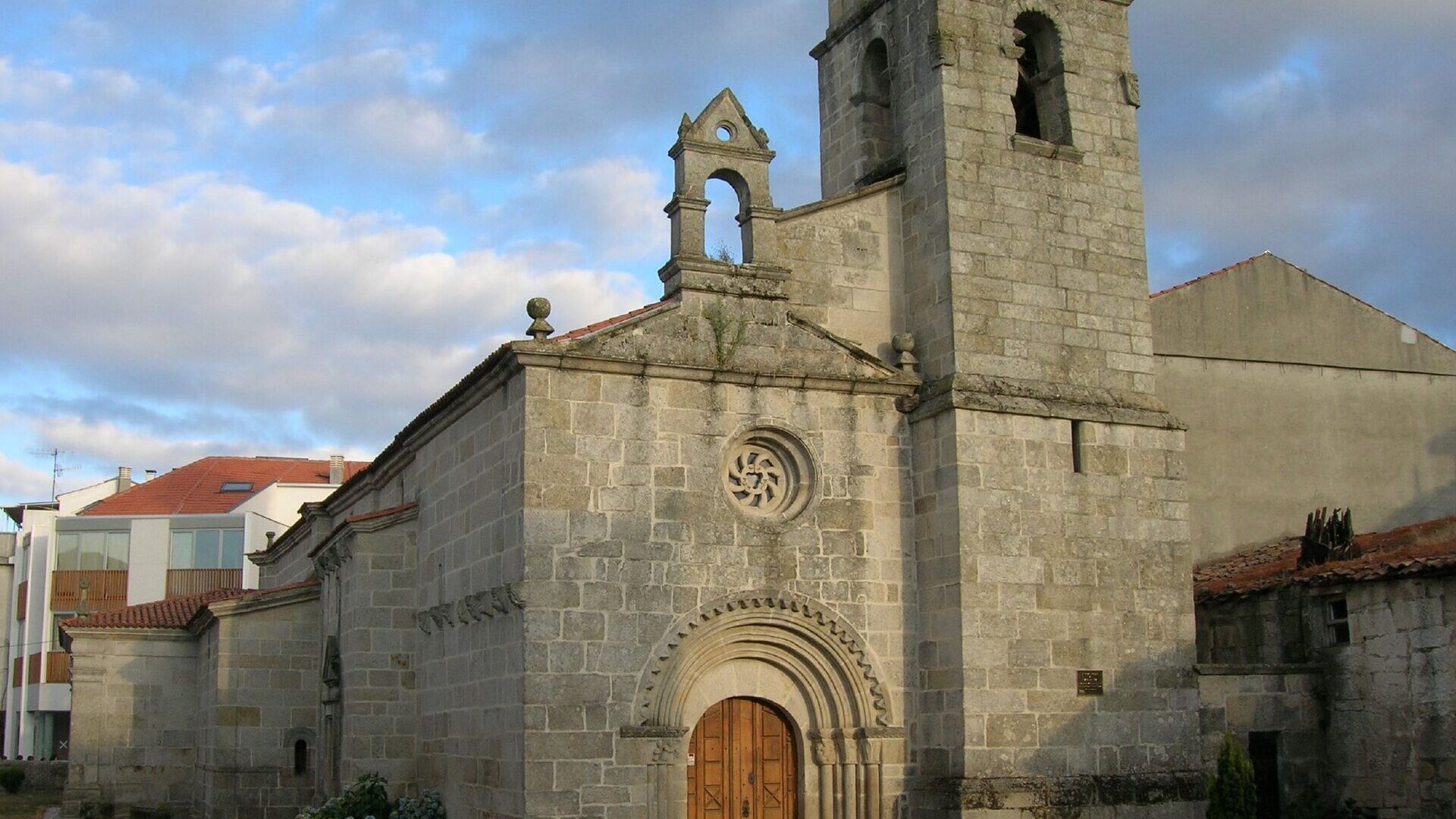
Hidatius (Spanish Idacio, Galician Hidacio; Hydatius Lemicensis, «the Limician») was born in the late 4th century in the Lemica civitas, the upper valley of the River Limia, and more precisely in or near Xinzo de Limia. He was Bishop of Chaves (Aquae Flaviae, Portugal) and wrote the Chronicle, which today is the main source for the history of Hispania between 418 and 468 [1]. The Praça do Peixe in Xinzo now carries his name as the Praza do Bispo Idacio de Limia.
A rich Christian family
The basic facts of his life were passed down by himself in the Chronicle [1]. He was born into a well-to-do family, possibly of curial origin and perhaps favoured by the inheritance of Theodosius the Great (died 395). He shared the traits of the Gallaecian nobility: a deeply rooted Christianity and pilgrimage to the holy places of the East, a fashion followed in the late 4th century by several women of the Imperial House [1].
For that reason, at little more than ten years old, Hidatius accompanied his parents to the Holy Land around 406 or 407, perhaps also to escape the usurpation of Constantine III. In Bethlehem he met St Jerome (died 419-420). He spent no more than three years in Palestine, but the journey marked him: it defined his clerical vocation, completed his Christian education and gave him some rudiments of Greek [1].
Between barbarians and plagues
He returned to Gallaecia around 410 and found a very different picture: in September 409 Hasding and Siling Vandals, Alans and Suevi had crossed the Pyrenees. The plundering, famine and bubonic plague of those years left a deep impression on him [1]. In 416 he was consecrated presbyter and eleven years later, in 427, bishop of the new Gallaecian diocese of Aquae Flaviae (Chaves), where his family must have had interests [1].
Bishops, with seats in well-defended centres, were the natural leaders of their communities in the face of the barbarians and the distant imperial authorities. The Chronicle itself is the best testimony to Hidatius’s political and ecclesiastical leadership. His life was shaped by the greater or lesser strength of the small Suevic «military monarchy» and by the interest of the imperial government at Ravenna in intervening in the north-west [1]. Four periods can be distinguished:
- Until 429, when the Hasding Vandals left for Africa: the Suevi were on the defensive and the Empire tried to restore its control. Hidatius took up the bishopric in this favourable context [1].
- The years 430-450: the Suevi settled in western Gallaecia (Braga, Lugo, Porto and Astorga) and, under Rechila and Rechiar, extended their influence as far as Baetica. Hidatius narrates the relations between Suevi and the Gallaeco-Roman aristocracies and played a prominent part in seeking formulas for coexistence that would protect the aristocracy and the Catholic Church. In 431 he led an embassy to the Gauls to ask the general Aëtius for military aid, without success [1].
- 450-456: the victory over Attila at the Catalaunian Plains (20 June 451) raised hopes of an imperial restoration, undone by the murder of Aëtius (454) and of the emperor Valentinian III (455). When the Goth Theodoric II destroyed the Suevic monarchy of the Catholic Rechiar on the Órbigo (October 456) and occupied Braga, Hidatius did not believe he did so in the name of the Empire [1].
- 457-469: chaotic years. Between August and November 460 Hidatius was a prisoner of Frumarius, one of the two Suevic petty kings, with the collaboration of Gallaeco-Romans opposed to imperial restoration. In 464 Remismund reunified the Suevic monarchy as a vassal of the Goths, converted to Arianism and sent Arian bishops, which pained Hidatius especially. In his last five years he lived with growing apocalyptic anxiety [1].
The Chronicle
Hidatius wanted his work to continue that of St Jerome, in the tradition of the Christian universal historiography of Eusebius of Caesarea, with precise chronology based on the Olympiads and on the Roman emperors [1]. Of that intention he could fulfil only part: from 440 the news is reduced to Hispania and southern Gaul and, in the last decade, almost to Gallaecia. Despite its deficiencies and errors, it is the main source for Hispanic history from 418 to 468, and later historiography was based on it. He may also have been the author of the Fasti Hydatiani, a list of consuls from 379 to 427 [1].
The Chronicle carefully notes any portent that might be a premonition. It ends with a cryptic allusion to the phoenix, on the fourth centenary of the destruction of the Second Temple in Jerusalem (468) [1]. Hidatius, very old, died shortly afterwards, in 469, convinced that the end of the world was imminent [1].
Further reading
The annotated edition A crónica de Idacio de Limia, bispo de Chaves (José Antonio López Silva, Civitas Limicorum, 2004) and the Cronicón de Idacio (Marcelo Macías, 1906) [1].
Links
- Parish: Xinzo de Limia
- Municipality: Xinzo de Limia
- People of A Limia
- Civitas Limicorum
- Marco Flavio Sabino, another Limician of the Roman period
- History of A Limia
Sources
- Luis Agustín García Moreno, «Hidacio», Diccionario Biográfico electrónico of the Real Academia de la Historia, reproduced in Historia de Xinzo, 13/04/2023. https://historiadexinzo.wordpress.com/2023/04/13/hidacio-hidacio-lemicensis-lemica-civitas-a-limia-ourense-s-iv-chaves-portugal-c-469-obispo-de-chaves-aquae-flaviae-e-historiador/
- «idacio de limia». http://www.xinzodelimia.eu:80/idacio_da_limia.htm
- «Idacio de Limia, único obispo conocido de Chaves e historiador de los siglos IV y V». https://vialethes.es/tercer-escritor-hispano-idacio-limia
- «Idácio de Chaves — Introdución». https://pt.wikipedia.org/wiki/Idácio_de_Chaves
You may also like
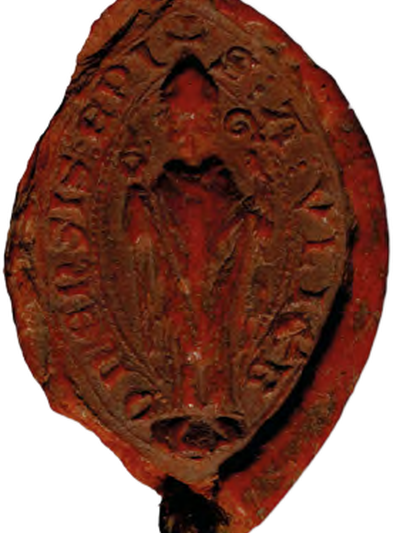 Notable personAiras Vasques, Bishop of Lisbon Born in Xinzo de Limia (13th Century)Airas Vasques (Xinzo de Limia, c. 1170 – Lisbon, 1258) was Bishop of Lisbon from c. 1241, archdeacon of Santiago, founder of the collegiate…
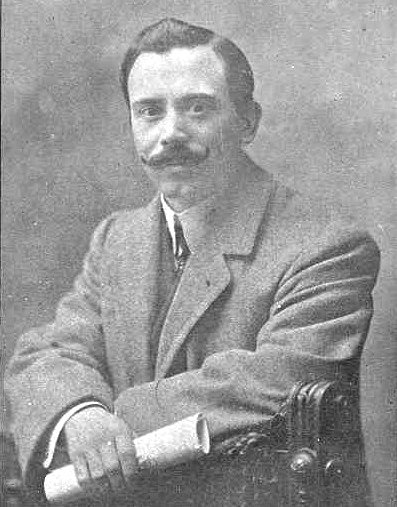 Notable personAlfredo Nan de Allariz, Poet and Playwright from Xinzo in HavanaAlfredo Fernández, «Nan de Allariz», was born in Xinzo de Limia (1874 or 1875) and died in Madrid in 1927; poet, playwright and composer,…
 Notable personÁlvaro de Oca y Zúñiga, the Jurist from Celme Who Became Viceroy of NavarreÁlvaro de Oca y Zúñiga (Celme, Rairiz de Veiga, 16th century – Pamplona, 1638) was a professor at Salamanca, judge, regent of the Royal…
 Notable personAna Prieto, pharmacist and MP born in Xinzo de LimiaAna Prieto Nieto (Xinzo de Limia, 1965) is a pharmacist, was president of the Lugo Pharmacists' Association (2009-2015), deputy mayor of…
Notable personÁngel Cocho Ferrero, Headmaster of the Colexio Santa Mariña in XinzoÁngel Cocho Ferrero (A Coruña, 1914) ran the Colexio Santa Mariña in Xinzo from 1953, the town's educational landmark of the 1950s–70s. In…
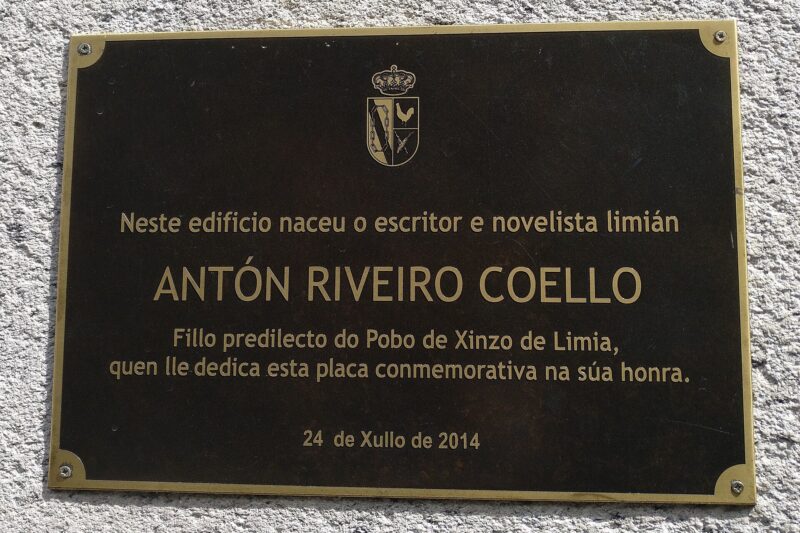 Notable personAntón Riveiro Coello, Writer from Xinzo de LimiaAntón Riveiro Coello (Xinzo de Limia, 1964) is one of the most translated Galician novelists: author of «As rulas de Bakunin», «Laura no…
