

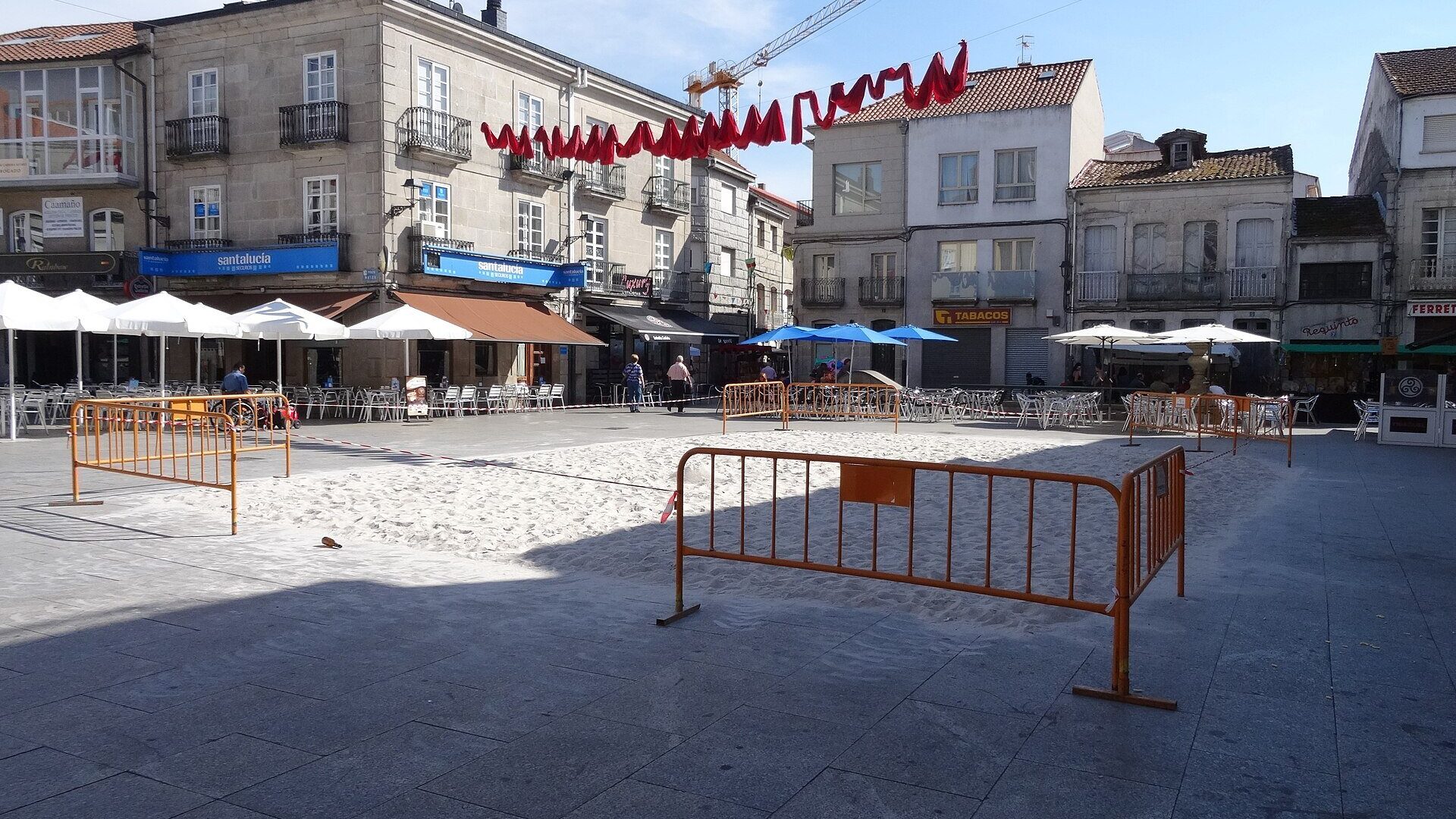
The traditional fairs of A Limia
The traditional fairs of A Limia and the Arnoia valley: their origin in a Civitas Limicorum of barter, the fame of Xinzo's oxen, the fairs of each concello and their role today as a social and commercial meeting place.
According to the 25 Motivos tourist network, fairs are an essential part of rural Ourense’s identity and have been held in the Limia-Arnoia territory for centuries [1]. This source links the oldest ones to the Civitas Limicorum, a meeting and barter place near Xinzo de Limia that predates the arrival of Rome, according to the same source [1].
Xinzo, centre of the livestock fair
In the Middle Ages and the early modern period fairs became the great economic and social event of each comarca, especially on the plain of A Limia, and stood out for their livestock markets: oxen, cows and horses. Xinzo was famous for the quality of its cattle, hence the saying "Bois… aqueles bois de Xinzo!" ("Oxen… those oxen of Xinzo!"). The source states that Xinzo came to concentrate up to 80 % of the cattle and horse trade of the surrounding area, thanks to its position on the roads; as early as the 18th century it attracted dealers from other parts of Ourense, Galicia and Castile [1]. The Xinzo fair is held on the 14th and 27th of each month [1].
The fairs by concello
The source gives these dates, following the list of the GDR Limia-Arnoia [1]:
- Xinzo de Limia: the 14th and 27th.
- Rairiz de Veiga: the 12th.
- Trasmiras: the 17th.
- Vilar de Santos: the second Sunday.
- Outside A Limia, in the Arnoia valley and Baixa Limia: Celanova, every Thursday since the late 12th century; Allariz, the 1st and 15th; Bande, the 13th and 28th, with the Mercado do Xurés on the first Sunday of the month; Maceda, the 4th and 20th; Xunqueira de Ambía, the 24th.
The fair today
With the weight of livestock much reduced, the fair has become above all a meeting place: local producers sell surplus garden produce, cheeses, honey and cured meats, there are stalls with clothes, shoes and tools, and the day ends with a shared meal, traditionally pulpo á feira (fair-style octopus) and carne ao caldeiro (boiled meat) [1]. On cattle dealing and Xinzo’s fair traders, see fair traders, cinzarradas and proxy weddings.
Links
Sources
- «As feiras tradicionais na Limia-Arnoia», 25 Motivos. http://25motivos.gal/feiras-tradicionais/
You may also like
 A Limia, a district of OurenseAssociations and organisations of A LimiaAssociations and organisations of A Limia with an entry on this website: Civitas Limicorum, A Pantalla, the Board of the Museo da Limia,…
 A Limia, a district of OurenseEconomy of A LimiaThe economy of A Limia: the weight of the potato and livestock, the food industry, trade and construction, and Xinzo's industrial history…
Economy of A LimiaFlax in A Limia in the 18th and 19th centuries: land, weavers and tradeFlax growing and industry in A Limia according to the Ensenada Cadastre and Madoz: the best land, rotations, weavers by concello, the linen…
 Gasosas Berardo Méndez (Sandiás): 80 years of a Limia factoryGasosas Berardo Méndez, a soft-drinks factory in Sandiás founded in 1945, honoured in 2025 at the Museo da Limia: a talk, a collection of…
 Economy of A LimiaGastronomy of A LimiaThe gastronomy of A Limia: the potato as the star product and its designation, the bread from Xinzo's ovens, the pig slaughter and the…
 Economy of A LimiaPropasi, AGA and the Feculera of Xinzo: the potato industry in the 20th centuryThe history of Propasi and Agrícola Ganadera Antelana (seed potatoes, from the late 1940s) and the Feculera of Xinzo (starch, c.…
