

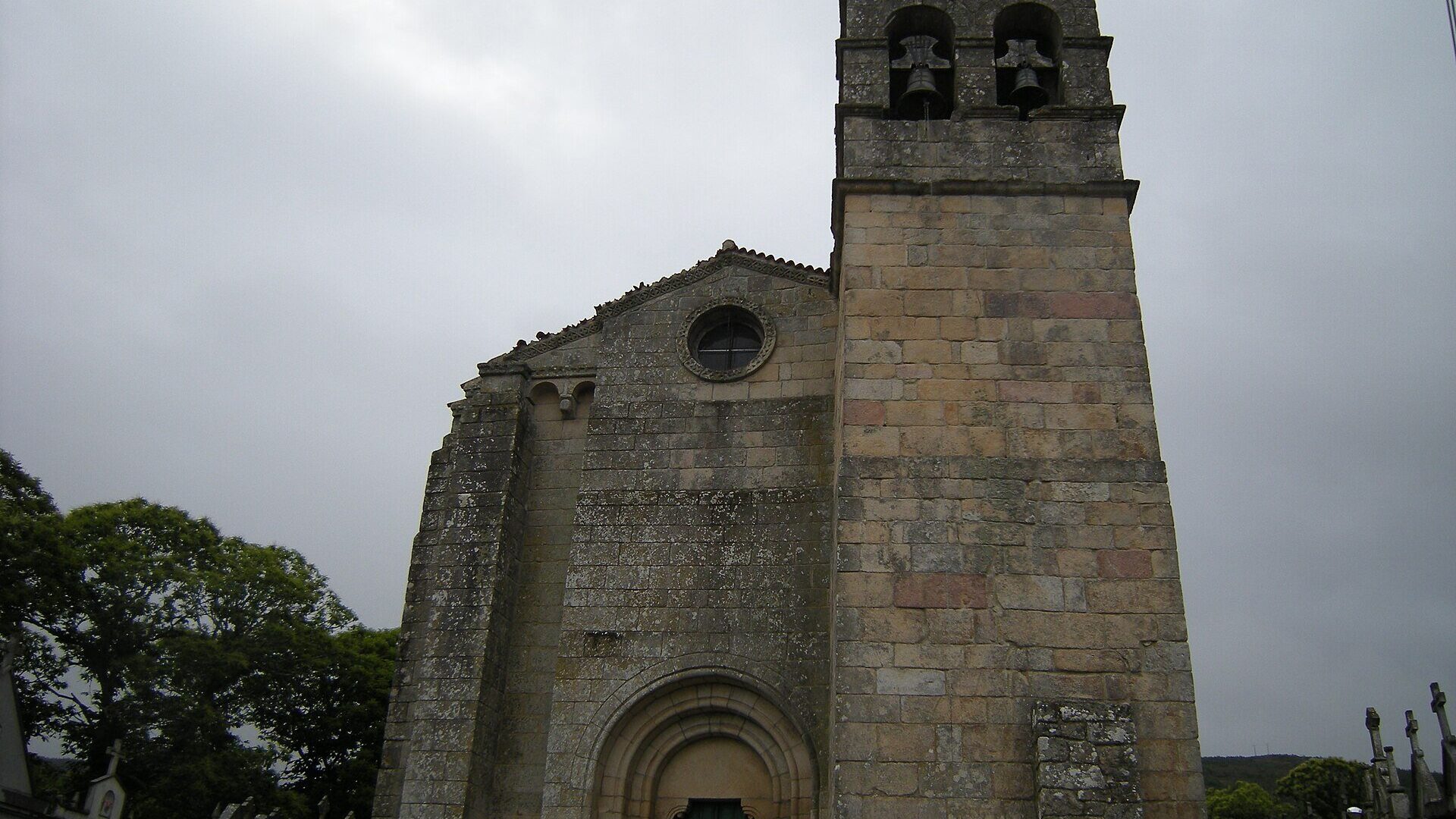
Juan Campos Rodríguez (1907-1995), Redemptorist Missionary in China and Singapore
Juan Campos Rodríguez (Pazos, Codosedo, Sarreaus, 1907 – Singapore, 1995) was a Redemptorist missionary in Sichuan from 1934, translator into Chinese and English and author of the memoir «Evangelio tras la Gran Muralla».
- Born
- Pazos (Codosedo, Sarreaus), 1907
- Died
- Singapore, 1995
- Congregation
- Redemptorists
- Postings
- Sichuan (China), Macao, Hong Kong, Singapore and Malaysia
- Work
- Evangelio tras la Gran Muralla (1987)
Juan Campos Rodríguez was born in Pazos, in the parish of Codosedo (municipality of Sarreaus), on 11 July 1907, and died in Singapore on 9 December 1995, aged 88. He was a priest of the Congregation of the Most Holy Redeemer (Redemptorists), a missionary, writer and translator [1].
Life
He had a younger brother, José Campos Rodríguez, also a Redemptorist priest and a missionary in Mexico. He joined the congregation, founded in the 18th century by St Alphonsus Liguori to evangelise the poorest, and was ordained in 1932, assigned to the Redemptorist mission in China, where the order had arrived in 1928 [1].
In 1934 he settled in the province of Sichuan, mainly in Sichang (apostolic vicariate of Ningyuanfu), capital of the Nosu country, in the south-west of the province. He devoted himself to popular preaching, catechesis, care of the sick and fostering local vocations, learned the Chinese language and culture and continued his work during the Japanese invasion. He described the years 1945 to 1948 as a time of «violent persecution». After the Communist Revolution triumphed in 1949 he fled to Macao and then to Hong Kong, where he ministered to Chinese refugees. In 1955, in Macao, he founded with Father Eusebio Arnáiz the Perpetual Help Anglo-Chinese school [1].
In October 1967 he moved to Singapore, where the Redemptorists had opened a new mission, and occasionally helped the Malaysian one, including the founding of a church in Ipoh Garden, whose first public Mass was on 9 April 1972. He worked at the church of St Alphonsus in Singapore until his death [1].
Work and legacy
He spoke several languages. He translated into Mandarin The Life of St Alphonsus and the saint’s complete ascetical works, and into English Raimundo Tellería’s Life of St Gerard, three volumes of Our Lady of Perpetual Help and Manuel Gómez Ríos’s The Poor Are Evangelised. He wrote his memoirs, Evangelio tras la Gran Muralla: memorias de un misionero de China, published by Editorial San Pablo in 1987 [1].
He was one of the many Spanish missionaries who devoted their lives to the evangelisation of Asia; see Sarreaus and Codosedo.
Frequently asked questions
Where was Juan Campos born? In Pazos, in the parish of Codosedo, in Sarreaus [1].
Where did he work as a missionary? In Sichuan (China), Macao, Hong Kong, Singapore and Malaysia [1].
Links
Sources
- «Juan Campos Rodríguez», Spanish Wikipedia (CC BY-SA 4.0). https://es.wikipedia.org/wiki/Juan_Campos_Rodr%C3%ADguez
You may also like
 Notable personOlimpia Valencia López, the First Woman in Galicia to Graduate in MedicineBorn in Baltar in 1898, Olimpia Valencia was the first Galician woman to graduate in Medicine (1925) and in 1928 opened a general medicine…
 People of A LimiaHistorical Figures of A Limia: A TimelineTimeline of historical figures linked to A Limia, from Roman times to the 20th century: Limicians of Rome, Hidatius, counts, medieval…
People of A LimiaPoliticians and Public Officials of A LimiaDirectory of people from A Limia who held public office: Restoration-era deputies for the Xinzo district, Galician parliamentarians,…
 Notable personInés de Castro, the Queen Tradition Says Was Born in A LimiaInés de Castro (c. 1320 – Coimbra, 1355), natural daughter of a Galician nobleman, loved Prince Pedro of Portugal, was executed on Afonso…
 Notable personMartín de Ginzo, the Minstrel of Xinzo de Limia Who Sang the PilgrimageMartín de Ginzo was a 13th-century Galician minstrel, born in Xinzo de Limia, of whom eight cantigas de amigo survive, seven of them…
Notable personMarcus Flavius Sabinus, the Limician Who Became a Priest of the Imperial CultMarcus Flavius Sabinus, of the Civitas Limicorum, was duumvir of his city and provincial flamen of Hispania Citerior in the 2nd century; he…
