

Martín de Ginzo, the Minstrel of Xinzo de Limia Who Sang the Pilgrimage
Martín de Ginzo was a 13th-century Galician minstrel, born in Xinzo de Limia, of whom eight cantigas de amigo survive, seven of them pilgrimage songs, in the Italian songbooks.
Martín de Ginzo was a 13th-century Galician minstrel born in Xinzo de Limia. He was active during the reign of Ferdinand III or Alfonso X, and the Italian apographs (the songbooks of the National Library of Lisbon and the Vatican) preserved eight cantigas de amigo by him: seven are pilgrimage songs and the eighth is hard to classify [1][2]. The toponymic surname preserves the medieval form of the place of origin, as it appears in the songbooks.
What cantigas de amigo are
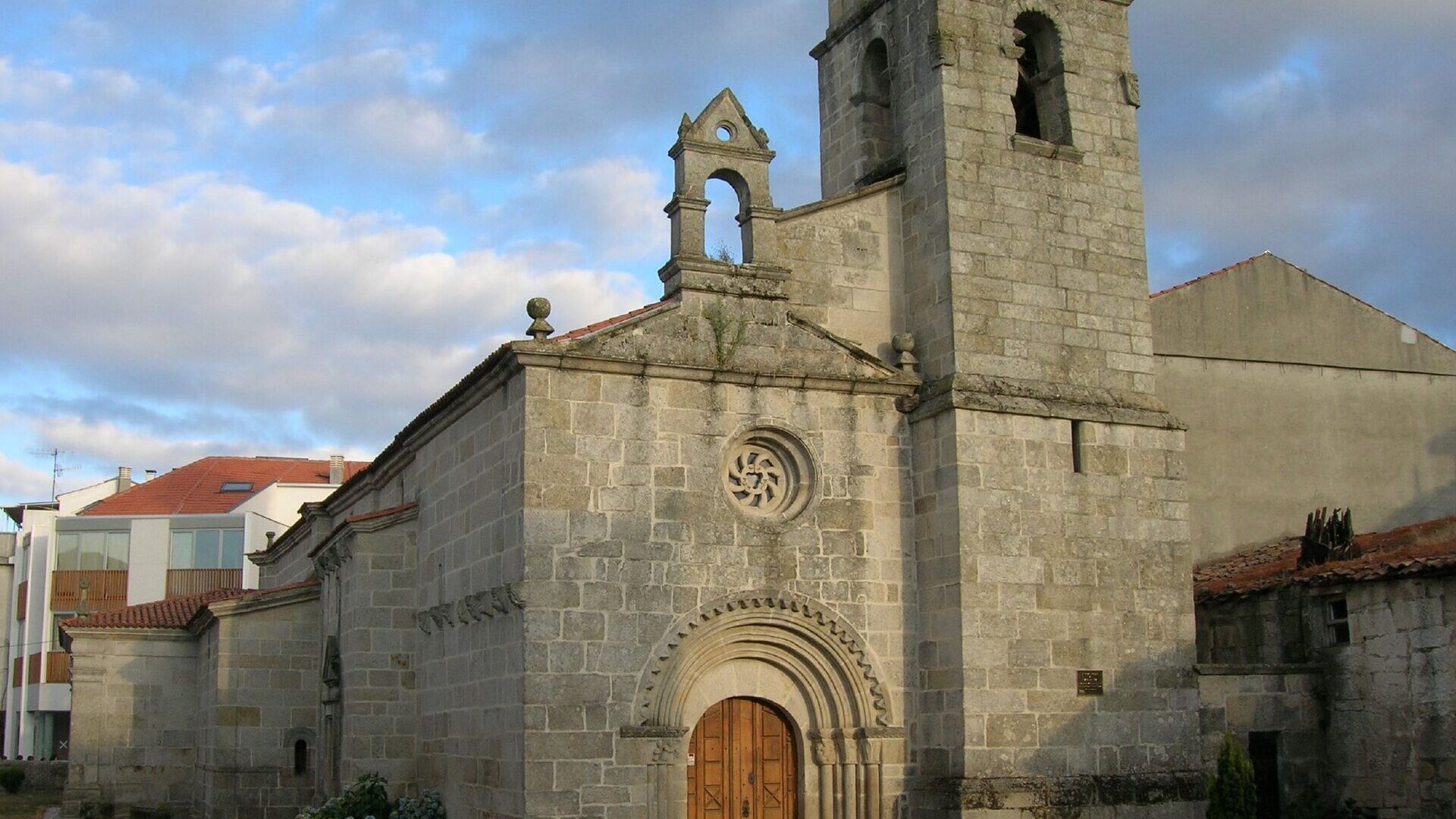
In cantigas de amigo a female voice, the girl in love, speaks to her absent beloved, to her mother, to her friends or to the elements of nature. Those «of pilgrimage» set the lovers’ meeting at the festival of a hermitage or shrine, where the festivities allowed outings and encounters; here the hermitage is that of Santa Cecilia [1].
Four cantigas
The archive of the regional website xinzodelimia.eu reproduced four texts by Martín de Ginzo. We transcribe them as they stood there, in medieval spelling [1].
«A do mui bon parecer»
A do mui bon parecer mandou lo adufe tanger. Louçana, d’amores moir’eu. A do mui bon semelhar mandou lo adufe soar. Louçana, d’amores moir’eu. Mandou lo adufe tanger e non lhi davan lezer. Louçana, d’amores moir’eu. Mandou lo adufe sõar e non lhi davan vagar. Louçana, d’amores moir’eu.
(The adufe is a square tambourine, an instrument played by women at festivals.)
«Ai vertudes de Santa Cecilia»
Ai vertudes de Santa Cecilia, que sanhudo que se foi un día o meu amigu’, e ten-se por morto, e, se s’assanha, non faz i torto o meu amigu’, e ten-se por morto. Ai vertudes de santa ermida, con gran pesar fez aquesta ida o meu amigu’, e ten-se por morto, e, se s’assanha, non faz i torto o meu amigu’, e ten-se por morto.
«Como vivo coitada, madre, por meu amigo»
Como vivo coitada, madre, por meu amigo, ca m’enviou mandado que se vai no ferido, e por el vivo coitada! Como vivo coitada, madre, por meu amado, ca m’enviou mandado que se vai no fossado, e por el vivo coitada! Ca m’enviou mandado que se vai no ferido, eu a Santa Cecilia de coraçón o digo, e por el vivo coitada! Ca m’enviou mandado que se vai no fossado, eu a Santa Cecilia de coraçón o falo, e por el vivo coitada!
«Non mi digades, madre, mal e irei»
Non mi digades, madre, mal e irei veé-lo sen verdade que namorei na ermida do soveral, u m’el fez muitas vezes coitad’estar, na ermida do soveral. Non mi digades, madre, mal, se eu for veé-lo sen verdad’e o mentidor na ermida do soveral, u m’el fez muitas vezes coitad’estar, na ermida do soveral. Se el non ven i, madre, sei que farei: el será sen verdad’e eu morrerei na ermida do soveral, u m’el fez muitas vezes coitad’estar, na ermida do soveral. Rogu’eu Santa Cecilia e Nostro Senhor que ach’hoj’eu i, madr’, o meu traedor na ermida do soveral, u m’el fez muitas vezes coitad’estar, na ermida do soveral.
«Treides, ai mia madr’, en romaría»
Treides, ai mia madr’, en romaría orar u chaman Santa Cecilia. E, louçana irei, ca ja i ést’o que namorei, e, louçana, irei. E treides migo, madre, de grado, ca meu amigu’é por mí coitado. E, louçana, irei, ca ja i ést’o que namorei, e, louçana, irei. Orar u chaman Santa Cecilia, pois m’aduss’o que eu ben quería. E, louçana, irei, ca ja i ést’o que namorei, e, louçana, irei. Ca meu amigu’é por mí coitado, e, pois, eu non farei seu mandado? E, louçana, irei, ca ja i ést’o que namorei, e, louçana, irei.
A poet for A Limia
Martín de Ginzo is, as far as is known, the first named poet linked to Xinzo de Limia. His cantigas do not speak of A Limia through its landscape, but through the world of hermitages and pilgrimages that still defines the area today [1].
Links
Sources
- «Martín de Ginzo», xinzodelimia.eu (Wayback capture), with the text of the cantigas from the medieval songbooks. http://www.xinzodelimia.eu/martin_de_ginzo.htm
- Cancioneiro da Vaticana and Cancioneiro da Biblioteca Nacional (Lisbon), Italian apographs cited by the source. http://pt.wikipedia.org/wiki/Cancioneiro_da_Vaticana
You may also like
 Notable personOlimpia Valencia López, the First Woman in Galicia to Graduate in MedicineBorn in Baltar in 1898, Olimpia Valencia was the first Galician woman to graduate in Medicine (1925) and in 1928 opened a general medicine…
 People of A LimiaHistorical Figures of A Limia: A TimelineTimeline of historical figures linked to A Limia, from Roman times to the 20th century: Limicians of Rome, Hidatius, counts, medieval…
People of A LimiaPoliticians and Public Officials of A LimiaDirectory of people from A Limia who held public office: Restoration-era deputies for the Xinzo district, Galician parliamentarians,…
 Notable personInés de Castro, the Queen Tradition Says Was Born in A LimiaInés de Castro (c. 1320 – Coimbra, 1355), natural daughter of a Galician nobleman, loved Prince Pedro of Portugal, was executed on Afonso…
Notable personMarcus Flavius Sabinus, the Limician Who Became a Priest of the Imperial CultMarcus Flavius Sabinus, of the Civitas Limicorum, was duumvir of his city and provincial flamen of Hispania Citerior in the 2nd century; he…
Notable personJosé Seguín, Baroque Sculptor of Rairiz de VeigaJosé Seguín (Rairiz de Veiga, 17th century – 1751) was a Baroque master of architecture and sculpture who restored and carved altarpieces…
