


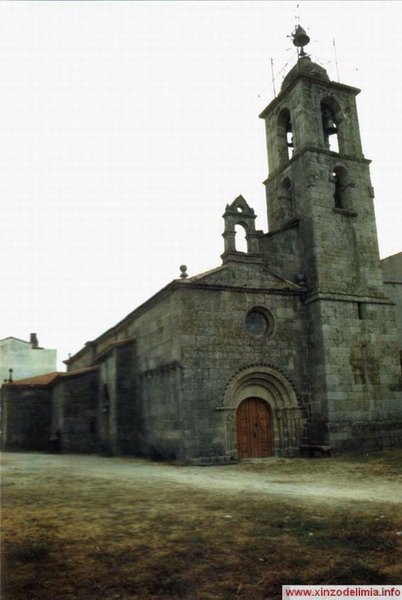
A tour of the historic heritage of the municipality of Xinzo de Limia
A summary of the historic heritage of Xinzo de Limia: the Romanesque old church, the churches of Novás and Morgade, Torre da Pena, the Bon Xesús convent, Mosteiro de Ribeira and the Vía de la Plata branch of the Way of St James.
- Dominant style
- Romanesque (12th–13th centuries)
- Old church of Xinzo
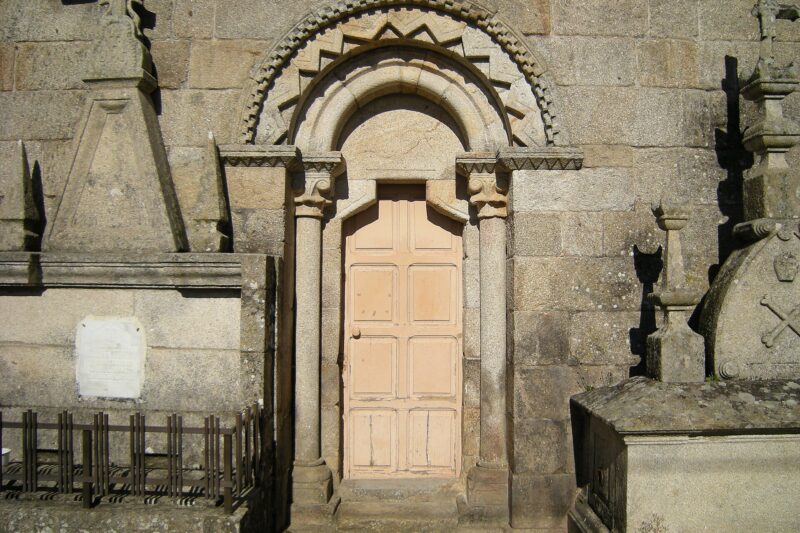
- Façade with a three-archivolt portal (12th century)
- Way of St James
- Vía de la Plata, branch via Verín, A Estivada, Xinzo and Sandiás
The municipality of Xinzo de Limia preserves a historic heritage dominated by rural Romanesque. The regional website xinzodelimia.eu, in its culture and monuments section, put together a short tour in 2009 that still serves as a reading guide to the territory: what follows sets out what it said and how it connects with what we know now [1][2].
The old church of Xinzo
Of the original 12th-century Romanesque church only the façade, part of the plan and a stretch of the north wall survive. The portal is a plain arch surrounded by three archivolts on columns with historiated capitals, and around them runs a band of nailhead ornament, very typical of the churches of A Limia. The website recalled that, a few years earlier, excavations and refurbishment work had found several frescoes inside, and that, according to some historians, the Civitas Limicorum would have stood on the same spot as the church today [1]. The later history of the church, from abandonment to rescue, is in As igrexas de Xinzo; on the civitas debate, see A Civitas Limicorum.
Other Romanesque churches
The website singles out as Romanesque the churches of Novás, in the south-east corner of the municipality, and of Morgade, on the road to Vilar de Barrio and Maceda, which keeps two interesting Romanesque doors. It also cites other churches with Romanesque elements: San Pedro de Boado, Santa María and San Pedro de Laroá, Santo Tomé de Morgade, San Pedro de Pena, San Xoán de Oleiros and Santa Mariña de Xinzo, and recalls that the municipality has plenty of cruceiros and petos de ánimas [2]. See the parish pages for Novás and Morgade.
The Torre da Pena
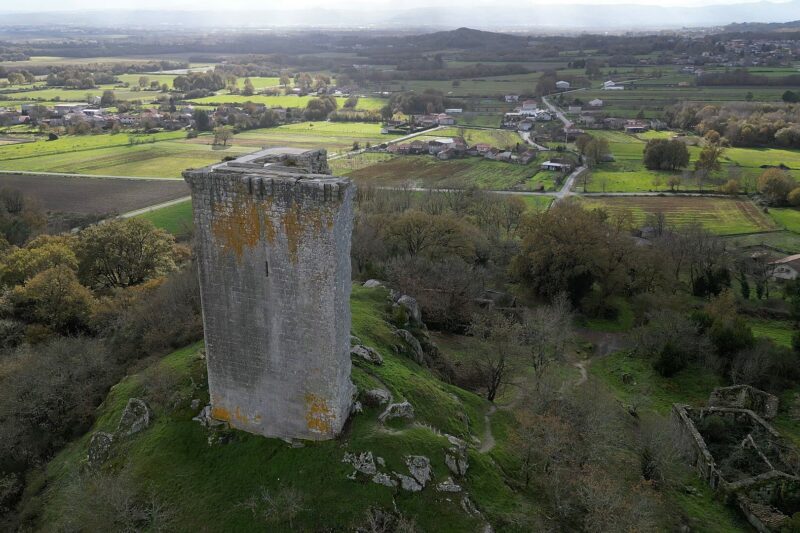
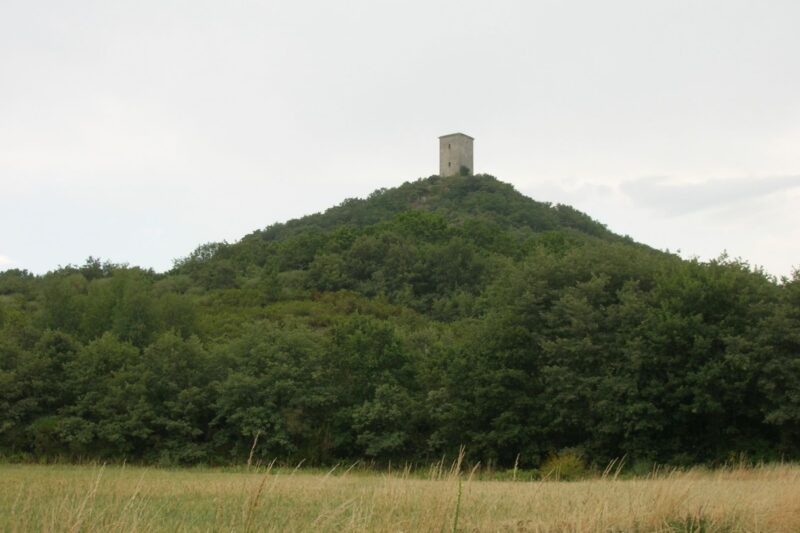
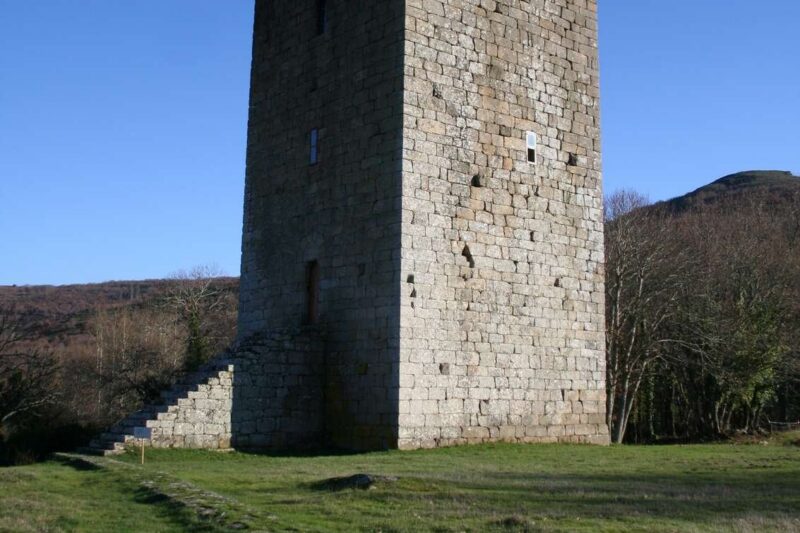
On the edge of the Lagoa de Antela, on the road to Maceda, stands the Torre da Pena, with a high door and crowned with corbels, from which there is a broad view of A Limia [2]. More detail in Torre da Pena.
The Bon Xesús convent of Trandeiras
To the north, in Trandeiras, is the building of the Franciscan convent of Bon Xesús, from the late Middle Ages, with its 16th-century church. The website says that the convent was founded by Alonso Piña at the beginning of the 19th century and became famous for the welcome it gave to French priests who emigrated during the Revolution, and that after Mendizábal’s disentailment it was left isolated and plundered, like many others [2]. See Convento do Bon Xesús da Limia.
The Mosteiro de Ribeira
In the south-west of the municipality is another example of Romanesque architecture, the Benedictine house of Mosteiro de Ribeira, which became a priory of Celanova, where Padre Sarmiento found Roman tablets dedicated to individuals of the Quirina tribe [2]. Page at Mosteiro de Ribeira.
Nine churches with interpretive panels
In October 2018 the Concello presented the information panels installed, with the Axencia de Turismo de Galicia, at nine medieval churches in the municipality, all of at least Romanesque origin: Santa Mariña de Xinzo, San Tomé de Morgade, San Pedro de Boado, Santo André de Piñeira Seca, San Xoán de Guntimil, San Xoán de Seoane de Oleiros, San Nicolau de Novás, Santa María de Laroá and San Pedro de Solbeira. The work included historical and field documentation, review of the walls to identify pre-Baroque phases and recording of the intangible culture associated with the churches, because they previously lacked interpretive infrastructure for visitors [3].
The Way of St James
The same source places a pilgrim route in the municipality: coming from Zamora along the Vía de la Plata, it forks at A Gudiña and one of the recognised alternatives continues via Verín, A Estivada, Xinzo, Sandiás, Allariz, Xunqueira de Ambía and San Cibrao das Viñas to Ourense [2].
Landscape
The text ends with the Lagoa de Antela, which despite being drained remains a stronghold of great ecological value, and with the upland parts of the municipality, which offer a panorama of the whole Limia plain [2]. See Charcas e aves da Lagoa de Antela.
Frequently asked questions
What style dominates Xinzo’s heritage? Rural Romanesque, with plain-arch portals and three archivolts [1][2].
Does the Way of St James pass through Xinzo? According to the regional website, an alternative of the Vía de la Plata, forking at A Gudiña, passes through Verín, A Estivada, Xinzo and Sandiás [2].
Links
Sources
- «Monumentos históricos de Xinzo de Limia», xinzodelimia.eu (web archive). http://www.xinzodelimia.eu:80/monumentos.htm
- «Cultura e monumentos», xinzodelimia.eu (web archive). http://www.xinzodelimia.eu:80/cultura_e_monumentos.htm
- Concello de Xinzo de Limia, «Presentación dos paneis informativos nas nove igrexas románicas do Concello de Xinzo», 29/10/2018. http://www.xinzodelimia.es:80/articulo/cultura/presentacion-paneis-informativos-nas-igrexas-romanicas-do-concello-xinzo/20181029192353002098.html
You may also like
 Heritage of A Limia: towers, convents, mills and ethnographic villagesEthnographic heritage of Rairiz de Veiga: Congostro, mills, ovens and springsThe ethnographic heritage of Rairiz de Veiga: the restored village of Congostro, the San Miguel mills route, 17 mills, 5 communal ovens and…
 Heritage of A Limia: towers, convents, mills and ethnographic villagesXinzo de Limia in a day: a route through heritage, water and the lagoonA suggested one-day visit to Xinzo de Limia: Museo Galego do Entroido, the church and square of the town, Torre da Pena, the Bon Xesús…
 Heritage of A Limia: towers, convents, mills and ethnographic villagesMills and ethnographic heritage of Calvos de RandínCalvos de Randín has 18 mills catalogued in Galicia Nomeada, plus the Oratorio, tied to the rivers and streams of the Salas valley and the…
 Heritage of A Limia: towers, convents, mills and ethnographic villagesThe Torre do Castro of Sandiás: history, visits and activitiesThe Torre do Castro, in Sandiás, is a 12th-century castle torn down by the Irmandiños in 1467 and now consolidated: its history, the 2024…
 Heritage of A Limia: towers, convents, mills and ethnographic villagesThe Torre da Pena (Portela): history of a fortress of A LimiaThe Torre da Pena or Portela tower, in Xinzo de Limia, is a 14th-century military tower and a Bien de Interés Cultural since 1994: the…
 Heritage of A Limia: towers, convents, mills and ethnographic villagesThe Torre da Forxa (Porqueira): castle, monastery and IrmandiñosThe Torre da Forxa, also called de Fírbeda or de Porqueira, is what remains of a 12th-century castle: ceded to the bishopric of Ourense in…
