


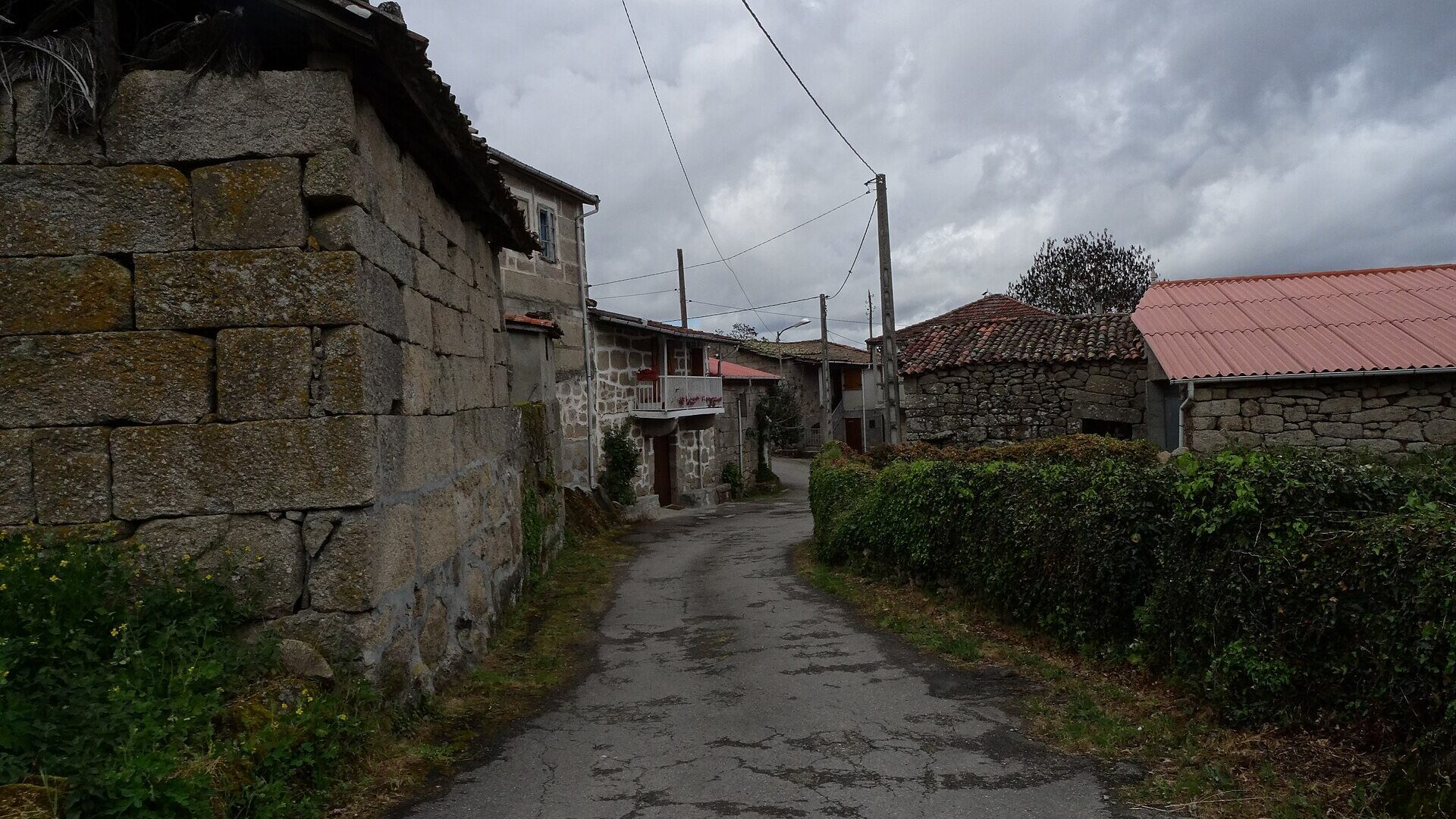
Stable doors: latches and cancelóns of A Forxa and As Pegas
The fastening systems of livestock stable doors in A Forxa (Porqueira), grouped by bolt and handle, and the cancelóns of As Pegas (Sandiás), the half-door that ventilates the stable and serves for chatting.
In traditional houses of A Limia the entrance is usually through the livestock stable door, on the ground floor, through which the cart also enters and leaves. Xosé "Pepe" Calleja López studied in As tradicións da Limia two elements of those doors: the pechos (latches) of A Forxa (Porqueira) and the cancelóns of As Pegas (Sandiás).
The pechos of A Forxa
In A Forxa there are still traditional houses, though many are abandoned and some have fallen: water enters through the roof, the wood rots and then the floors until the walls cannot hold. The stable doors have two leaves and are closed with "pechos", usually wooden with a bolt (the bolt is what people call the pecho). The simple wooden latch was what said most about the neighbours’ trust; later the times brought distrust and the war fear, and they were reinforced with metal, bars, bolts, keys and padlocks [1].
The wooden pechos of A Forxa fall into three groups [1]:
- Group A: a latch with a fastening above the bolt, a projection for pulling the leaf. Examples 30 and 33 cm high, with doors of 195-210 cm.
- Group B-1: a latch with a handle (space to put the hand in) and the bolt above the handle, on a door beside which there is another small door for people.
- Group B-2: a latch with a handle and the bolt below; one worn example is patched with iron bands, with a chain and padlock and a bar inside.
The pechos serve to keep livestock from leaving, to stop animals or unwanted people entering and the wind from opening the doors. Typical measurements: doors 195 to 219 cm high and 155 to 192 wide, and pechos 30 to 34 cm high [1].
The cancelóns of As Pegas
In As Pegas, some stable doors have on the front, on one of the leaves, another half-door, the cancelón, which reaches about 100-130 cm in height and sometimes is deep enough to rest the elbows on. It allows the stable to be ventilated when the leaf is open without livestock leaving or animals entering. In other parts of A Limia the same service is done by a leaf divided in two; in As Pegas the main doors are whole and the cancelón avoids splitting the leaf, giving the whole more sturdiness [2].
Calleja measured eight cancelóns, averaging 116 cm high, 110 wide and 8 deep, on doors averaging 222 by 213 cm. They are wooden boxes with two iron hinges and a simple bolt; some are reinforced with brass at the bottom against water, one, of minimal depth, is made of boards, and another is reused "upside down". The cancelón also served the owner to chat with neighbours leaning on it. Not all doors have a cancelón [2].
Links
Sources
- «OS ELEMENTOS DE PECHE DAS PORTAS DE A FORXA. PORQUEIRA – Tradicións da Limia», As tradicións da Limia. https://tradicionsdalimia.es/os-elementos-de-peche-das-portas-de-a-forxa-porqueira/
- «OS CANCELÓNS – Tradicións da Limia», As tradicións da Limia. https://tradicionsdalimia.es/os-cancelons/
You may also like
 History of A LimiaPrehistory and castros of A LimiaFrom the Pedra Alta de Antela to the castro of Bóveda: megaliths, the Roufeiro weapons, the Outeiro de Baltar and the gold earring of Vilar…
 History of A LimiaThe Limici in Roman inscriptions: Celer’s gladiatorial tessera and Corellius LimicusTwo epigraphic pieces outside A Limia that mention a "Limicus": the bronze gladiatorial tessera from Niebla (Huelva), of the 1st century,…
History of A LimiaThe Limici and Romanisation: Civitas, Forum Limicorum and Via NovaWhat is known of the Limici and Roman Limia: the Civitas Limicorum, the debate over where the Forum Limicorum stood (A Cidá of Nocelo da…
 History of A LimiaThe Praza Maior, the Ladeira and the Toural: history of Xinzo’s central placesHistory of the Praza Maior (fairs since the 16th century, the 1907 Espolón, the fountain), the Ladeira and the Toural (the lagoon, the…
History of A LimiaLight, chocolate, fizzy drinks and roads: the industrial and service Xinzo of the 20th centuryHow electricity (1911), the printing press, chocolate and soda factories, the Rubio Cold-Storage Slaughterhouse and buses to Ourense and…
 History of A LimiaCinemas, café, radio, school and library: Xinzo’s cultural life from 1948 to the 1970sThe cinemas Los Molinos (1948) and Antelano (1954), the Café Ideal and the Ideal 6 disco, the 1950 radio, the Colegio Santa Marina, the…
