


Propasi, AGA and the Feculera of Xinzo: the potato industry in the 20th century
The history of Propasi and Agrícola Ganadera Antelana (seed potatoes, from the late 1940s) and the Feculera of Xinzo (starch, c. 1945-1954): companies, workers, plots, tractor OR-001 and closure.
Potatoes were not only grown in A Limia: in Xinzo there was industry built around them. Edelmiro Martínez Cerredelo reconstructed the history of two companies, those of the 1940s and 1950s [1][2].
Propasi and AGA
On 23 June 1923 the Asociación de Exportadores de Patata S.A. was founded in Valencia, to buy, sell, export and import potatoes, rice and onions. Possibly after the Civil War another company was born, Productores de Patata de Siembra S.L. (PROPASI), with branches in Miranda de Ebro and Palencia; the creation of several companies may have been an attempt to obtain larger import quotas, which were very restrictive in the post-war years [1].
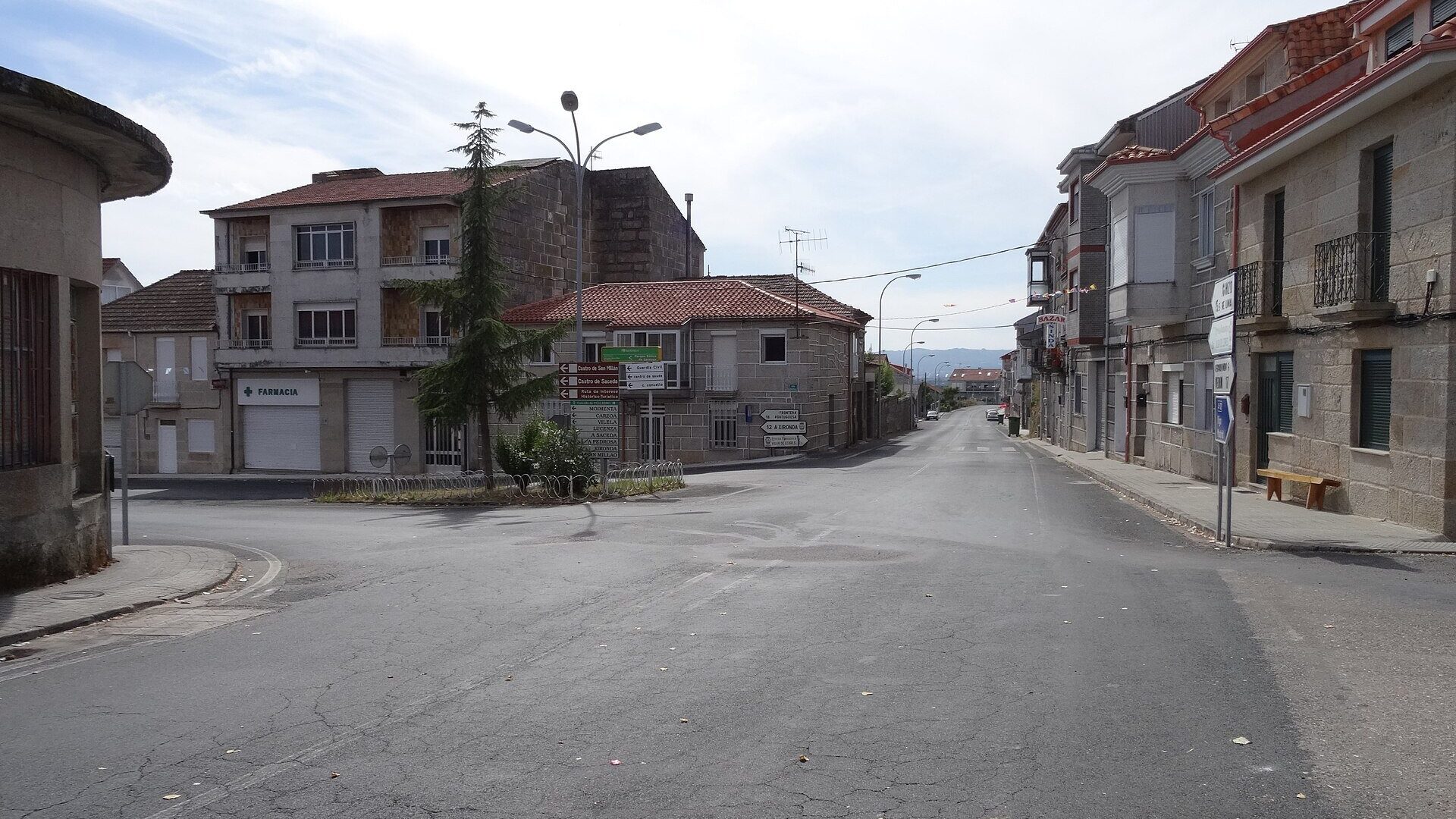
The parent company set up in A Limia the subsidiary Agrícola Ganadera Antelana S.A. (AGA), devoted to producing and marketing seed potatoes, which probably began operating in the late 1940s, with offices on the ground floor of the main road. The seed was imported from several countries, above all the Netherlands and Canada. In the early 1950s (works of 1951-52) Propasi built in Xinzo the offices, the manager’s house and the warehouses still visible in the Vilasana district, and later extended the warehouse as far as what is now Rosalía de Castro street [1].
Propasi gave farmers imported or certified seed potatoes and plant-protection products; according to those who know, it was "a blessing" for the farmers, and Guillermo Budiño even says it deserves a monument in A Limia. It brought new cultivation techniques and one of the first American tractors in Xinzo, a petrol-powered Farmall International with the registration OR-001, with its two front wheels set together [1]. According to informants, the companies had 16 to 20 permanent employees, rising to 40 or 50 from September to December [1].
They had plots in A Tapada to experiment and choose the potatoes best suited to the land. Farmers under contract delivered their whole crop to the company; the growing areas were the parishes of Lamas, Boado, A Pena, Trandeiras, Baronzás, Laroá, Damil, Parada de Ribeira, Xinzo, Ganade, Viladerrei, A Boullosa, Sandiás and Couso de Limia, and also Pidre. Inspectors checked and selected plants in the fields, pulling up defective or virus-infected ones, and twice a year the agronomist engineer from the Valencia headquarters, Carlos García Girbert, came; there was also an official inspection by the Ministry of Agriculture [1].
The Feculera of Xinzo
In Xinzo there was the «Feculera de Ginzo S.L.» (quote), a subsidiary of Feculeras Españolas S.A., on the Baronzás road, on a plot between that road and what are now Cruceiro and Marcelo Macías streets, almost as far as the Grupo San Sebastián. The entrance had an enormous weighbridge for carts and lorries. Almost 30 workers worked there, a third of them women. Starch (potato starch) was extracted by crushing the potatoes, washing, settling and drying, a product that mothers used to starch shirt collars. There was no sewerage and the area smelled of rotting potatoes [2]. In 1945 it appears in the festival programme as sponsor of the feast of the patron saint, Santa Mariña, and it must have closed in 1954; on 10 July 1964, after ten years of abandonment, the property was sold, with three ruined sheds and an area of 90 ares [2].
Links
Sources
- Edelmiro Martínez Cerredelo, «(PROPASI S.L.) Productores de Patata de Siembra S.L.», Historia de Xinzo, 31/01/2019. https://historiadexinzo.wordpress.com/2019/01/31/propasi-s-l-productores-de-patata-de-siembra-s-l/
- Edelmiro Martínez Cerredelo, «A Feculera de Ginzo S.L.» (cita), Historia de Xinzo, 16/09/2016. https://historiadexinzo.wordpress.com/2016/09/16/a-feculera-de-ginzo-s-l/
You may also like
 Economy of A LimiaGastronomy of A LimiaThe gastronomy of A Limia: the potato as the star product and its designation, the bread from Xinzo's ovens, the pig slaughter and the…
 Economy of A LimiaFlax in A Limia in the 18th and 19th centuries: land, weavers and tradeFlax growing and industry in A Limia according to the Ensenada Cadastre and Madoz: the best land, rotations, weavers by concello, the linen…
