


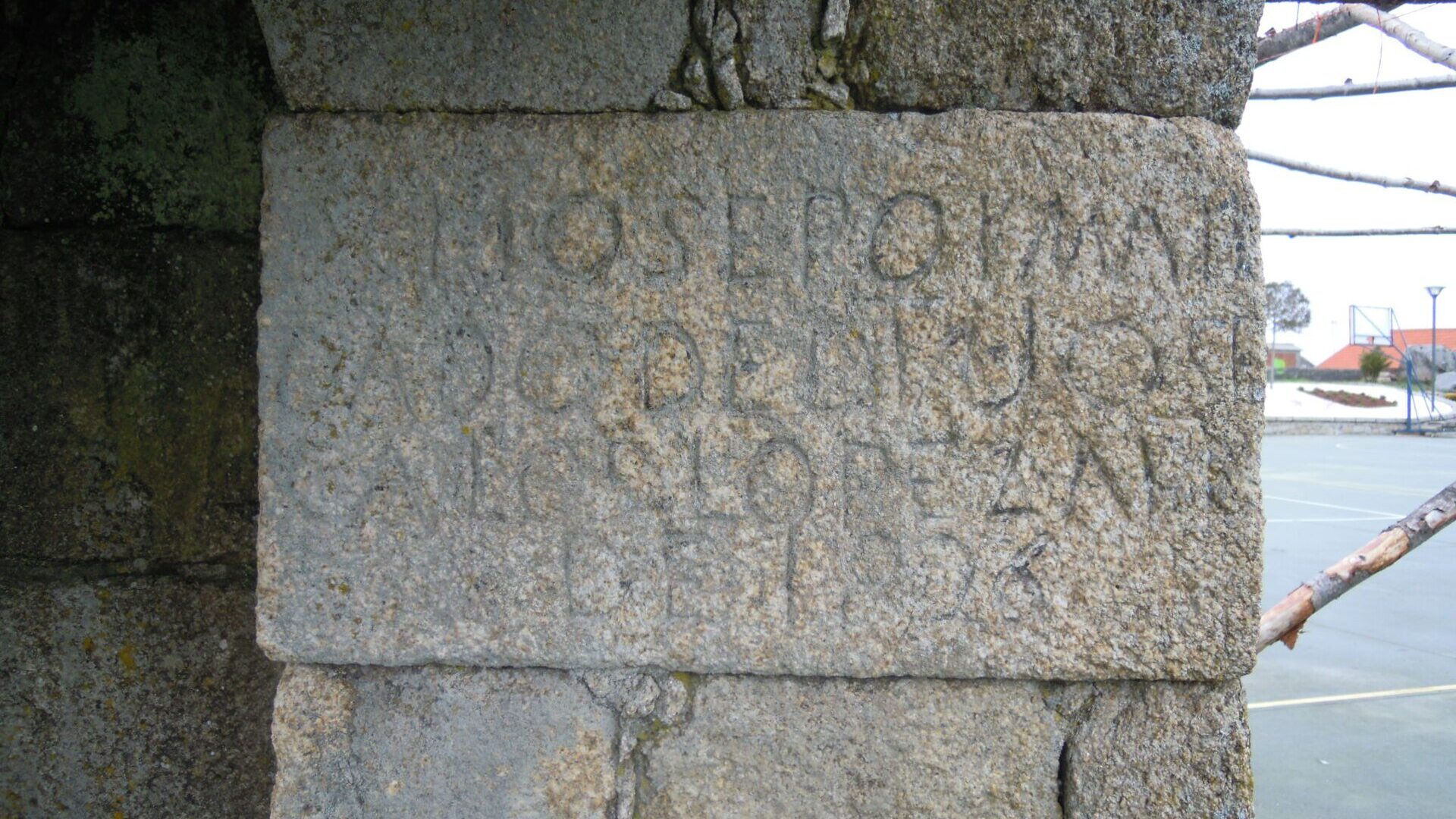
The vanished peto de ánimas of the Rúa do Peto, in Xinzo de Limia
The peto de ánimas (souls' shrine) that stood on today's Rúa do Peto in Xinzo until the late 1950s, when the Santa Mariña council housing was built: what it looked like, what it was for and how Ángel Cerrato classifies it.
A peto de ánimas is a small religious structure where the neighbours leave an offering (coins, flowers, maize cobs, bread, bundles of grass…) so that the souls in purgatory may shorten their stay. The source, an article by Xosé «Pepe» Calleja López in As tradicións da Limia, says the offering was «self-interested», because whoever gives it counts on others doing the same when their turn comes, and that people also asked for luck on a journey, in love or in earning money at the fair [1].
Where it stood
Xinzo had one, on today’s Rúa do Peto, which still bears the name of the heritage element. It stood in the same place until at least the late 1950s, when the Casas Baratas of the Santa Mariña group were built. A photograph taken from the bell tower of the Igrexa Vella, published on Facebook, shows the peto to the north of the Casa Rectoral [1].
What it looked like
From the image, the author says it was very similar to the peto of Ponte Liñares (A Feira Nova). It has a large niche (fornelo) in the centre (the space where the saint or the Virgin goes) and a projecting top, and it is not clear whether it carried crosses or pinnacles. A witness remembers that it held a stone Virgin or saint (later they doubted this and spoke of a wooden one), that children brought flowers and that the lads chatted sitting in the fornelo. The images on petos tend to resemble the one on the altarpiece of the church of Laroá: a saint, the Virgin or angels trying to pull the souls out of the flames of the purifying fire [1].
Cerrato’s classification
According to Ángel Cerrato (O mundo dos cruceiros, cruces e petos de ánimas na bisbarra da Limia), the Xinzo one would be an alms peto (peto esmoleiro): beneath the figure a hollow was cut in the stone for a wooden box or lid with a slot for coins, padlocked against theft. By its form, it was one of the «wide single-body» type, in broad masonry, and by its location one of those beside churches and under the influence of the Way of St James: many petos stood on paths, to help at the start of a journey after an offering [1].
A heritage that was lost
The author laments that when such elements disappear, the community loses a point of reference and, two generations later, sometimes not even the memory remains: he does not remember it, his sister, four years older, does. For the inventory of the petos that do survive, see cruceiros e petos de ánimas da Limia [1].
Links
- Patrimonio da Limia
- Cruceiros e petos de ánimas da Limia
- Patrimonio de Xinzo de Limia
- Xinzo de Limia nun día
Sources
- «O PETO DE ÁNIMAS DE XINZO DE LIMIA – Tradicións da Limia», As tradicións da Limia. https://tradicionsdalimia.es/o-peto-de-animas-de-xinzo-de-limia/
You may also like
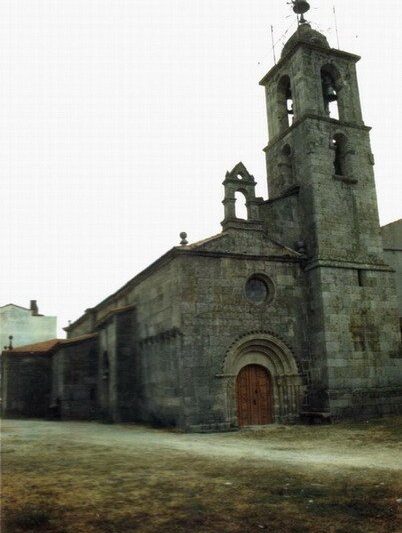 Heritage of A Limia: towers, convents, mills and ethnographic villagesA tour of the historic heritage of the municipality of Xinzo de LimiaA summary of the historic heritage of Xinzo de Limia: the Romanesque old church, the churches of Novás and Morgade, Torre da Pena, the Bon…
 Heritage of A Limia: towers, convents, mills and ethnographic villagesEthnographic heritage of Rairiz de Veiga: Congostro, mills, ovens and springsThe ethnographic heritage of Rairiz de Veiga: the restored village of Congostro, the San Miguel mills route, 17 mills, 5 communal ovens and…
 Heritage of A Limia: towers, convents, mills and ethnographic villagesXinzo de Limia in a day: a route through heritage, water and the lagoonA suggested one-day visit to Xinzo de Limia: Museo Galego do Entroido, the church and square of the town, Torre da Pena, the Bon Xesús…
 Heritage of A Limia: towers, convents, mills and ethnographic villagesMills and ethnographic heritage of Calvos de RandínCalvos de Randín has 18 mills catalogued in Galicia Nomeada, plus the Oratorio, tied to the rivers and streams of the Salas valley and the…
 Heritage of A Limia: towers, convents, mills and ethnographic villagesThe Torre do Castro of Sandiás: history, visits and activitiesThe Torre do Castro, in Sandiás, is a 12th-century castle torn down by the Irmandiños in 1467 and now consolidated: its history, the 2024…
 Heritage of A Limia: towers, convents, mills and ethnographic villagesThe Torre da Pena (Portela): history of a fortress of A LimiaThe Torre da Pena or Portela tower, in Xinzo de Limia, is a 14th-century military tower and a Bien de Interés Cultural since 1994: the…
