Moors and Christians at A Saínza
The Attack: the captains' parley, the cavalry charge, the gunpowder and the burning of the castle in one of the few Moors and Christians reenactments in Galicia.
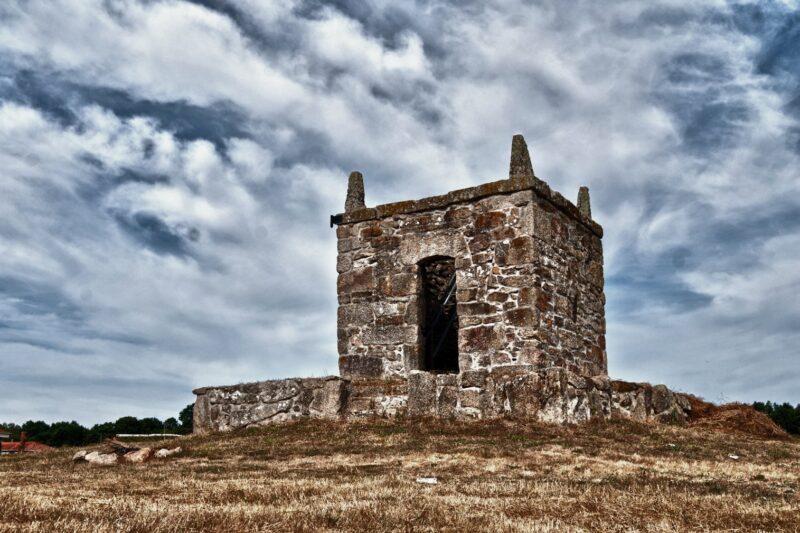
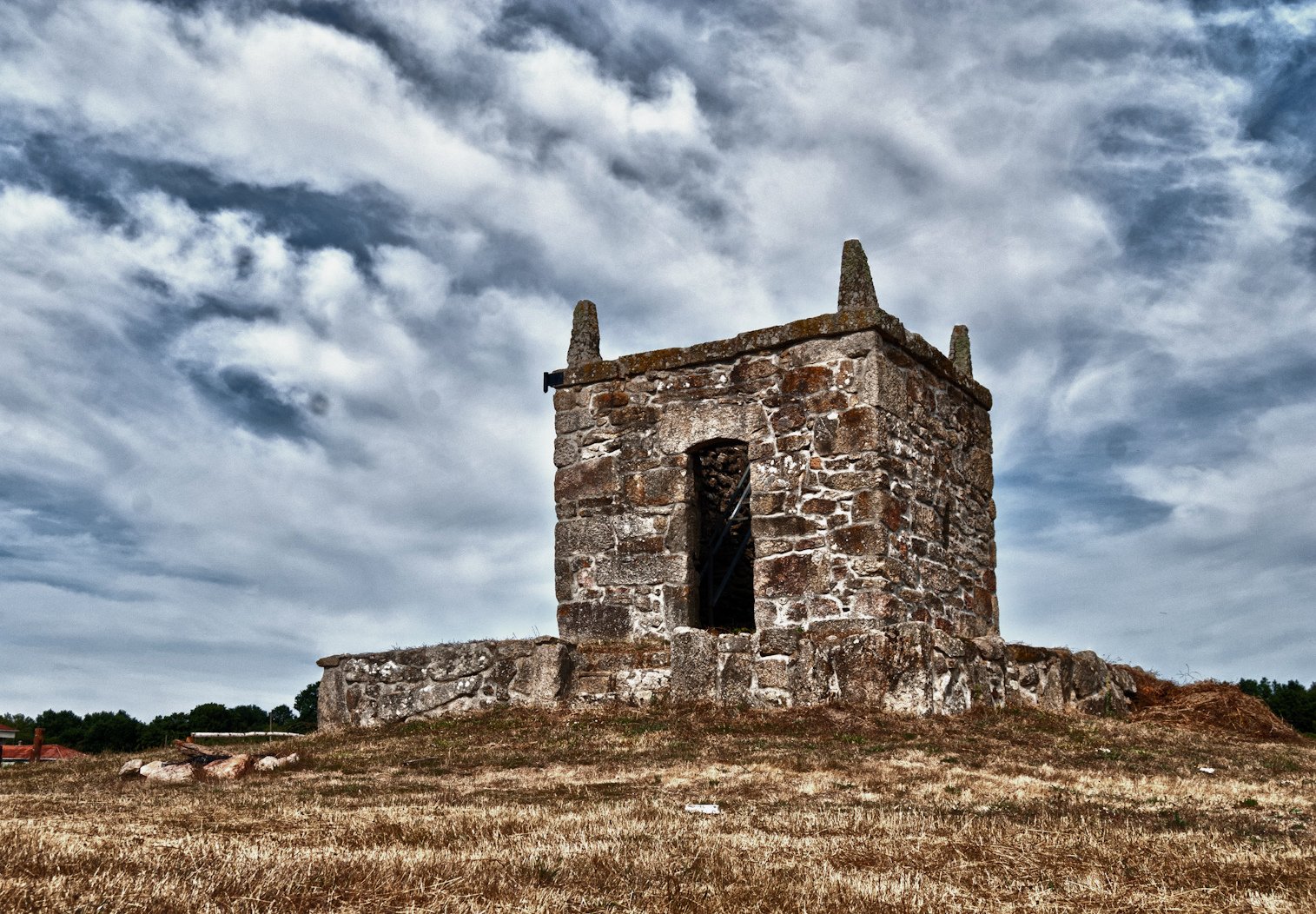
The Moors and Christians battle at A Saínza is the Ataque (the Attack): a staged battle, with horses and gunpowder, fought at the foot of the castle of A Saínza during the pilgrimage of Our Lady of Mercy [1]. It is one of the few festivals in Galicia that reenact the struggle between Christians and Muslims [6]. Go back to the presentation of the pilgrimage, or read its history and the legends of the Hundred Maidens.
The two sides
The town council presents the battle as a struggle between two sides standing for good and evil [1]. The Moors, armed, defend the fortress. Inside they hold some Christian prisoners and demand the tribute of the «hundred maidens» [2]. The Christians, mounted, come to free them.
In 1929 Jaime Solá named the leading players. The Moorish leader had for years been Manuel Araujo, a former board member of the Centro Gallego de Cienfuegos, and that year his son replaced him. The Christian leader was Vicente Feijoo, the postman of Santa Baia, with spurs and a two-cornered hat [3]. According to Solá, the two armies numbered «dieciocho o veinte hombres» (eighteen or twenty men). The prisoners were played by some boys «cargados de imaginarios grillos y cadenas» (loaded with imaginary shackles and chains) on the terrace of the castle [4].
How it unfolds
- The parley. The captains approach the castle and speak in verse from two rocks fixed in the ground. Vicente Risco called them the rocks «of the parley» [2]. In 1929 they stood about fifteen metres from the fortress [4]. The Christian demands surrender in the name of God and the king, and the Moor will only accept it if they win the castle from him by the sword [4].
- The declaration of war. After the challenge war is formally declared, and the leaders harangue their troops [2].
- The assault. Bombs and rockets burst, and the Christian cavalry gallops around the fortress. In 1929 the fireworks makers filled three sides of the castle with «torpedoes» and set a firecracker string in front [3][4].
- The outcome. The Moorish and Christian captains fight hand to hand at the gate, and the Moor surrenders. The prisoners’ chains are broken, and the Christian flag replaces the crescent on the highest battlement [4]. The rebel castle burns [1].
- Homage to the Virgin. The victorious captain thanks the Virgin of Mercy, who waits in procession. The repentant Moors convert [2][4].
The dialogues in verse and the infidels’ attempt to steal the image of the Virgin are common elements of the genre [2]. Solá recounted that the speeches that year had been written by Manuel Lezón and were delivered in Spanish. They used to be in Galician [4].
The battle in recent editions
The main battle takes place on the Sunday of the pilgrimage, after Mass in the battlefield [5]. The 2026 programme included two more events: on Saturday night, the 19th Moorish Night (Noite Moura), with the assault on the castle, and the 9th edition of «O Meu Primeiro Combate de Mouros e Cristiáns» («My First Moors and Christians Battle»), for the youngest [5]. The setting is described on the page about the castle and the oak grove.
Sources
- Concello de Rairiz de Veiga, «Romaría da Sainza». https://rairizdeveiga.es/gl/feiras-festas/romaria-da-sainza
- Fronteira Esquecida, «Romaría da Saínza» (bibliography: Delfín Caseiro Nogueiras, A Romaría da Saínza: mouros e cristiáns, Ourense, 2003). https://fronteiraesquecida.eu/gl/fichas/romaria-da-sainza/
- Alexander de los Ríos Conde, «La romería de A Saínza en un reportaje de 1929 (Primera Parte)», Vía Lethes, 25-09-2016. https://vialethes.es/romeria-sainza-1929
- Alexander de los Ríos Conde, «La romería de A Saínza en un reportaje de 1929 (Segunda Parte)», Vía Lethes, 02-10-2016. https://vialethes.es/romeria-sainza-1929-ii
- Páxinas Galegas, «Romería da Saínza e Nosa Señora da Mercé» (2026 programme). https://www.paxinasgalegas.es/fiestas/romeria-da-sainza-e-nosa-señora-da-merce-rairiz-de-veiga-574.html
- Wikipedia (gl), «Carballa da Rocha», CC BY-SA 4.0. https://gl.wikipedia.org/wiki/Carballa_da_Rocha