


Legends of Vilar de Santos: the Mariquiña, Santa Marta and the St John’s snake
Legends of Vilar de Santos: the moura Mariquiña of Monte das Cantariñas (Laioso), Santa Marta and the Castelaos serpent, St John, the jingle snake, the Casas da Veiga horse, the gold beam of Saa and the Blood Man.
Vilar de Santos preserves legends collected mainly in Laioso, Castelaos, Casas da Veiga and Saa. The most famous, according to Adalid, is that of the Mariquiña [1].
The legend of the Mariquiña (Monte das Cantariñas, Laioso)
A girl taking the livestock to the hill met a moura weaving on a boulder or combing her hair with a golden comb. The moura asked her to delouse (or comb) her and to give her milk. In exchange she filled her kerchief with gold coins, on condition that she did not look at them until she got home and told nothing. Under her mother’s insistence, the girl confessed. One day she did not return from the hill and, when her mother went looking, she heard: "a Mariquiña por lengoreteira, está na miña barriga con pan e manteiga" (the Mariquiña, for being a gossip, is in my belly with bread and butter) [1]. It has the same structure as the man-eating mouras of Os Blancos and Sandiás, which can be read in Moors of A Limia. Near Saa there is also a "Peneda da Moura" [1].
Santa Marta and the serpent of Castelaos
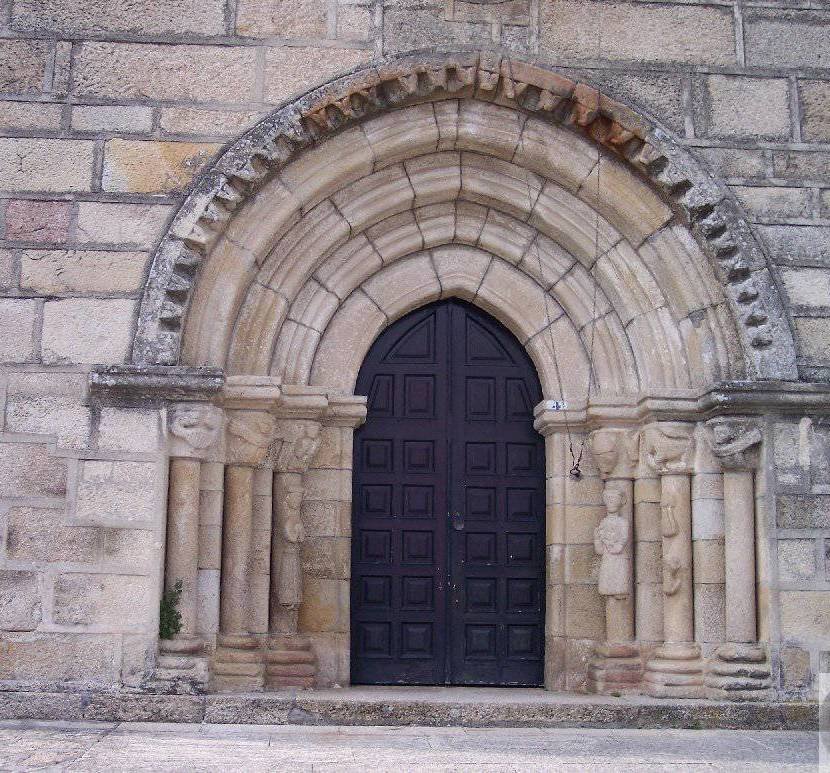
In Castelaos there is a chapel of Santa Marta. It is said that the saint freed the village from a great serpent that terrorised it, and for that reason the place bears her name and a chapel in her honour [1].
The apparition of St John at Laioso
At the chapel of San Xoán, in Laioso, tradition says the saint appeared on a boulder and that is why the chapel was built there [1].
The snake with the jingle
From the spring on the Laioso hill comes a snake with a jingle or bell. If someone is able to take it from it before twelve without being bitten, the snake turns into a young woman. It parallels the snake of the Fonte da Cruz at Cardeita, in Sandiás [1][2].
The horse of the Casas da Veiga stream
Some young men returning from visiting some girls found a horse and mounted it to cross a stream. In the middle of the water the animal vanished and left them soaked, just like the devil’s horse of Porqueira [1].
The gold beam of Saa
In Saa, now an abandoned village, the legend of the gold beam and the tar beam was also told [1].
The Blood Man and the Blood Car
In Castelaos, the elders scared children with the Blood Man, who could carry them off. The "Blood Car" served the same purpose when few vehicles still passed [1].
Links
Sources
- Rafael José Adalid Rodríguez, «Contos, lendas e mitos da auga na Limia e pequenas achegas», Revista Galicia Encantada 16 (2020). https://galiciaencantada.com/lenda.asp?cat=11&id=2886
- «A Fonte da Cruz de Cardeita», Xavier Feixoo, Galicia Encantada. https://galiciaencantada.com/lenda.asp?cat=4&id=308
You may also like
 LegendThe Raíña Loba and her castle on the crags of Covas (Os Blancos)On the crags of Covas, at about 1,150 metres, there was a rocky castle where a cruel queen lived who charged a calf, a sheep and a pig…
 LegendMoors of A Limia: treasures, broken secrets and enchantmentsThe legends of Moorish men and women in A Limia: the mouras of Treboal, the Covelas mine, the gold cart of A Touza, the Moors' girl, the…
 LegendLegends of the Torre do Castro and SandiásThe legends of the Torre do Castro and Sandiás: the Moors' tower and the hammer that made the Lagoa de Antela, the treasure in the well,…
 LegendLegends of Vilar de Barrio: xianas, Moors’ holes and the Lagoa de AntelaLegends and tales of Vilar de Barrio: the xianas of Arnuíde, the Moors' holes at Bóveda with the twelve chicks, the Pozo dos Mouros at…
LegendLegends of Xinzo de Limia: the Lethes, Trandeiras, the Torre da Pena and the river mourasLegends of Xinzo de Limia: the river of oblivion, the Virgin and Xoán Folgoso at Trandeiras, the moura of the sieve at Lamas, the moura of…
 LegendCrags, healing stones and humorous tales of A LimiaThe Arangaño rock for curing children, the stones of the moura of Nocelo da Pena, the ears of Monte de Rubiás, the crags of Meaus and…
