


The SGHN Antela Section: wetlands, lapwings and water lilies
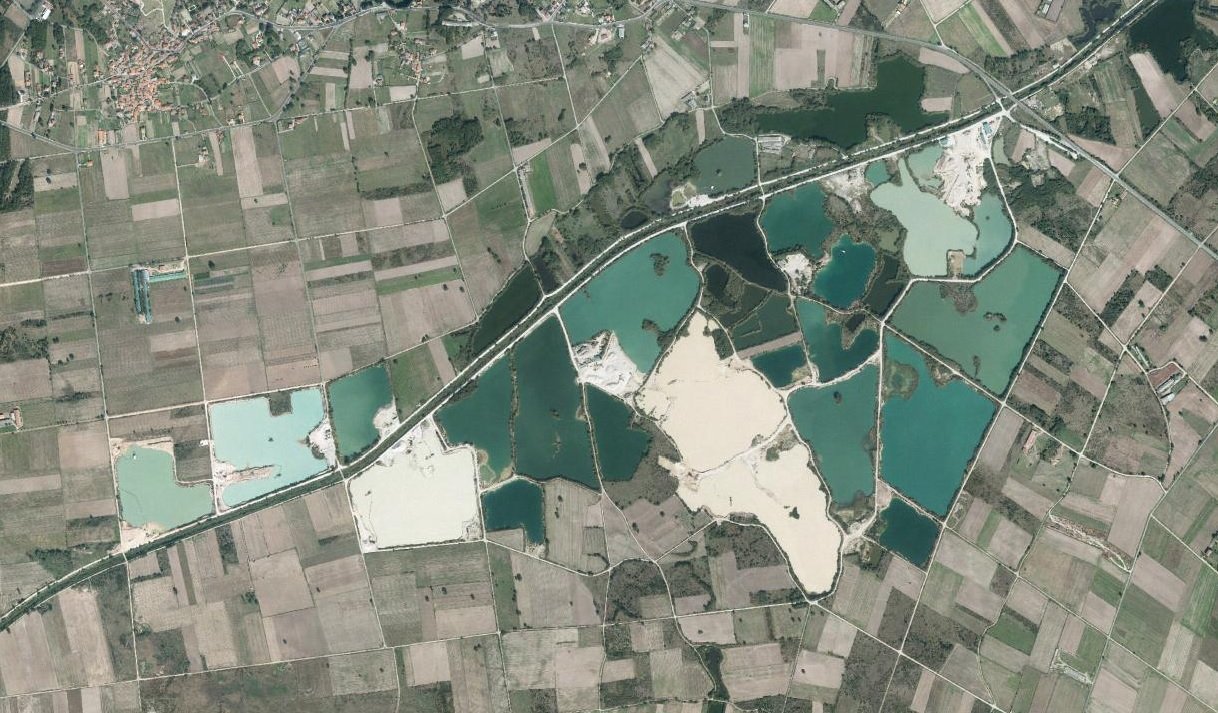
Since 2011 the SGHN Antela Section has been restoring meadows and ponds in A Limia: the Antonio Villarino Wetland at Vilaseca, the Veiga de Gomareite and the Sandiás pools, for lapwings, lagoon thistles and water lilies.
- Organisation
- SGHN, Antela Section
- Vilaseca plot
- 12,780 m²
- A Limia IBA
- 326.48 km²
- Target birds
- lapwing and other meadow species
The Antela Section of the Sociedade Galega de Historia Natural (SGHN) was born in 2011, around the 40th anniversary of the Ramsar Convention, to reconcile the recovery of wetlands and marginal areas of the former Lagoa de Antela with sustainable farming and livestock keeping [1][2]. This page summarises what the organisation itself says about its projects. The context of the draining is in The draining of the Lagoa de Antela and the present state of the wetland in The Lagoa de Antela today.
The Antonio Villarino Wetland (Vilaseca, Trasmiras)
On 25 March 2013 the SGHN won at public auction a plot of 12,780 m² at the place called O Escudeiro, in the Trasmiras land consolidation area, adjoining the A Limia SPA and within its peripheral protection zone. The purchase was formalised in July 2013 with funds from the charity booklet A historia de Antela contada por unha cegoña and donations from more than 900 members and supporters, the "beónfeitores" (a pun on benefactores and beón) [1]. In the fundraising campaign, each book sold equalled 3 m² of plot, each share in "Na procura do abellaruco" 5 m² and each euro donated 1.7 m² [1].
The project recovers the plot as a temporary wetland to favour about ten species of flora and fauna that are rare or threatened in Galicia, and in particular the lapwing (Vanellus vanellus, "conícora" in Galician), endangered as a breeding bird in Galicia [1]. Work began on 5 October 2013, Bird Day, with clearing and mowing so that grass would again dominate the meadow, and continued in the November 2013 and March 2014 working days [1]. According to the SGHN, the Galician breeding population of lapwing was 20–30 pairs, about 80 % in A Limia, and some 5 pairs bred around the plot [1]. Years later the organisation reports that a breeding group of lapwings has settled and that the lagoon thistle (Eryngium viviparum) is spreading [3].
The Veiga de Gomareite
Until the mid-20th century the Limia plain held a wetland complex that in winters covered nearly 8,000 hectares [2]. In 2014, on World Environment Day, the SGHN signed a land stewardship agreement to halt the deterioration of the Veiga de Gomareite and to reconcile its recovery with traditional grazing. Between 2014 and 2024 dumped waste was removed by hand: 5.2 m³ of glass, 19.5 m³ of plastics, 76 tyres, 2 m³ of timber, 119 m³ of mixed waste and 120 m³ of rubble [2]. A private extensive-farming project complements the environmental one: in winter and spring the meadow is partly covered by a shallow sheet of water and when it recedes cattle graze, as before the draining [2].
Other actions by the section are the Pozas dos Arieiros and das Conícoras, in the sand pits of Sandiás and Vilar de Santos [2], and a 2024 event with IES Lagoa de Antela on ponds as an educational resource that ended with a visit to the Gomareite works [10].
The water lilies of A Limia
The SGHN signed an agreement with the association Gemosclera to conserve the white water lily (Nymphaea alba) in Galicia, with initial work in A Limia and in the Gándaras de Budiño. The agreement notes that the main Galician population is in the Antela canal, that the area occupied has fallen sharply in the last 15 years and that the species is not on the Galician Catalogue of Threatened Species [4]. At the 2023 and 2024 events the evolution of the populations, which the sources describe as declining through habitat loss, predation by exotic fauna and water quality, was studied, and reinforcing the population on stewardship plots in the Sandiás sand pits was proposed [5]. An event on 6 July 2024 located eight stands of yellow water lily (Nuphar lutea) along a stretch of about 7 km of the Limia river, five more than in the first survey, and checked the white water lily seedlings at the Pozas das Conícoras and dos Arieiros [6].
The stork’s tale
To fund the Vilaseca project the section published Un conto de verdade. A historia de Antela contada por unha cegoña, a 24-page charity story adapted "for humans aged 9 to 99": a mother stork teaches her three chicks, in a nest on a hundred-year-old oak among the trees of Rairiz de Veiga and the meadows of Ordes and Penelas, the history of their ancestors and their land. It reviews the draining of Antela, the deforestation of the land consolidations, the channelling of the rivers and the sand pits, and ends with a line from Delmar Blasco, secretary general of the Ramsar Convention from 1994 to 2002 [11]. The section distributed versions in Galician, Spanish, Catalan and French [12].
The commitment to restore 500 hectares
In 2020 the SGHN, G.N. Hábitat and ADEGA, with 19 other groups and 31 scientists, sent the Spanish Government the proposal "Antela, La Nava y La Janda: un trío de ases", which called for partially restoring 1,028 hectares of public domain land of the former lagoon (those delimited by Decree 2336/1962) [7]. The Strategic Wetlands Plan to 2030, published in BOE no. 301 of 16 December 2022, sets as a goal to partially restore, before 2030, the Lagoa de Antela and areas around it in the Limia depression, at least 500 ha [7]. The organisations complained in 2024 that no action had yet been taken on that commitment [7].
SEO/BirdLife, with the collaboration of Sandiás Town Council, organised at the Lagoon Interpretation Centre a conference, "Redescubrir Antela: a memoria e o futuro do gran humidal galego", at which the participating organisations concluded that the original area must be restored as far as possible, in coordination with the authorities and local people, and that the Strategic Plan sets 500 ha as a reference framework [8].
A Limia as an important area for birds
SEO/BirdLife includes A Limia in its inventory of Important Bird Areas (IBA ES008): 326.48 km² between 610 and 905 m altitude, at the head of the Limia river, with a description that recalls the old lagoon "drained in the late 1950s" and the landscape of meadows, hedgerows and oak woods that has been reduced to isolated places. The species that meet the criteria are the stone-curlew, the white stork, Montagu’s harrier and the little bustard. The entry cites as threats agricultural intensification and a conversion to irrigation affecting 39 % of the IBA, and rates the conservation status as "poor" [9].
Links
- Lagoa de Antela
- The Lagoa de Antela today
- Ponds and birds of the Lagoa de Antela
- Protected areas of A Limia
Sources
- Sociedade Galega de Historia Natural, «O Humidal Antonio Villarino». https://sghn.org/humidal-antonio-villarino/
- Sociedade Galega de Historia Natural, «A Veiga de Vilar de Gomareite». https://sghn.org/a-veiga-de-vilar-de-gomareite/
- Sociedade Galega de Historia Natural, «Avelaíñas e traballos da SGHN en A Limia». https://sghn.org/avelainas-e-traballos-da-sghn-en-a-limia/
- Sociedade Galega de Historia Natural, «Convenio de SGHN e Gemosclera para conservar o nenúfar». https://sghn.org/convenio-de-sghn-e-glemosfera-para-conservar-o-nenufar/
- Sociedade Galega de Historia Natural, «II Xornada de traballo para a protección do nenúfar branco». https://sghn.org/ii-xornada-de-traballo-para-a-proteccion-do-nenufar-branco/
- Sociedade Galega de Historia Natural, «III Xornada de traballo para a protección do nenúfar». https://sghn.org/iii-xornada-de-traballo-para-a-proteccion-do-nenufar-con-gemosclera/
- Sociedade Galega de Historia Natural, «É hora de recuperar Antela». https://sghn.org/e-hora-de-recuperar-antela/
- SEO/BirdLife, «Demandamos la restauración de la emblemática Laguna de Antela» (cita). https://seo.org/demandamos-la-restauracion-de-la-emblematica-laguna-de-antela/
- SEO/BirdLife, «A Limia (IBA ES008)». https://seo.org/detalle-iba/es008/
- Sociedade Galega de Historia Natural, «As charcas como recurso educativo». https://sghn.org/as-charcas-como-recurso-educativo/
- Sociedade Galega de Historia Natural, Sección Antela, «Publicacións» (páxina web antiga). http://www.sghn.org/Seccion_Antela/Galego/Publicacions.html
- Sociedade Galega de Historia Natural, «Un conto de verdade: a historia de Antela contada por unha cegoña». https://sghn.org/arquivo_xeral/un-conto-de-verdade-a-historia-de-antela-contada-por-unha-cegona/
You may also like
 Lagoa de AntelaThe original lagoon: extent, canals, ponds, fauna and flora of the Lagoa de AntelaWhat the Lagoa de Antela was like before 1958: a shallow sheet of water 7 by 6 kilometres, with canals and ponds, water birds, leeches,…
Lagoa de AntelaThe Lagoa de Antela in figures: area, water and habitatsSources give very different areas for the Lagoa de Antela, from 2,630 to 5,870 ha. This page gathers the estimates, the seasonal flooding…
Lagoa de AntelaThe 1956 Law and the drainage project of AntelaHow the Law of 27 December 1956 and Francisco Zapata Tejedor's project led to the draining of Antela: phases, works from 1958, the 1962…
Lagoa de AntelaLegislation on the Lagoa de Antela (1868–2002)Chronology of the rules of the Gaceta de Madrid, BOE and DOG on the draining of Antela: concessions from 1868 to 1907, the 1918 law, the…
Lagoa de AntelaThe leeches of the Lagoa de AntelaIn the 19th century the Lagoa de Antela was a leech breeding ground famous in Spain: a factory exported to France, catching ended up…
Lagoa de AntelaMemory and testimonies of the draining of the Lagoa de AntelaWhat the people of A Limia say about the draining of the Lagoa de Antela: who gained plots and work, who lost pasture, bión and birds, and…
