


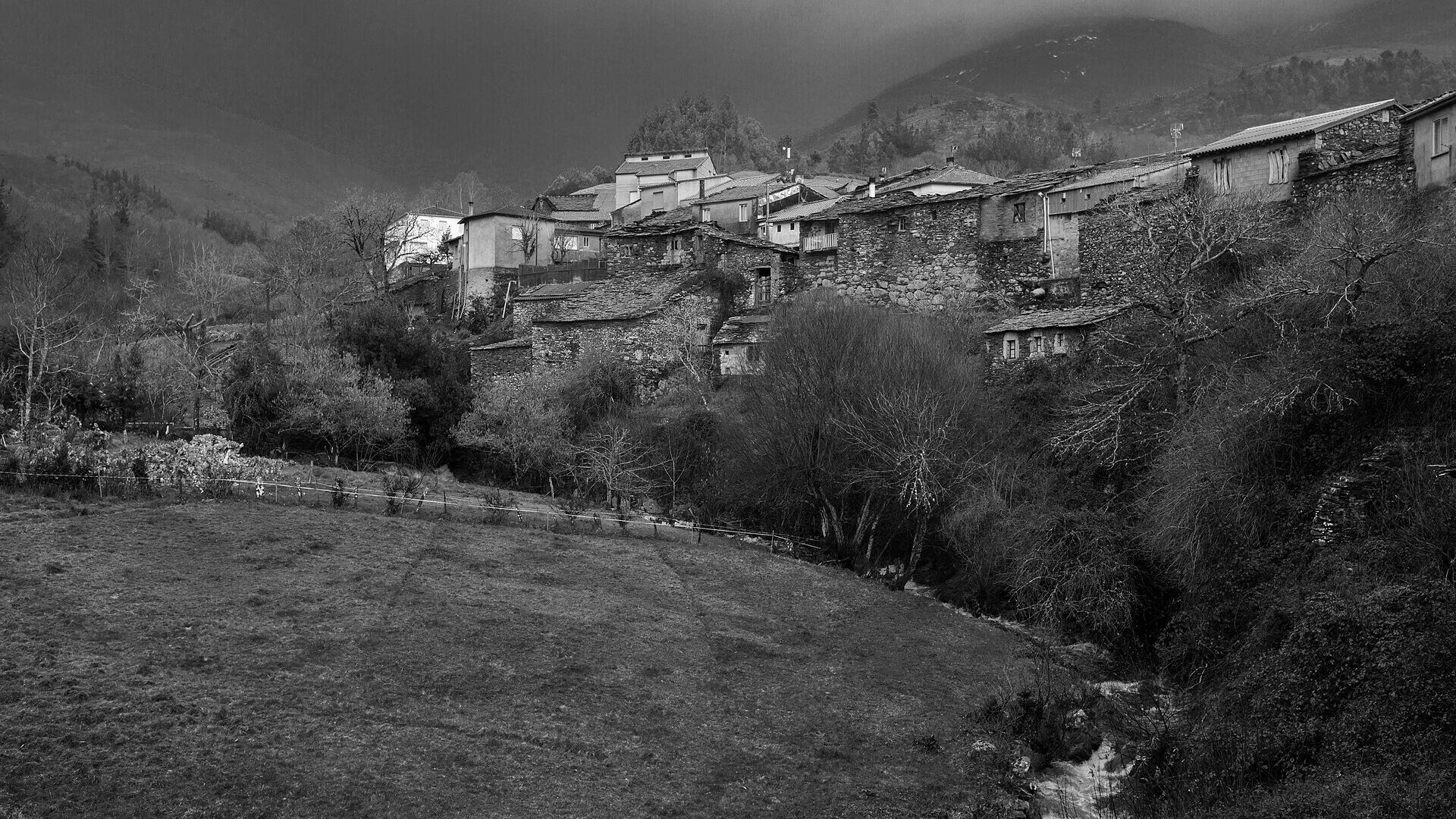
Emigration of the Limia people: from the 1950s diaspora to personal itineraries
How the Limia people emigrated: destinations and phases (America from 1920, Venezuela, Brazil, the Basque Country and Catalonia in the 1950s, Europe from the 1960s), child recruitment by religious orders and two documented itineraries.
- First documented wave
- America (New York, Cuba), 1920s
- 1950s
- Venezuela, Brazil, Vigo, Basque Country and Catalonia
- From the 1960s
- Germany, the Netherlands, Switzerland and France
- Documented case
- José Ramón Pérez Cid (Piñeira Seca, 1901 – Xinzo, 1961)
Galician emigration to America between the late 19th century and the mid-20th was one of the country’s great social phenomena, driven by poverty, the economic crisis after the First World War and lack of opportunities. In A Limia, a land of subsistence agriculture, there were also successive waves of departure, which the researcher Edelmiro Martínez Cerredelo documents through concrete cases in his works for Historia de Xinzo [1][2]. This page summarises the known phases and two itineraries, meant as examples.
Phases and destinations
- 1920s and 1930s: America. The usual destinations were New York, Cuba, Argentina, Uruguay and Brazil. Emigrants were mostly farmers and unskilled workers who sent remittances to their families [1].
- 1950s: the local diaspora. According to Cerredelo’s testimony, who was a child then, whole families left Xinzo for Venezuela, Brazil, Vigo, the Basque Country and Catalonia, in a town of rationing and need: there were no opportunities to study and work [2].
- From the 1960s: Europe. Limia people begin to emigrate to Germany, the Netherlands, Switzerland and France [2].
Religious orders and childhood
In the 1950s several orders of friars and nuns toured towns and villages looking for boys and girls to take to their convents, and many families saw in them the possibility of an education and a better future. Not all those recruited remained definitively in religious life; some, on finishing their training, changed course. Such is the case of a neighbour of Xinzo born in 1941 who entered the friars as a young child and, at 20, the Navy: he served on three ships, fell ill with tuberculosis, spent almost three years in a naval hospital and then made a career at the Navy’s Communications and Electricity School in Vigo, until moving to the reserve in 1996; aboard the cruiser Canarias he attended the wedding of Princes Juan Carlos and Sofía in Greece in May 1962. He died in Vigo in 2021 and his descendants keep an interest in the family’s homeland [2].
A documented itinerary: Pérez Cid
José Ramón Pérez Cid (Piñeira Seca, 1901 – Xinzo, 1961) left documents that allow his 15 years of emigration to be reconstructed [1]:
- 4 December 1920. Aged 18, he buys in Vigo an emigrant ticket, for 600.10 pesetas, to travel to New York on the steamer Henry R. Mallory; his father authorised the embarkation.
- 27 August 1927. A safe-conduct from the Spanish vice-consul in Brownsville (Texas) states that he returns "by the authorities of the U.S.A."; he lands at Le Havre on 18 September and crosses the border at Irún on the 19th.
- October 1927 – 1935. Cuba. He appears as a canteen worker on the steamer Eusebio Coterillo of the Cuban Shipping Company; in 1932 he registered in Havana’s Register of Foreigners and obtained a seaman’s card; in 1934 he appears as a member of a woodworkers’ union and applies for Cuban citizenship.
- May 1935. The Havana consulate issues his passport and the visa indicates the journey on the steamer Cristóbal Colón. He returns to Xinzo aged 33, after 15 years as an emigrant.
On his return, he opened a mixed grocery and tavern on Progreso street, in a premises sharing a building with the post office; at the back he had stables where farmers left their animals while in town. The business ended in the hands of a niece, who moved to the ground floor of the old Sindical building on Lepanto street when a developer bought the house to build a new block and open streets. During the dictatorship he was a councillor and first deputy mayor for over twelve years, which documents the process of "hand-picked" appointments by civil governors; in 1954, as an ex officio member of the Municipal Library Board, he took part in creating the concello’s library. He died on 1 March 1961, aged 60 [1].
What these cases teach
The two itineraries show that emigration was not always definitive: some returned and set up businesses in the village; others, like the diaspora’s second generation, kept the link through their descendants. Social media have helped in recent years descendants in America and elsewhere in Spain to reconnect with A Limia [2]. See also Xinzo: people and businesses in the 20th century.
Frequently asked questions
What were the main destinations of the Limia people? America (New York, Cuba) in the 1920s and 1930s; Venezuela, Brazil, Vigo, the Basque Country and Catalonia in the 1950s; and Europe from the 1960s [1][2].
Who was José Ramón Pérez Cid? An emigrant from Piñeira Seca who lived in New York and Cuba and returned to Xinzo in 1935, where he opened a shop and was a councillor [1].
Links
- History of A Limia
- Xinzo: people and businesses in the 20th century
- Memories of the Xinzo of the past
- Piñeira Seca
Sources
- Edelmiro Martínez Cerredelo, «Historias da emigración de limiaos ás Américas: José Ramón Pérez Cid», Historia de Xinzo, 21/11/2024. https://historiadexinzo.wordpress.com/2024/11/21/historias-da-emigracion-de-limiaos-as-americas-jose-ramon-perez-cid-pineira-seca-1901-xinzo-1961/
- «Manuel Martínez Santana, un dos limiaos da diáspora local», Historia de Xinzo, 07/09/2023. https://historiadexinzo.wordpress.com/2023/09/07/manuel-martinez-santana-un-dos-limiaos-da-diaspora-local/
You may also like
 Antela Football Club (1919): the oldest club in OurenseAntela Football Club, founded in Xinzo de Limia in June 1919, is the oldest club in the province of Ourense: the statutes, the Toural…
 Archpriestship of A Limia: parishes and dedicationsThe Archpriestship of A Limia in the diocese of Ourense: 82 villages, 33 chapels and a list of parishes with their dedication, from Santa…
 History of A LimiaCinemas, café, radio, school and library: Xinzo’s cultural life from 1948 to the 1970sThe cinemas Los Molinos (1948) and Antelano (1954), the Café Ideal and the Ideal 6 disco, the 1950 radio, the Colegio Santa Marina, the…
 Ethnography of A Limia: canastros, houses, limewash, finger guards, stonemasons, blind singers’ verses and the GerinaldoEthnographic studies by Pepe Calleja on A Limia: the canastros of Fontemoura and Faramiñás, the houses of Xinzo, the limewash of Solbeira…
 From the Republic to the coup: Xinzo and A Limia between 1931 and 1936How the proclamation of the Republic (1931), 1 May 1936 and the preparation and success of the military coup of 17 to 20 July 1936 were…
History of A LimiaHistorical memory of A Limia, 1931–1953: Republic, repression and guerrillaGuide to the historical memory of A Limia between the Republic and the guerrilla: the 1936 coup, repression, women victims, the Causa…
