


The battle of Aguioncha (c. 966): the first Galician civil war
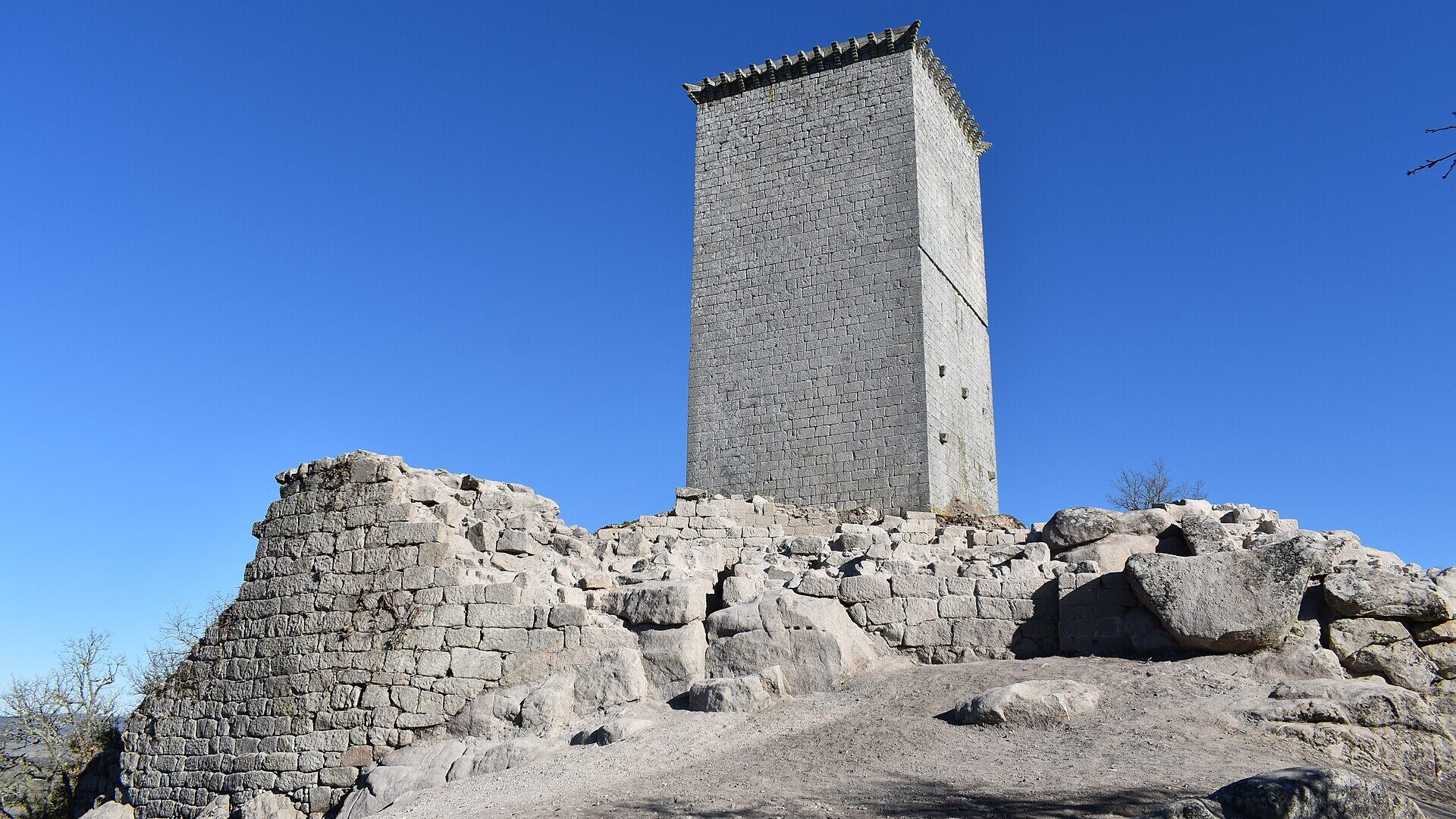
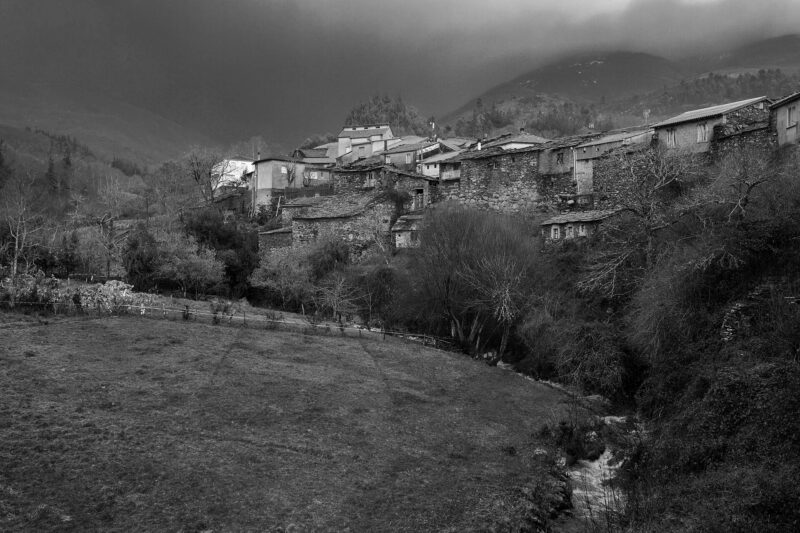
Around the year 966, at the foot of Mount Aguioncha, in Feás (Calvos de Randín), Counts Rodrigo Velázquez and Gonzalo Menéndez clashed; the will of Odoino, in the Celanova cartulary, tells of the first Galician civil war.
One of the most singular documents in the Celanova cartulary is the will of Odoino, drawn up in the year 982. It speaks of a clash between "Gallecos" a century and a half before the birth of the Kingdom of Portugal, and places its climax in A Limia [1].
The document: Odoino’s will
Odoino is the monk who owned the church of Santa Comba de Bande, which holds the remains of St Torquatus, and its territory. He donates them to the monastery of San Rosendo, founded shortly before. In the document he explains why he held those possessions and adds other details in an almost novelistic tone [1]. His story inspired the novel by Antonio Rodríguez Baixeiras, A historia de Odoyno: a primeira novela galega (2015) [1].
The two counts
At that time, King Ramiro III of León, a minor, had jurisdiction over all Gallaecia, but several counties had formed within it [1]:
- Rodrigo Velázquez, the most powerful of the counts of the territory of present-day Galicia, son of the noble owners of the town of Verín, a supporter of the kings of León.
- Gonzalo Menéndez, Count of Coimbra, son of the powerful Muniadona Díaz, abbess of Guimarães, and possibly the Galician noble who poisoned Sancho I of León, father of Ramiro III. The future King Bermudo II was brought up in his house.
Perhaps the possession of Santa Comba de Bande and its lands in the Limia valley was among the reasons for the rivalry, but it was clear that they defended different monarchical interests [1].
The battle
The climax of the confrontation was fought at the foot of Mount "Aquilunchas" (Aguioncha), in the parish of Feás, in Calvos de Randín, on a date close to the year 966. Rodrigo came out "half-dead" and fled to seek refuge with Bishop Rosendo at Sabucedo, probably Sabucedo de Montes (Cartelle), although it could also be San Salvador de Sabucedo, in Porqueira [1].
Wounded but not defeated, some time later he gathered an army that laid waste Odoino’s lands, to the point that Odoino had to beg him for mercy [1].
Significance
The combatants were the most powerful nobles of the Kingdom of Galicia, and they even sent emissaries to win the favour of Al-Hakam II, second Umayyad caliph of Córdoba and arbiter of power relations in the Peninsula [1]. That is why the episode is considered the first Galician civil war.
Further reading
- Rodríguez Baixeiras, Antonio: A historia de Odoyno: a primeira novela galega, Noia, 2015.
- Isla Frez, Amancio: Ejército, sociedad y política en la Península Ibérica entre los siglos VII y XI, Madrid, 2010.
Links
Sources
- «La primera guerra civil gallega. Batalla de Aguioncha (siglo X)», Vía Lethes. https://vialethes.es/guerra-civil-gallega
You may also like
 Antela Football Club (1919): the oldest club in OurenseAntela Football Club, founded in Xinzo de Limia in June 1919, is the oldest club in the province of Ourense: the statutes, the Toural…
 Archpriestship of A Limia: parishes and dedicationsThe Archpriestship of A Limia in the diocese of Ourense: 82 villages, 33 chapels and a list of parishes with their dedication, from Santa…
 History of A LimiaCinemas, café, radio, school and library: Xinzo’s cultural life from 1948 to the 1970sThe cinemas Los Molinos (1948) and Antelano (1954), the Café Ideal and the Ideal 6 disco, the 1950 radio, the Colegio Santa Marina, the…
 Emigration of the Limia people: from the 1950s diaspora to personal itinerariesHow the Limia people emigrated: destinations and phases (America from 1920, Venezuela, Brazil, the Basque Country and Catalonia in the…
 Ethnography of A Limia: canastros, houses, limewash, finger guards, stonemasons, blind singers’ verses and the GerinaldoEthnographic studies by Pepe Calleja on A Limia: the canastros of Fontemoura and Faramiñás, the houses of Xinzo, the limewash of Solbeira…
From the Republic to the coup: Xinzo and A Limia between 1931 and 1936How the proclamation of the Republic (1931), 1 May 1936 and the preparation and success of the military coup of 17 to 20 July 1936 were…
