

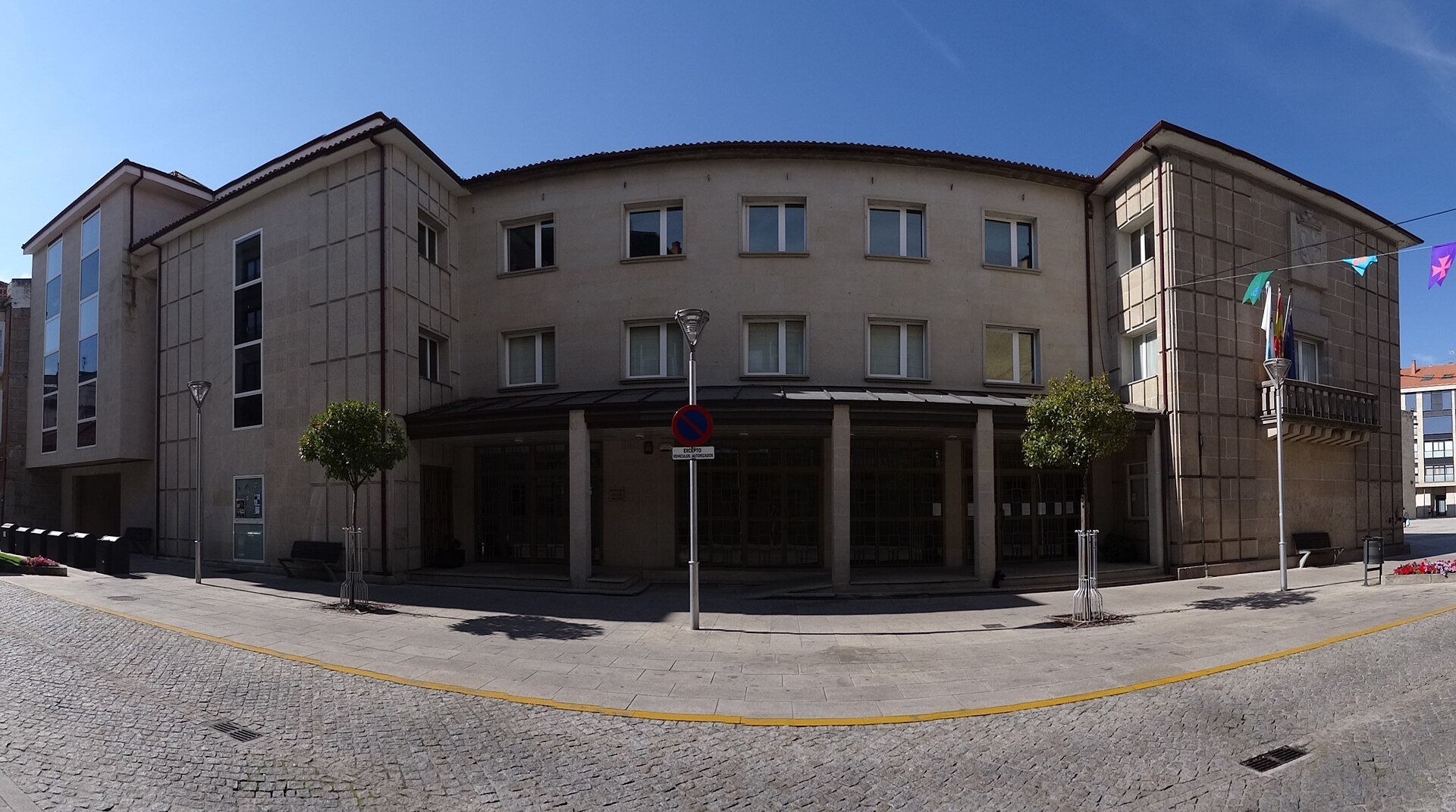
Xinzo at the 1878 Paris Universal Exhibition: the soap and linen of A Limia
In 1878 José Romero took Xinzo's linen and soaps to the Paris Universal Exhibition: he won a gold medal for the linen and an honourable mention for the soap, and defended his work against a criticism from Ourense.
In 1878 the Xinzo industrialist José Romero, founder of the "La Constancia" soap factory, took soap and linen from A Limia to the Paris Universal Exhibition. For the linen he brought back a gold medal and for the soap an honourable mention [1].
The exhibition
The 1878 edition was a universal exhibition with 6,672 Spanish exhibitors, a figure exceeded only by the host country, who won 2,482 prizes not counting honourable mentions. Spain had its own agricultural pavilion and two canopies for forestry products, hemp and linen, on the Champ de Mars [1].
The prizes
Galicia won only two gold medals: that for Xinzo linen and that for the artificial fruit models of the Compostela craftsman Juan Sisay de Andrade [1]. In class 46 (non-food agricultural products) Xinzo’s hackled linen was one of six gold medals for Spain and its colonies, shared with four Cuban cigar producers and a Valencian hemp. Romero’s soap won no medal in the chemical products class, but did win one of Spain’s 30 honourable mentions [1].
The controversy in Ourense
In January 1879 the Ourense weekly El Trabajo (founded by Paz Novoa and Curros Enríquez) published an article, «Orense en la Exposición de París» (quote), which Romero took as an insult to all the province’s exhibitors. He wrote to its editor, and Valentín Lamas Carvajal reproduced the letter in El Heraldo Gallego on 10 February 1879: he argued that his soaps sold in many places in the province, had prizes from Santiago (1875) and Lugo (1877) and that his factory could supply the whole provincial consumption; that he did not advertise because it did not pay him; and that Limia linen was not exported abroad but was sold "in more than regular quantity" inside and outside the province, and that he had sent it to show "that here there are women who know how to prepare linen" just as in any of the places cited in the article [1]. The issue of El Trabajo with that article has not survived [1].
What it shows
Romero’s participation bears witness to an incipient soap-making activity in Xinzo in the late 19th century and to the quality of the comarca’s linen, deserving the only gold medal of the province of Ourense [1].
Links
Sources
- Alexander de los Ríos Conde, «Xinzo en la Exposición Universal de París 1878», Vía Lethes, 29/01/2017. https://vialethes.es/xinzo-exposicion-universal-1878 (cita Umbert, España en la Exposición Universal de 1878, 1879; Sánchez Gómez, Historia Contemporánea 32, 2006; La Ilustración Española y Americana, 15/07/1878; El Heraldo Gallego, 10/02/1879)
You may also like
 Curiosities of A LimiaThe Escornabois plague (1598-1599): 118 dead in a Limia parishBetween September 1598 and 1599 the plague killed 118 people in Santa Mariña de Escornabois (Trasmiras); the priest Francisco Rodríguez…
Curiosities of A LimiaSymbols and traditions of Xinzo: coat of arms, giants, pasodoble and Lady of the LagoonThe coat of arms of Xinzo de Limia (1979), the giants and big-heads of the festivals, the 1929 pasodoble and the sculptures of Xosé Lois…
 Curiosities of A LimiaTransport and accidents in A Limia: Monteagudo 1944, Trasmiras 1997 and Prado stationThe British Hudson that crashed at Monteagudo (Calvos de Randín) in 1944, the 1997 accident at the Trasmiras airfield and the disused halt…
Curiosities of A LimiaThe game of the Vintos of San Martiño dos PerosThe Vintos are a game of aim played only in San Martiño dos Peros and Sabucedo (Abades, Baltar): two pairs throw stones (barlas) to knock…
