

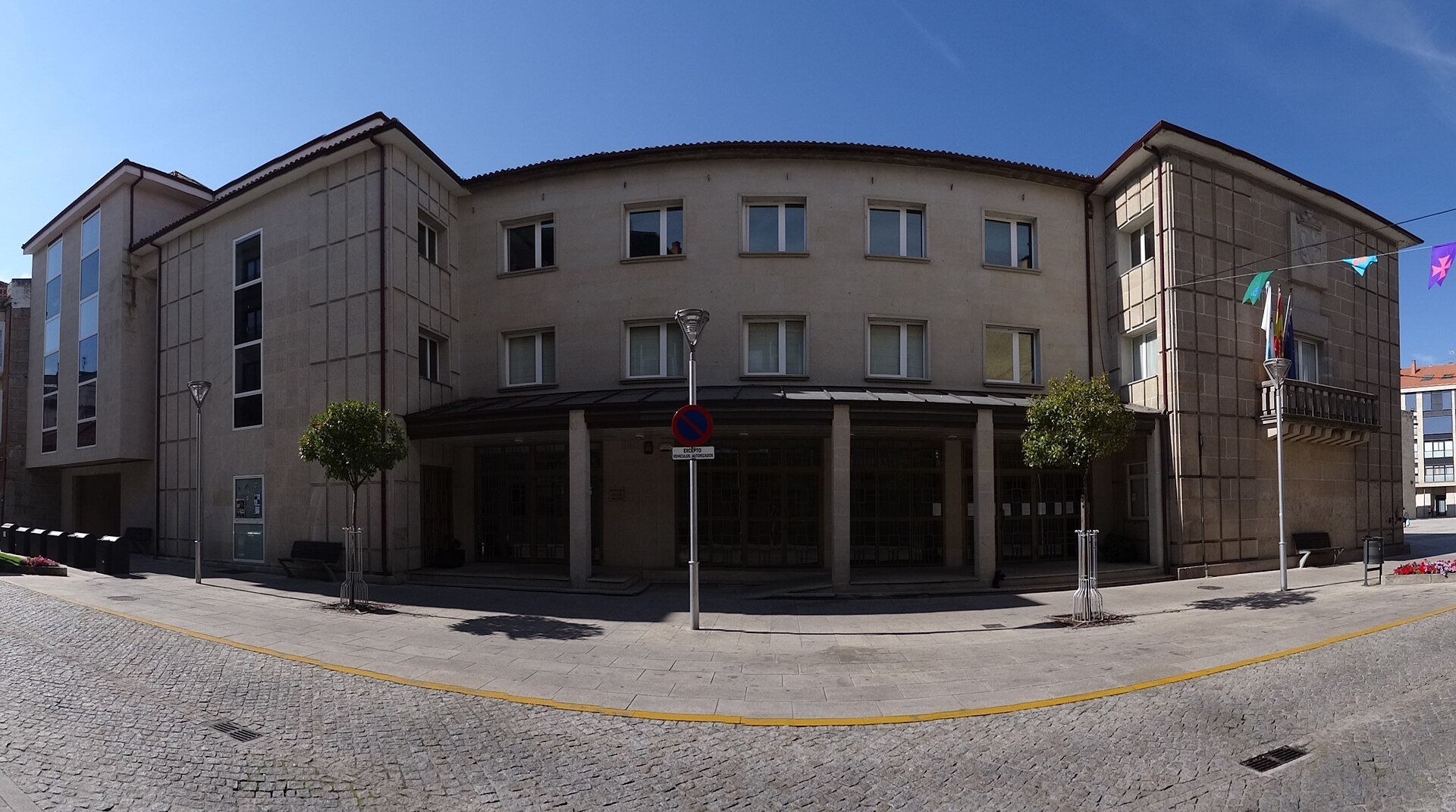
The miser of Xinzo: José Oterino’s hidden fortune (1891)
In November 1891 José Oterino, aged 43, died in Xinzo and the judge found 432 gold ounces in his house: the "miser of Xinzo" appeared in newspapers across Spain.
On the death of José Oterino, at the end of 1891, Xinzo de Limia discovered that this 43-year-old neighbour lived like a pauper and left a fortune. The press called him "the miser of Xinzo" and the story reached newspapers all over Spain and even Tenerife [1].
The treasure
The Xinzo court of first instance found it when inventorying the deceased’s assets. The Gaceta de Galicia made it front page on 10 November 1891 with the headline "¡Cuatrocientas treinta y dos onzas!" ("Four hundred and thirty-two ounces!"), because gold hardly circulated then [1]. The ounces were in a tin can inside a display case holding a Holy Christ; in addition 180 five-duro coins, 180 four-duro coins, half-ounces, forty-real coins and a bundle of banknotes turned up, spread across trunks and drawers [1].
Among the "curious" items in the inventory were a mule that had spent 22 years in the stable without setting foot in the street, two cows that had been in the stable 150 months and a pointer puppy blind and deaf with age [1]. The inheritance, of about two million reals, was deposited at the Bank of Spain branch in Ourense while the only relative, Alonso Junquera, who had been a servant in Allariz for 32 years, was declared heir [1].
The miser’s life
On 14 November the Gaceta returned to the subject with the headline «El avaro de Ginzo» (quote), with anecdotes the town repeated: the house door was shut at sunset and not opened until dawn; artificial light was banned as "unhygienic"; he had 500 homespun linen sheets and used only one, folded in half [1].
The most-discussed anecdote: Oterino was in Ourense jail, sentenced to two months for assault, to be served in Xinzo jail. The governor, aware that the case stemmed from an intrigue, offered him the journey in a private carriage, to avoid being escorted by the Civil Guard. Oterino asked: "¿y quién paga el coche?" ("and who pays for the carriage?"). On learning he would pay, and that it would cost five duros, he preferred to walk about 50 kilometres between two Civil Guards [1].
The inheritance
Fame brought relatives from Villar de Ciervos (Zamora), Verín, Allariz and even a magistrate from Burgos, and there was talk of lawsuits and that one of the supposed heirs was mad. In early 1892 El Lucense reported that the coins had not passed to the heir but to a gentleman, under a contract made into a public deed in which he undertook to pay him an annual sum; the heir renounced his rights on those terms [1]. The story also appeared in the Diario de Tenerife of 26 November 1891 [1].
Links
Sources
- Alexander de los Ríos Conde, «El caso de "el avaro de Xinzo", famoso en toda España a finales del siglo XIX», Vía Lethes, 24/12/2017. https://vialethes.es/avaro-xinzo-famoso-espana (cita Gaceta de Galicia 05, 10 e 14/11/1891; El Eco de Galicia 11 e 20/11/1891; Diario de Tenerife 26/11/1891; El Lucense 04/01/1892)
You may also like
 LegendAntioquía, the Drowned City beneath the Lagoa de AntelaBeneath the waters of the Lagoa de Antela would sleep Antioquía, the proud city that God flooded for refusing alms to a beggar. All the…
 Archive stories: the trees of 1755, the three-key chest, the union of 1061 and the 1932 revoltFour documented episodes from A Limia: the royal order to plant trees on common land (1755), the three-key chest of the Xinzo jurisdiction,…
Blind singers’ songs, Ermelinda do Muíño, the pot game and drowned citiesOral and popular traditions of A Limia in the Galipedia: blind singers' songs and ballads, the singer Ermelinda do Muíño (Sas, Sarreaus),…
 LegendCrags, healing stones and humorous tales of A LimiaThe Arangaño rock for curing children, the stones of the moura of Nocelo da Pena, the ears of Monte de Rubiás, the crags of Meaus and…
A Limia, a district of OurenseCuriosities of A LimiaTrue and curious stories of A Limia told with sources: the miser of Xinzo, the Escornabois plague, the Randín fire, the 1878 Paris…
 Fair traders, cinzarradas and proxy weddings: customs of old XinzoThree customs of 20th-century Xinzo told by Edelmiro Martínez Cerredelo: the traders at the fairs of the 14th and 27th and Remy of the…
