


The early modern period in A Limia: convents, lordships, fairs and wars
The 16th to 18th centuries and the French invasion in A Limia: the Bon Xesús convent of Trandeiras, the lordships of Monterrei and Lemos, the fair of the 14th, the Santanas and the Inquisition, the 1809 Xinzo bridge and the Carlist wars.
- Bon Xesús convent
- works from February 1520
- Fair of the 14th
- documented in 1131, 1576 and 1600
- Battle of the Xinzo bridge
- 23 February 1809
- Inquisition Tribunal of Galicia
- Santiago, 1574
Between the 16th century and the French invasion of 1809, A Limia lived under noble lordships, with important fairs in Xinzo, with convents that organised the territory and with wars that crossed it. This page is a chronological guide; each section links to the page that develops it.
The Bon Xesús convent of Trandeiras (1520–1835)
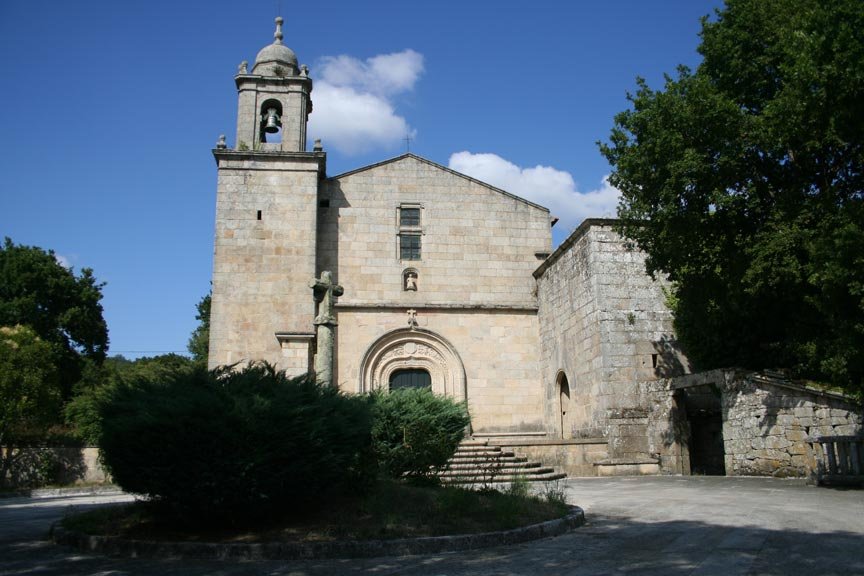
According to Edelmiro Martínez Cerredelo, the work was promoted by the cleric Alonso de Piña, prior of Xunqueira de Ambía, and directed by the Portuguese master Bartolomé de Nosendo: works began in February 1520 and in December 1523 the church was handed over to the Franciscans. Legend says the Virgin appeared to Xoán Folgoso on the crags where the main chapel stands [1]. A great fire in 1668 forced the convent to be rebuilt; in 1797 a Philosophy faculty opened that took in clerics fleeing the French Revolution, and after French troops destroyed the church and a fire in 1813, the desamortización (the Franciscans were there until 1835) left it abandoned [2]. In 2025 the Xunta began the procedure to declare it a BIC. See Bon Xesús convent of A Limia.
Lordships and lawsuits
The lawsuit between the houses of Monterrei and Lemos over the inheritance of Sancho de Ulloa ended with a ruling of 16 September 1610 that gave the Torre da Pena to the Lemos and left Xinzo, Ganade, Viladerrei and the Terra de Todea to Monterrei (see Torre da Pena). In Rairiz de Veiga, according to the concello, the Count of Monterrei held ordinary justice and the lands of six parishes and the Count of Moctezuma the rest, including Congostro and Ordes [8]. In Vilar de Santos, the concello recalls that Vilar de Santos, Saa and the Casas da Veiga belonged to the Order of Santiago, that Parada belonged to the Marquis of Malpica and that in 1836 the concello was created by uniting Vilar de Santos and Parada de Outeiro [7].
The Xinzo fairs
The fair of the 14th is documented in 1131, 1576 and 1600; in 1576 there were already covered stalls in today’s Praza Maior. The second fair, that of the 27th, was created under the mayoralty of Antonio Nieto Casado, elected on 1 April 1922 [11]. See The Xinzo fairs through time and Praza Maior, Ladeira and Toural.
The Inquisition and the Santanas
The Inquisition tribunal of Galicia was established in Santiago in 1574; the house of the Santanas of Sandiás, with branches in Potosí and A Limia, served the Holy Office in the 17th and 18th centuries as a symbol of status and nobility [6]. See Inquisition and the Santana house of Sandiás.
The first projects for the Lagoa de Antela
In 1765, the abbot of Covelas Pedro González de Ulloa presented to the Royal Agricultural Academy of the Kingdom of Galicia the first documented project to drain the Lagoa [10]. The full story is in The draining of the Lagoa de Antela.
1809: the Xinzo bridge
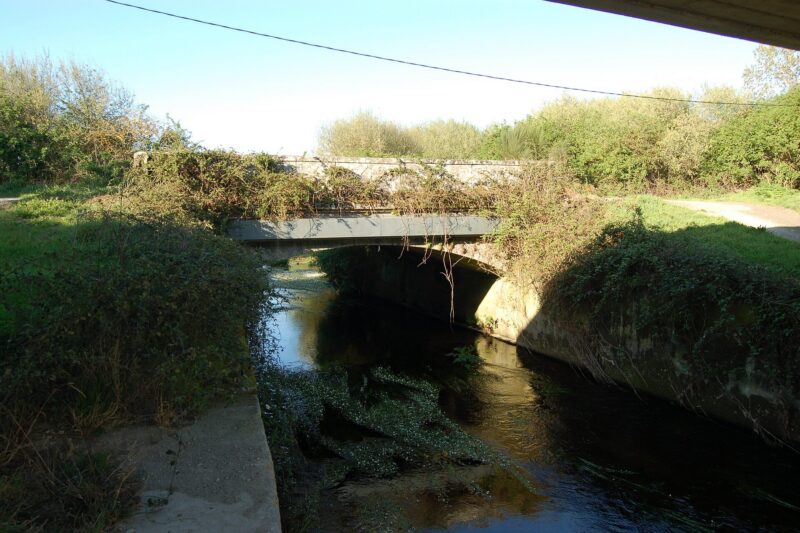
On 23 February 1809, farmers, abbots and friars of A Limia, poorly armed, tried to stop Marshal Soult’s French vanguard at the Xinzo bridge; they were defeated and the town was sacked [4]. See The battle of the Xinzo bridge. In the Couto Mixto too, the documents of the three-key chest disappeared when Soult’s troops passed (Couto Mixto).
Carlists and the First Republic
A Limia lived through the three Carlist wars: Mateo Guillade’s band sacked Xinzo in September 1837, there were bands in 1870–1873 and attacks on tax collectors [5]. See Carlist wars in A Limia.
Frequently asked questions
When was the Trandeiras convent founded? Works began in February 1520 and the church was handed to the Franciscans in December 1523 [1].
What happened in Xinzo in 1809? A battle at the bridge against the French vanguard and the sacking of the town [4].
Links
Sources
- Edelmiro Martínez Cerredelo, «A fundación do convento do Bon Xesús de Trandeiras», Historia de Xinzo, 24-09-2018. https://historiadexinzo.wordpress.com/2018/09/24/a-fundacion-do-convento-do-bon-xesus-de-trandeiras/
- Fronteira Esquecida, «Convento do Bon Xesús de Trandeiras». https://fronteiraesquecida.eu/en/fichas/monastery-of-bo-xesus-de-trandeiras/
- Edelmiro Martínez Cerredelo, «As feiras de Xinzo a través do tempo», Historia de Xinzo, 17-11-2018. https://historiadexinzo.wordpress.com/2018/11/17/as-feiras-de-xinzo-a-traves-do-tempo/
- Edelmiro Martínez Cerredelo, «A batalla da ponte de Xinzo: 23 de febreiro de 1809», Historia de Xinzo, 23-02-2015. https://historiadexinzo.wordpress.com/2015/02/23/a-batalla-da-ponte-de-xinzo-23-de-febreiro-de-1809/
- Edelmiro Martínez Cerredelo, «Apuntes sobre as guerras carlistas na Limia», Historia de Xinzo, 17 e 18-09-2018. https://historiadexinzo.wordpress.com/2018/09/17/apuntes-sobre-as-guerras-carlistas-na-limia-1a-parte/
- Luis Pazos Bande, «El Santo Oficio de la Inquisición…», Historia de Xinzo, 31-08-2021. https://historiadexinzo.wordpress.com/2021/08/31/el-santo-oficio-de-la-inquisicion-su-implantacion-en-galicia-y-su-relacion-con-la-familia-santana-y-allegados-por-luis-pazos-bande/
- Concello de Vilar de Santos, «Historia». https://vilardesantos.gal/historia/
- Concello de Rairiz de Veiga, «Historia». https://www.rairizdeveiga.es/gl/concello/historia
- «Couto Mixto», Galipedia (CC BY-SA 4.0). https://gl.wikipedia.org/wiki/Couto_Mixto
- lagoadeantela.es, «Intentos de desecación de la laguna de Antela». https://lagoadeantela.es/intentos-de-desecacion-laguna-antela/
- Edelmiro Martínez Cerredelo, «José Antonio Nieto Luis, (Xinzo de Limia, 1894-1983). Médico e político local» (nota sobre o seu pai), Historia de Xinzo, 31-07-2025. https://historiadexinzo.wordpress.com/2025/07/31/jose-antonio-nieto-luis-xinzo-de-limia-1894-1983-medico-e-politico-local/
You may also like
 History of A LimiaPrehistory and castros of A LimiaFrom the Pedra Alta de Antela to the castro of Bóveda: megaliths, the Roufeiro weapons, the Outeiro de Baltar and the gold earring of Vilar…
 History of A LimiaThe Limici in Roman inscriptions: Celer’s gladiatorial tessera and Corellius LimicusTwo epigraphic pieces outside A Limia that mention a "Limicus": the bronze gladiatorial tessera from Niebla (Huelva), of the 1st century,…
 History of A LimiaThe battle of the Xinzo bridge (23 February 1809)On 23 February 1809 farmers, abbots and friars of A Limia, poorly armed, tried to stop Soult's French vanguard at the Xinzo bridge; they…
History of A LimiaThe Limici and Romanisation: Civitas, Forum Limicorum and Via NovaWhat is known of the Limici and Roman Limia: the Civitas Limicorum, the debate over where the Forum Limicorum stood (A Cidá of Nocelo da…
 History of A LimiaThe Praza Maior, the Ladeira and the Toural: history of Xinzo’s central placesHistory of the Praza Maior (fairs since the 16th century, the 1907 Espolón, the fountain), the Ladeira and the Toural (the lagoon, the…
History of A LimiaLight, chocolate, fizzy drinks and roads: the industrial and service Xinzo of the 20th centuryHow electricity (1911), the printing press, chocolate and soda factories, the Rubio Cold-Storage Slaughterhouse and buses to Ourense and…
