


The Torre da Pena (Portela): history of a fortress of A Limia
The Torre da Pena or Portela tower, in Xinzo de Limia, is a 14th-century military tower and a Bien de Interés Cultural since 1994: the Biedma family, the Monterrei–Lemos lawsuit, its three vaults and the Inês de Castro tradition.
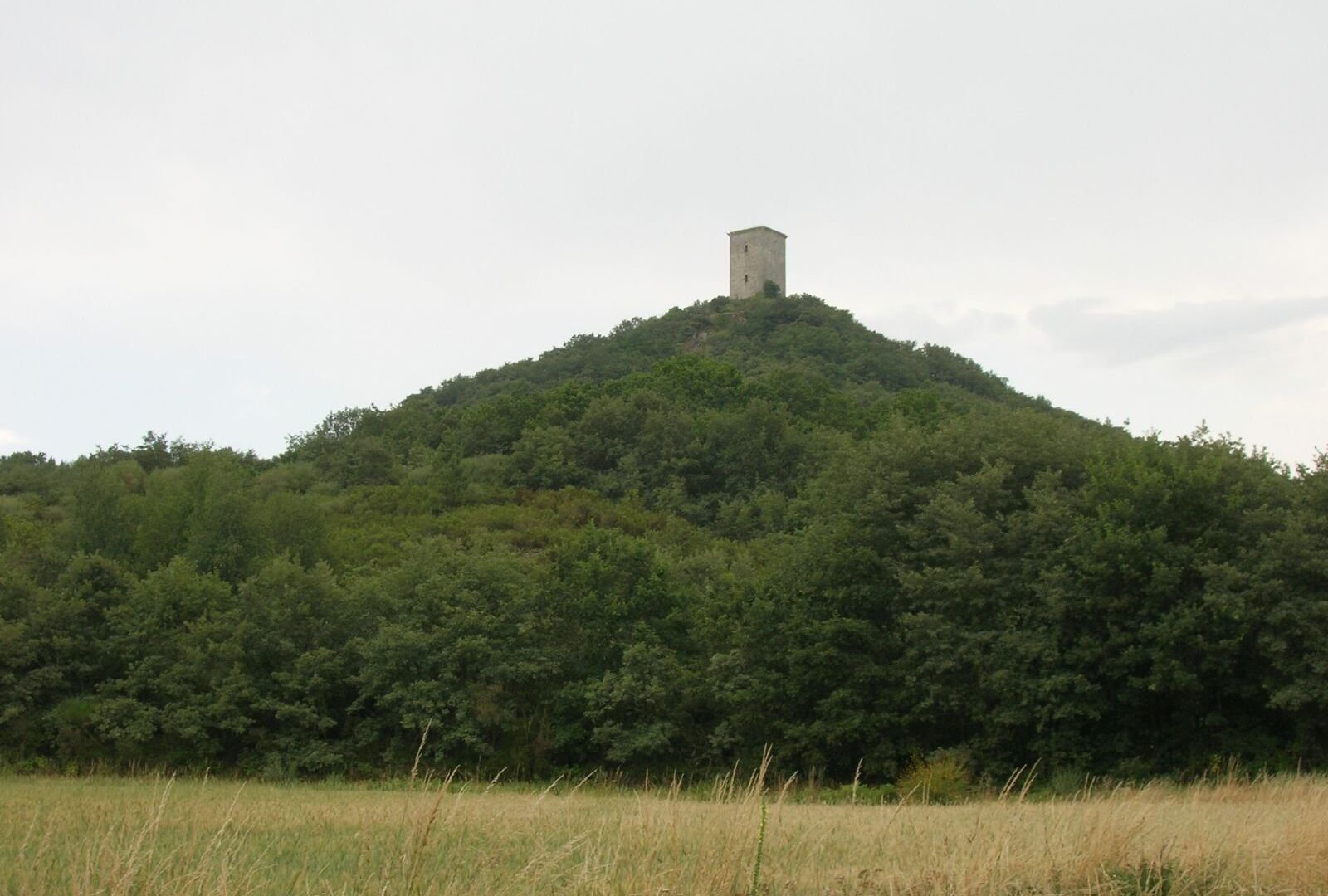
The Torre da Pena, also called the Torre de Portela, Pena de Portela or San Pedro de Portela, stands in A Pena, in Xinzo de Limia, on a natural balcony of the Limia plain. It is one of the four towers that, according to the source, defended A Limia on the border with Portugal [1].
Origins and first records
Some historians place the tower in the 12th century and others attribute it to the Suevi. The first documented mention is from 1217, when Alfonso IX gave his daughters Sancha and Dulce, as a dowry, several Galician fortresses, among them the castellum of Portela, the «Castle of Portela da Limia» [1].
Later, in 1336, Alfonso XI granted the Pena de Portela to Rui Páez de Biedma, chief steward, who founded the house of the Torre de Portela and built the military tower. His son Juan Rodríguez de Biedma, the king’s alcalde in Allariz, obtained confirmation of the family estates; in 1369 Henry II gave him, among others, the places of Xinzo and Ganade and later Viladerrei and the Terra de Todea, and John I confirmed his privileges in 1379 [1].
The Duke of Lancaster and noble lawsuits
In the spring of 1387, the Duke of Lancaster, on his way to Benavente, occupied the castles of A Limia, among them the Torre de Portela. In time it passed from the counts of Monterrei to the counts of Lemos, after a long lawsuit, and finally to the counts of Alba [1].
The lawsuit arose because Sancho de Ulloa, first count of Monterrei, left a daughter, Francisca de Zúñiga, whose inheritance was disputed. An entail (mayorazgo) of 1515 favoured her granddaughter Teresa over Alonso, which gave rise to the Monterrei–Lemos lawsuit. The final ruling, of 16 September 1610, divided places, fortresses and jurisdictions: Xinzo, Ganade, Viladerrei and the Terra de Todea went to Monterrei, and the fortress of the Torre de Portela, at Pena, to Lemos [1].
The construction
The tower has a square plan (10.30 × 10.40 m) and walls of carefully dressed masonry up to 2.40 m thick. The door opens high up, as a precaution: it forced entry by a wooden ladder that could be withdrawn if necessary. It has three floors; the most notable feature is the excellently built barrel vaults, running east–west on the first floor, north–south on the second and again like the first on the third. It was declared a Bien de Interés Cultural in 1994 and the conservation and refurbishment of 2001–2002 was directed by the Limia architect Manuel Seoane Feijoo [1].
Inês de Castro
Tradition places the birth of Inês de Castro (Limia, 1325 – Coimbra, 7 January 1355) in this castle: a Galician noblewoman and, after her death, queen of Portugal, the illegitimate daughter of Pedro Fernández de Castro. She had a clandestine romance with Prince Pedro of Portugal; she was murdered and, according to the legend, King Pedro, by then on the throne, had her crowned and seated on a throne so that the nobles could kiss her hand. The source cites Senén López (2009) for this account [1]. See Inés de Castro.
Links
Sources
- «A Torre de Pena (Xinzo de Limia)», Historia de Xinzo, 12 October 2018. https://historiadexinzo.wordpress.com/2018/10/12/a-torre-de-pena-xinzo-de-limia/
- «Torre da Pena – Cultura – Concello de Xinzo de Limia». http://www.xinzodelimia.es/articulo/cultura/torre-da-pena/20160505122842000666.html
You may also like
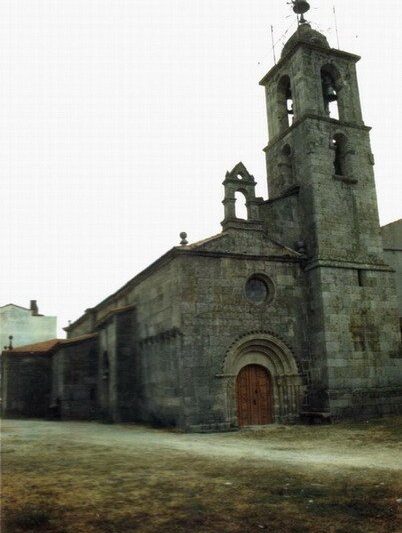 Heritage of A Limia: towers, convents, mills and ethnographic villagesA tour of the historic heritage of the municipality of Xinzo de LimiaA summary of the historic heritage of Xinzo de Limia: the Romanesque old church, the churches of Novás and Morgade, Torre da Pena, the Bon…
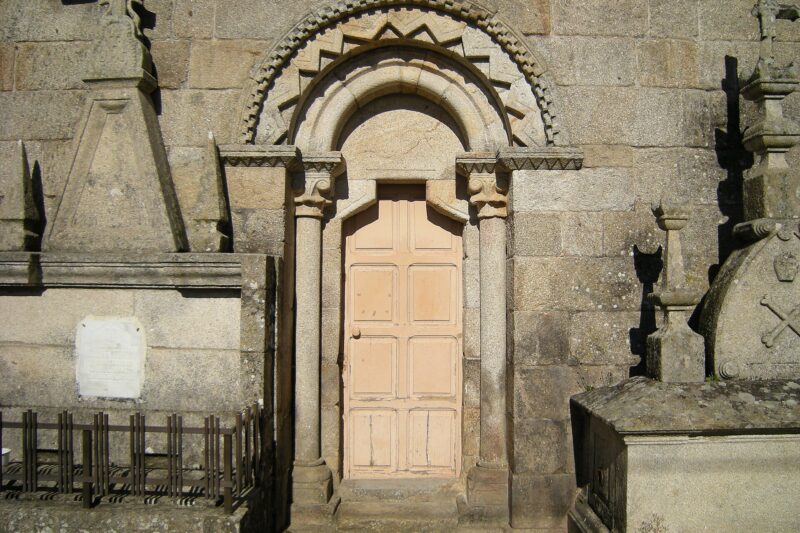 Heritage of A Limia: towers, convents, mills and ethnographic villagesEthnographic heritage of Rairiz de Veiga: Congostro, mills, ovens and springsThe ethnographic heritage of Rairiz de Veiga: the restored village of Congostro, the San Miguel mills route, 17 mills, 5 communal ovens and…
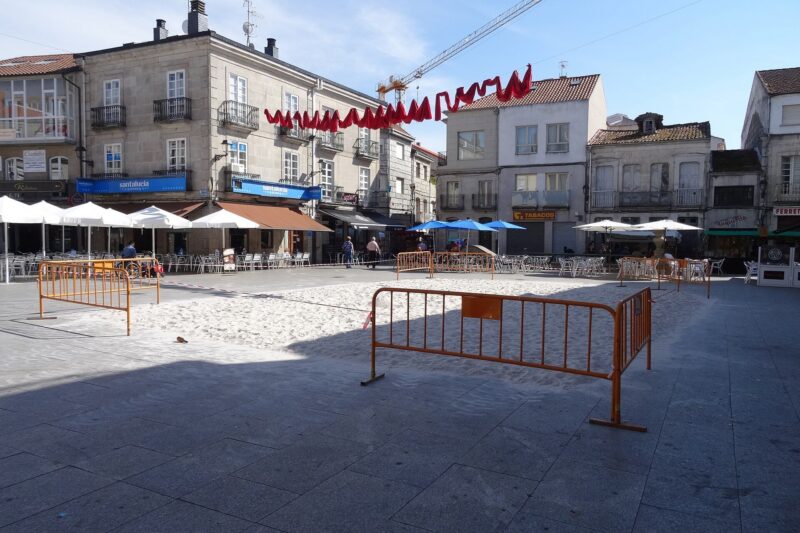 Heritage of A Limia: towers, convents, mills and ethnographic villagesXinzo de Limia in a day: a route through heritage, water and the lagoonA suggested one-day visit to Xinzo de Limia: Museo Galego do Entroido, the church and square of the town, Torre da Pena, the Bon Xesús…
Heritage of A Limia: towers, convents, mills and ethnographic villagesChurches and chapels of the parishes of Xinzo de LimiaIndex of the parish churches and chapels recorded in each of the 20 parishes of Xinzo de Limia, with their dedication, according to…
 Heritage of A Limia: towers, convents, mills and ethnographic villagesMills and ethnographic heritage of Calvos de RandínCalvos de Randín has 18 mills catalogued in Galicia Nomeada, plus the Oratorio, tied to the rivers and streams of the Salas valley and the…
 Heritage of A Limia: towers, convents, mills and ethnographic villagesConvento do Bon Xesús da Limia (Trandeiras): the BIC fileThe Convento do Bon Xesús da Limia, in Trandeiras (Xinzo de Limia), was built in the early 16th century; the Xunta has opened the procedure…
