


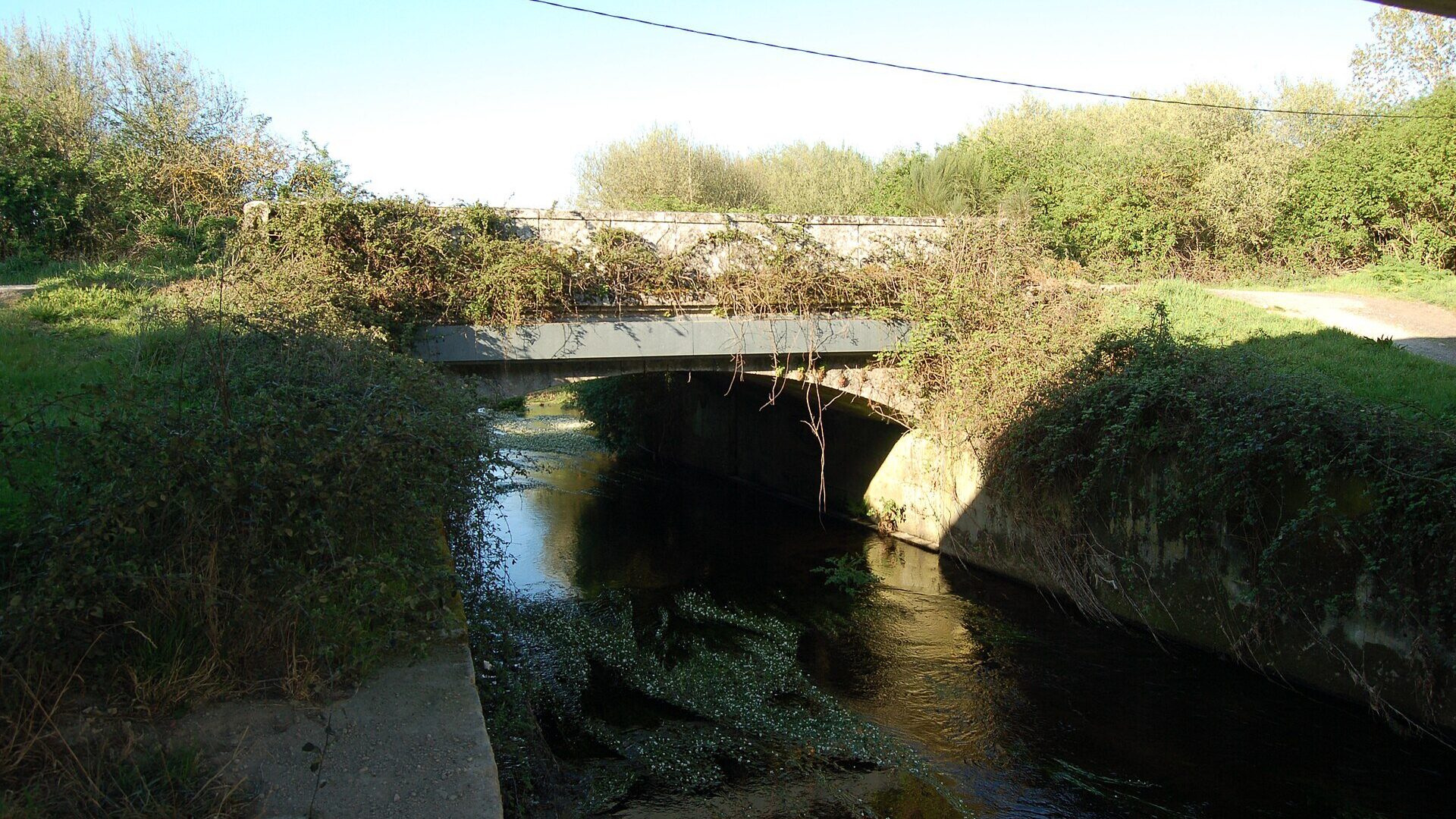
The battle of the Xinzo bridge (23 February 1809)
On 23 February 1809 farmers, abbots and friars of A Limia, poorly armed, tried to stop Soult's French vanguard at the Xinzo bridge; they were defeated, the town sacked and the house where the dead and wounded were piled up burned.
On 23 February 1809, during the War of Independence, Marshal Soult’s French troops, on their way to Portugal, met in A Limia a resistance they did not expect: men, women, abbots, friars and young men, poorly armed and almost without ammunition, tried to stop about 5,000 invading soldiers at the Xinzo bridge (the bridge over the Lagoa de Antela, probably the vanished Poldras bridge) [1][2].
Before the battle
While the locals tried to slow the advance, the Marquis of La Romana, whom the people called "the marquis of the pilgrimages", was with his army at Oímbra, safe from the French [1]. After a night keeping vigil over their arms, reinforcements arrived from every corner of A Limia (Bóveda, Boado, Escornabois, Garabás, San Mamede, Vilar de Cobelas, Baronzás and Xinzo) with shotguns, sickles, pikes and farm tools. They made barricades on the bridge with trees, stones, carts and gorse, and had the help of the Regiment of Catalan Volunteers; the resistance was such that the French thought they faced a regular army [1][2].
The fight according to Xerónimo Vázquez
The most detailed account is that of Xerónimo Vázquez, a neighbour of Allariz. According to him, the French advance guards tried to force the bridge three times and three times were repelled with heavy losses; some horsemen tried to ford the swollen river and were shot dead. When he saw the locals’ advantage, the general ordered a feigned retreat to distract them and sent the cavalry to ford the river at several points; the locals believed they were being cut off and abandoned a height, and the infantry took the bridge "with considerable loss". A volunteer among the locals went over to the French and undeceived them: there were no regular troops, only farmers [1].
Another text recalls that "two friars" Franciscans of the Bon Xesús convent of Trandeiras fought on the battlefield without taking off their habit and died as heroes. The French pursued the locals across the plain and killed many, because there was nowhere to hide; at the entrance to Xinzo there was another resistance, which had to withdraw [1]. The French general was Franceschi, one of Napoleon’s most seasoned [1].
The hunter of A Pena
The same Xerónimo Vázquez tells an episode that Jesús Taboada Chivite recovered in La Región (March 1952) under the title "El cazador de franceses": a local from the village of A Pena, a great partridge hunter, received 40 cartridges and, according to the account, used 39 so accurately that he killed as many Frenchmen; he asked for more and was not given them, and kept the last to escape. Pursued by a dragoon, he had to jump into the river; finding himself pressed, he aimed and killed him [1][2]. It is the version of two chroniclers and should be read as an account of the time, not as a verified fact.
Sacking and fire
After the action the French sacked the houses of Xinzo, where no resident remained. They gathered the dead and wounded: those far away were buried in the field and those nearby, and those the army carried, were piled in the new house of the heirs of the abbot of Xinzo. According to a carter from Sandiás whom the French forced to accompany them, 354 were put in, besides over 30 wounded horses; the doors were shut, dry firewood put in and it was set alight, with over 900 fanegas of rye from the granary; and the carter said he had never wept so much as hearing the cries of the wounded, while the French sang and celebrated [1][2]. The casualty toll was, according to the text, 500 to 600 French and over 300 locals (other sources speak of 300 to 400) [1][2]. The French boasted so much of the victory that a gazette printed in Paris, according to the account, reported it as a defeat of the English army with 11,000 dead [1].
The testimony of the death register
The death register of the parish of Santa Mariña de Xinzo, which begins on 6 April 1809 because the earlier ones were burned, has a "warning" from the assistant priest Xosé Martínez: the French, "resentful that defenceless men had dared to measure their strength against theirs", killed the vacant chaplain, Martín Blanco, stole the church’s silver, burned altars, confessionals and doors, and the current books of baptisms, marriages and deaths. The text speaks of over 400 victims among the locals [1]. The French entered Xinzo around four in the afternoon and extended the occupation to Laroá and to the places near A Boullosa, where the new junta was [1].
Afterwards
The resistance continued: the Junta and Regiment of Lobeira were created to lead the fight in southern Galicia, and Limia people took part at Ponte Sampaio (8–9 June 1809), which meant the definitive French withdrawal [2]. In February 2009, on the bicentenary, a simple monument was placed in the Toural gardens in Xinzo [2].
To learn more
Edelmiro Martínez Cerredelo, "As tropas de Napoleón na Limia", Lethes no. 7 (2006); Carlos Gómez Salgado, "La Batalla de Xinzo de Limia, 23.II.1809" (summary); La Región, 26/03/1952 [2].
Links
- History of A Limia
- Xinzo de Limia
- Francisco Piñeiro Solveira, the guerrilla abbot of Gudín
- Curiosities of A Limia
Sources
- Edelmiro Martínez Cerredelo, «A batalla da ponte de Xinzo: 23 de febreiro de 1809», Historia de Xinzo, 23/02/2015 (cita a Xerónimo Vázquez e o libro de defuntos de Santa Mariña de Xinzo). https://historiadexinzo.wordpress.com/2015/02/23/a-batalla-da-ponte-de-xinzo-23-de-febreiro-de-1809/
- Alexander de los Ríos Conde, «Héroes anónimos de A Limia ante la invasión francesa de Galicia (1809)», Vía Lethes, 05/03/2017. https://vialethes.es/heroes-anonimos-limia-1809
You may also like
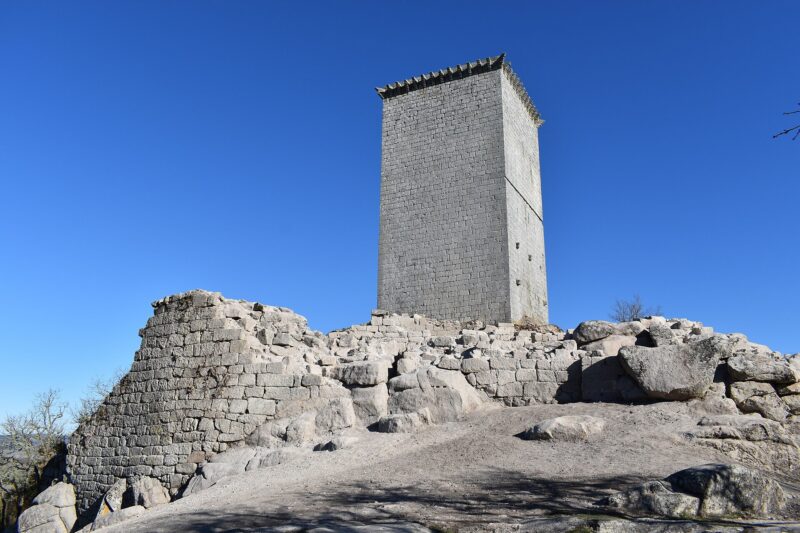 History of A LimiaPrehistory and castros of A LimiaFrom the Pedra Alta de Antela to the castro of Bóveda: megaliths, the Roufeiro weapons, the Outeiro de Baltar and the gold earring of Vilar…
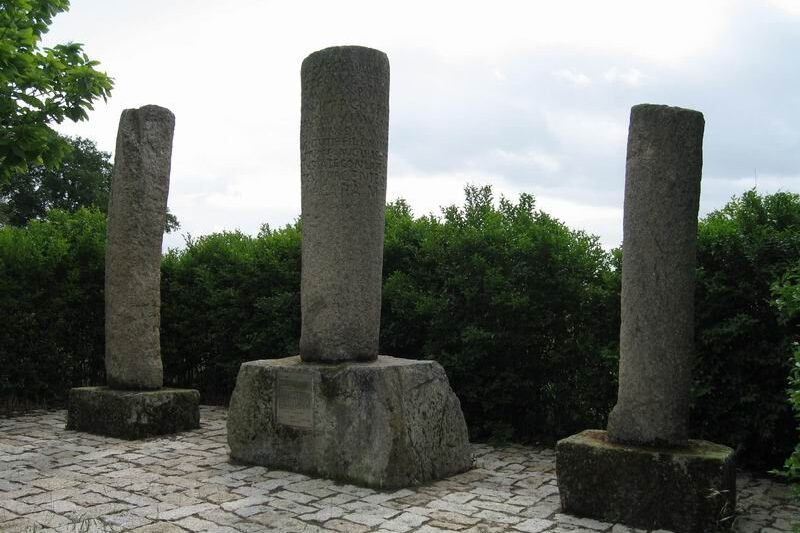 History of A LimiaThe Limici in Roman inscriptions: Celer’s gladiatorial tessera and Corellius LimicusTwo epigraphic pieces outside A Limia that mention a "Limicus": the bronze gladiatorial tessera from Niebla (Huelva), of the 1st century,…
History of A LimiaThe Limici and Romanisation: Civitas, Forum Limicorum and Via NovaWhat is known of the Limici and Roman Limia: the Civitas Limicorum, the debate over where the Forum Limicorum stood (A Cidá of Nocelo da…
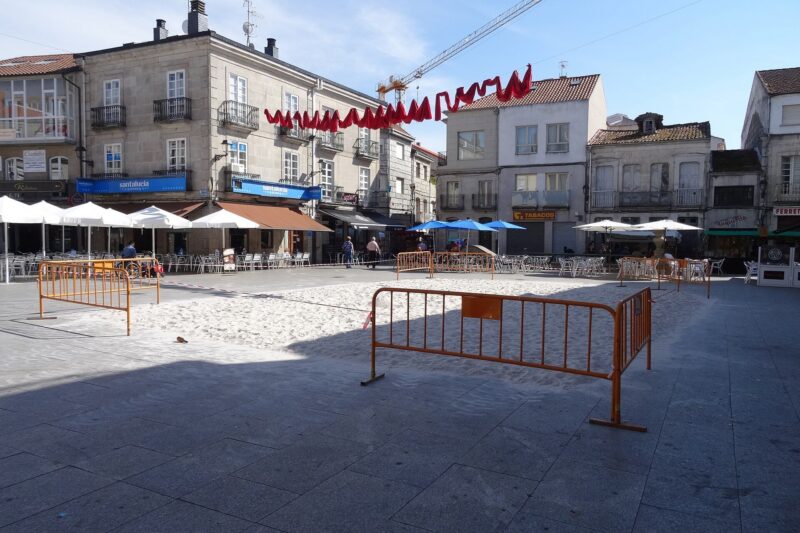 History of A LimiaThe Praza Maior, the Ladeira and the Toural: history of Xinzo’s central placesHistory of the Praza Maior (fairs since the 16th century, the 1907 Espolón, the fountain), the Ladeira and the Toural (the lagoon, the…
History of A LimiaLight, chocolate, fizzy drinks and roads: the industrial and service Xinzo of the 20th centuryHow electricity (1911), the printing press, chocolate and soda factories, the Rubio Cold-Storage Slaughterhouse and buses to Ourense and…
 History of A LimiaCinemas, café, radio, school and library: Xinzo’s cultural life from 1948 to the 1970sThe cinemas Los Molinos (1948) and Antelano (1954), the Café Ideal and the Ideal 6 disco, the 1950 radio, the Colegio Santa Marina, the…
