


The Xinzo fairs through time: from the 14th of each month to today’s feirón
The Xinzo de Limia fair of the 14th, documented in 1131, 1576 and 1600, its rent in the 18th century, the second fair of the 27th, life on the Toural field in the 1950s and its decline from the 1960s.
The Xinzo de Limia fair of the 14th of each month, held, in the words of the author who describes it, "since time immemorial", gave shape and life to the town. This page summarises what the article As feiras de Xinzo a través do tempo, published in Historia de Xinzo and taken from the book Xinzo de Limia na memoria, records about it [1].
From medieval documents to the 18th century
The fair was already important in 1131, when Alfonso VII exempted from toll and market tax the inhabitants of Ourense who went to sell in A Limia [1]. In 1576, the stewardship book of Xinzo, belonging to the Count of Monterrei, counted the cloth merchants’ shops and the stone seats of the fair: in what is today the Praza Maior there were covered arcades, with a gate towards Monterrei (six rows of stalls) and another, the Xinzo gate (three more rows), with a total of forty selling stalls, six silversmiths’ shops and eleven haberdasheries. The stalls were awarded at auction by the count’s administrator, who collected the rents, later ceded to the hospital of Monterrei [1].
A lawsuit between neighbours in 1600 records that the fair was held on the fourteenth of each month and that all the people of the land and cloth and linen merchants attended; there were so many people that five, eight or ten taverns were not enough to supply wine and food, and the alcabala paid to the king exceeded one hundred and fifty ducats a year [1].
In the 18th century, the fair of the 14th was considered the best in the province: in 1752-1753 that of Xinzo and its annex at Ponte Liñares were leased for 16,250 reals, ahead of Carballiño (14,983) and the city of Ourense (9,253 reals and 24 maravedís). With those rents the alcabalas of the jurisdiction’s concellos were paid. Pedro González de Ulloa described in 1777 the fairs as "the best in the province, very abundant in everything", above all in livestock, shown in a spacious field in the town, with cloths and other goods under sheds; in 1779 the Xinzo fair and that of Ponte Liñares were knocked down at 22,000 reals [1]. On Ponte Liñares see The Liñares bridge and the new fair.
The fairs of the 14th and 27th
In January 1915 the town council agreed to create a new fair on the 27th of each month, free of charges for breeders and traders; when it did not take off, on 1 April 1922, with Alonso Nieto Casado as mayor, it was created again. It came to have the same vitality as that of the 14th, so Xinzo had two important fairs, besides the weekly markets on Tuesdays and Saturdays. In the 1950s, under Mayor Xesús Carlos Romero Nieto, the 21st was designated for a third fair, which had little success and disappeared [1].
The fair of 14 May was the "girls’ fair": the town filled with young men and women in search of a sweetheart, and it was said: "O que non bota noiva o 14 de maio, non a bota en todo o ano" (whoever doesn’t find a girlfriend on 14 May won’t find one all year) [1].
Fair day in the 1950s
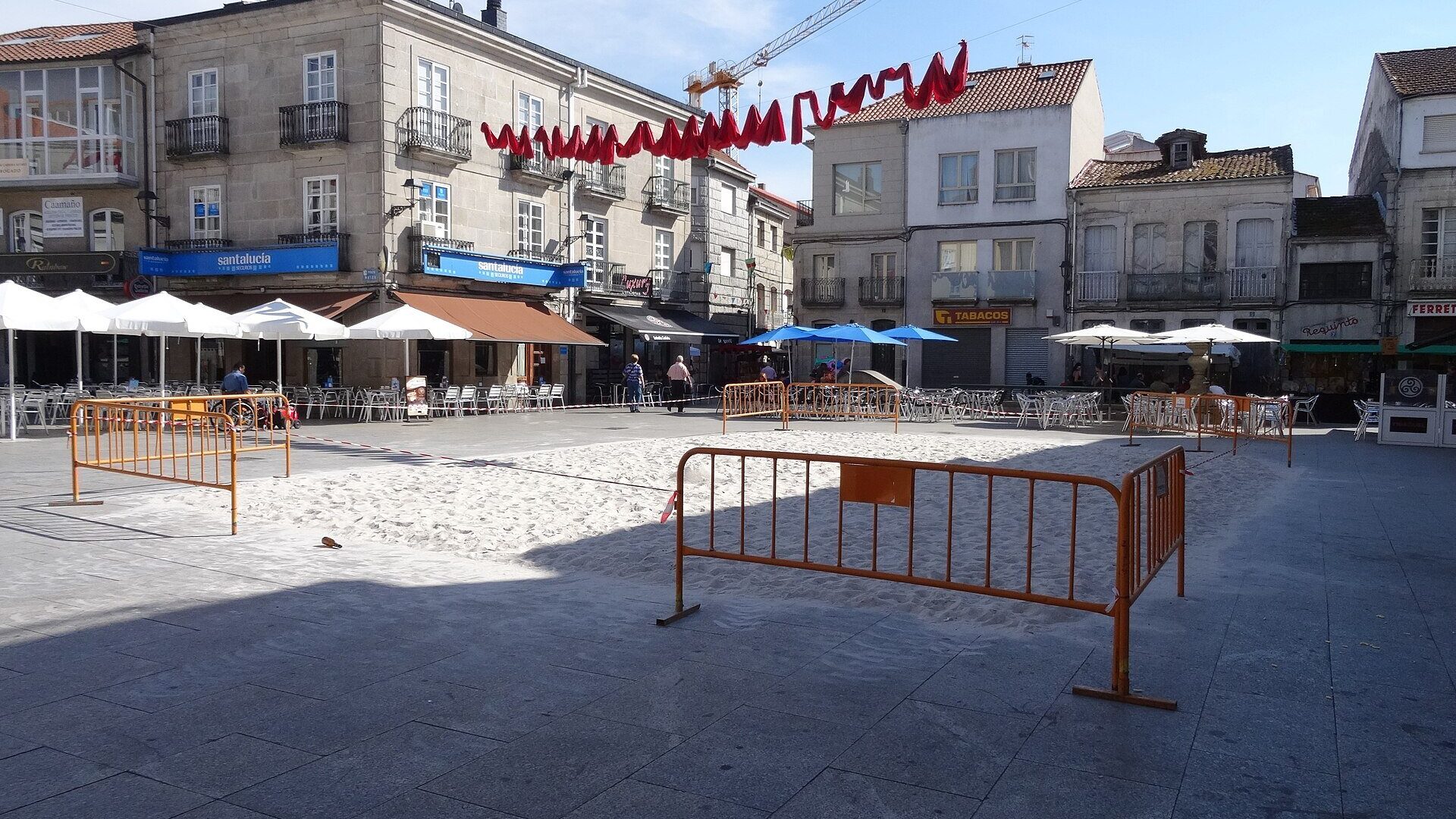
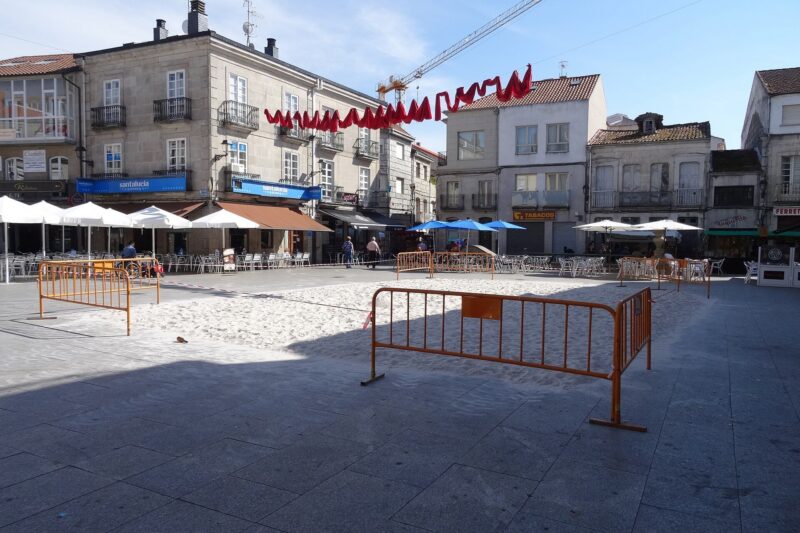
The fairs of the 14th and 27th were the town’s commercial engine. In the 1950s they occupied the Praza Maior, Lepanto street, the egg square (today Xoán XXIII), the fish square (today Bispo Idacio), San Roque street and the Toural field [1].
Almost all the farmers from nearby villages came on foot with cows and calves, set out early and took an hour or two, up to three for those from farther away, if they did not come on the mixed buses. Young cows were sold to work; old ones and calves went to the slaughterhouse. To move livestock a permit had to be obtained and paid for at the home concello. The Xinzo concello auctioned the collection of the fair’s levies [1].
Around the fair walked pickpockets, three-card tricksters (the best known, the Titá), patter-merchants like the one called Mario and quack healers like the Remi, who, covered in snakes, sold ointments; in summer, the lemonade sellers; and also blind singers’ songs and beggars. Children rummaged on the ground for rye ergot or, for a few pennies, minded in the yard of the old church under construction the donkeys, mules and horses of neighbours who came to the fair [1]. On Remi of the snakes and other customs, see Fair traders, cinzarradas and proxy weddings; on the fair’s spaces, Praza Maior, Ladeira and Toural.
The decline
In the 1960s and, above all, from the 1970s the livestock fair faded: dealers, by then motorised, bought livestock in the villages. Around the mid-1970s the concello exempted farmers bringing livestock from the levies. The author describes the present fair as a feirón of textiles, bags and footwear at low prices, which ends at midday and where locals take the chance to shop and eat octopus [1]. The Regional Country Fairs of 1964-1966 were an attempt to revitalise the farming world: The Regional Country Fairs of Xinzo.
Frequently asked questions
Which day is the Xinzo fair held?
The traditional fair is that of the 14th of each month; since 1922 there is also that of the 27th [1].
Since when has it existed?
There are references from 1131, and the count of the fair’s stalls dates from 1576 [1].
Why was the fair of 14 May called the "girls’ fair"?
Because the town filled with young men and women in search of a sweetheart [1].
Links
Sources
- «As feiras de Xinzo a través do tempo», Historia de Xinzo (17/11/2018), do libro Xinzo de Limia na memoria. https://historiadexinzo.wordpress.com/2018/11/17/as-feiras-de-xinzo-a-traves-do-tempo/
You may also like
 History of A LimiaPrehistory and castros of A LimiaFrom the Pedra Alta de Antela to the castro of Bóveda: megaliths, the Roufeiro weapons, the Outeiro de Baltar and the gold earring of Vilar…
 History of A LimiaThe Limici in Roman inscriptions: Celer’s gladiatorial tessera and Corellius LimicusTwo epigraphic pieces outside A Limia that mention a "Limicus": the bronze gladiatorial tessera from Niebla (Huelva), of the 1st century,…
 History of A LimiaThe battle of the Xinzo bridge (23 February 1809)On 23 February 1809 farmers, abbots and friars of A Limia, poorly armed, tried to stop Soult's French vanguard at the Xinzo bridge; they…
History of A LimiaThe Limici and Romanisation: Civitas, Forum Limicorum and Via NovaWhat is known of the Limici and Roman Limia: the Civitas Limicorum, the debate over where the Forum Limicorum stood (A Cidá of Nocelo da…
 History of A LimiaThe Praza Maior, the Ladeira and the Toural: history of Xinzo’s central placesHistory of the Praza Maior (fairs since the 16th century, the 1907 Espolón, the fountain), the Ladeira and the Toural (the lagoon, the…
History of A LimiaLight, chocolate, fizzy drinks and roads: the industrial and service Xinzo of the 20th centuryHow electricity (1911), the printing press, chocolate and soda factories, the Rubio Cold-Storage Slaughterhouse and buses to Ourense and…
