

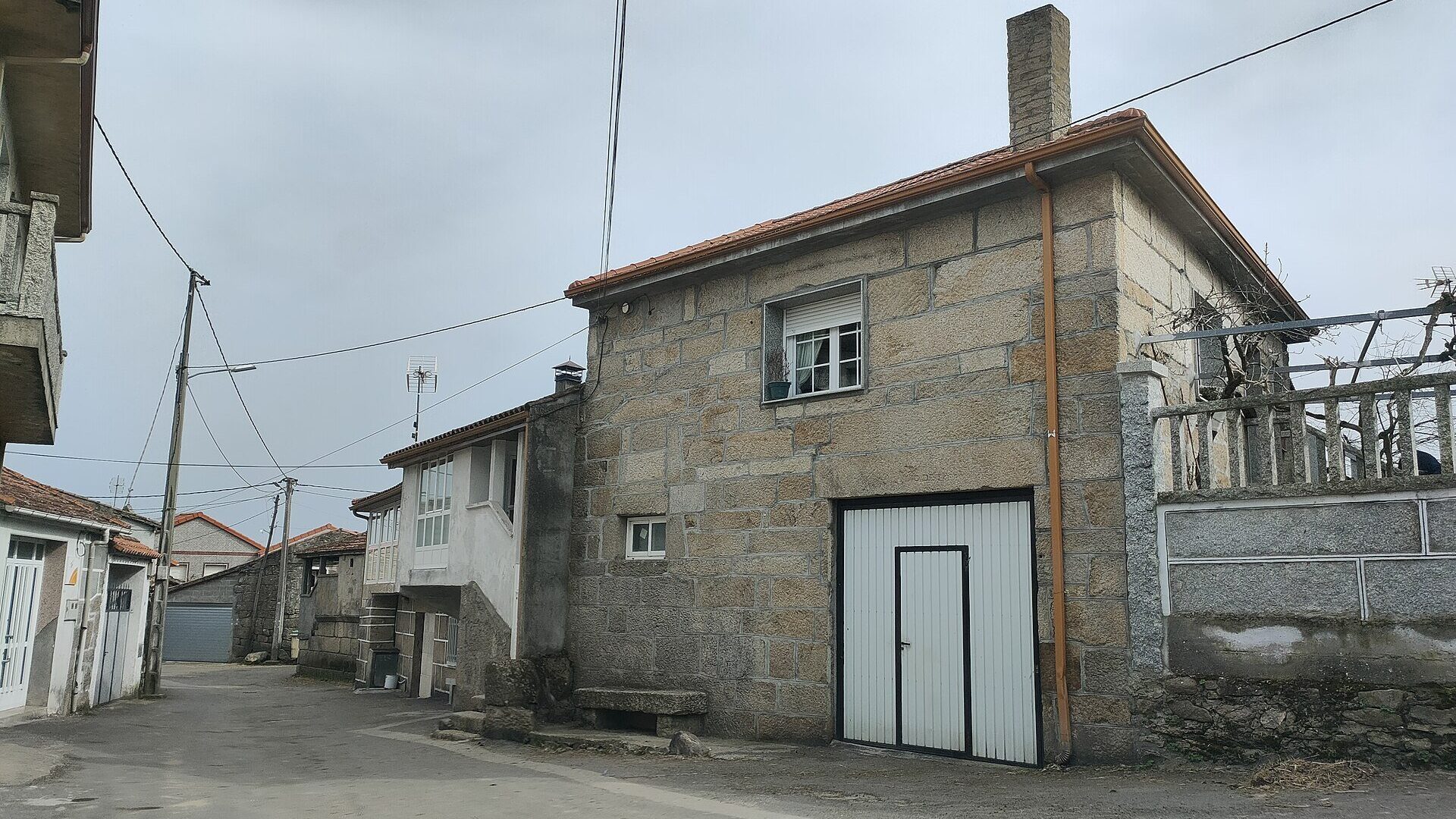
Francisco Piñeiro Solveira, the Guerrilla Abbot of Gudín
Francisco Piñeiro Solveira (Gudín, Xinzo de Limia, 18th century – Tui, 1828) was an abbot and leader of guerrilla bands in the Peninsular War, and brought arms from Lisbon to Galicia.
Francisco Piñeiro Solveira was born in Gudín (Xinzo de Limia) in the 18th century and died in Tui on 20 October 1828. He was a priest, guerrilla fighter and leader of military bands during the Peninsular War [1].
The abbot of Arnois
His biography is known from June 1808. He was already parish priest, with the dignity of abbot, of San Xulián de Arnois (A Estrada), which he had taken possession of in 1794. Moved by the news of the Spanish uprising against Napoleon’s troops, he went to A Coruña and offered the Supreme Junta of Galicia the income of the abbey, except for eight reales a day for his maintenance [1].
Arms from Lisbon
When the French invaded the Kingdom of Galicia in January 1809, he was among the first to warn the jurisdictions of Tabeirós, Bea, Viso and A Veiga. The junta formed in those jurisdictions charged him with requesting arms and ammunition from the English; he boarded the frigates Libelly and Venus and their commander, Captain Gregor Mackinley, gave him all he had available. He then reached Lisbon, where he gathered seven thousand muskets, cartridge boxes and other supplies, and paid out of his own pocket the carriage costs and the upkeep of the escort [1].
He took part in the reconquest of Vigo and of Santiago and in the battle of Ponte Sampaio (7 June 1809), in which Marshal Ney’s VI Corps was defeated. Once Galicia was liberated, he accompanied Colonel Pablo Morillo with his staff to Ciudad Rodrigo, where he handed over eight hundred equipped men [1].
The «Cruzada» band
On 4 April 1810 the Galician Armament Junta commissioned him to form a guerrilla band, called Cruzada, to defend the country should there be another invasion. From Arnois he addressed a proclamation to the Galician people on 8 April [1]. He was one of the many Galician «guerrilla priests», like the abbot of Valladares, Juan Rosendo Arlen y Enríquez, or José Antonio de Neyra, curate of O Barco [1].
After the war
When the war was over he stood out as a royalist: the proclamation of the military governor of Santiago, José Pesci, on the occasion of General Díaz Porlier’s uprising (1815), praises his «zeal, loyalty and patriotism», and Piñeiro offered five thousand men gathered in Tabeirós [1]. His services were rewarded with a canonry in Tui cathedral, which he took up on 28 June 1822, in the middle of the Liberal Triennium; because of his royalism he was persecuted and confined for six months in the seminary-convent of Herbón (until July 1823). In poor health from then on, he died in Tui in 1828 [1].
Links
- Municipality: Xinzo de Limia
- People of A Limia
- Gudín, his native parish
- History of A Limia
Sources
- Fernando Rodríguez de la Torre, «Piñeiro Solveira, Francisco», Diccionario Biográfico electrónico of the Real Academia de la Historia, reproduced in Historia de Xinzo, 08/03/2023. https://historiadexinzo.wordpress.com/2023/03/08/francisco-pineiro-solveira-gudin-ginzo-de-limia-s-xviii-tuy-20-x-1828-presbitero-guerrillero-y-jefe-de-partidas-militares-durante-la-guerra-de-la-independencia/
You may also like
 Notable personOlimpia Valencia López, the First Woman in Galicia to Graduate in MedicineBorn in Baltar in 1898, Olimpia Valencia was the first Galician woman to graduate in Medicine (1925) and in 1928 opened a general medicine…
 Notable personAntón Tovar, the Poet of A Pereira (Rairiz de Veiga)Antón Tovar Bobillo (A Pereira, Rairiz de Veiga, 1921 – Ourense, 2004) was an existentialist poet in Galician and Spanish, honorary member…
 Notable personCarlos Casares, the Writer Who Grew Up in Xinzo de LimiaCarlos Casares (Ourense, 1941 – Vigo, 2002) spent his childhood in Xinzo de Limia, between Lamas and Sabucedo; he was a novelist, RAG…
 Notable personAlfredo Nan de Allariz, Poet and Playwright from Xinzo in HavanaAlfredo Fernández, «Nan de Allariz», was born in Xinzo de Limia (1874 or 1875) and died in Madrid in 1927; poet, playwright and composer,…
 People of A LimiaHistorical Figures of A Limia: A TimelineTimeline of historical figures linked to A Limia, from Roman times to the 20th century: Limicians of Rome, Hidatius, counts, medieval…
 Notable personCástor Méndez Brandón, Baritone and Folk-Song Poet Born in XinzoCástor Méndez Brandón (Xinzo de Limia, 1864 – Celanova, 1920) was a lawyer, baritone at the Teatro Real in Madrid, poet and mayor of…
