

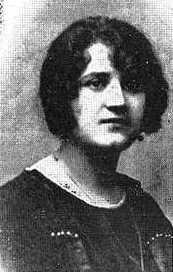
Olimpia Valencia López, the First Woman in Galicia to Graduate in Medicine
Born in Baltar in 1898, Olimpia Valencia was the first Galician woman to graduate in Medicine (1925) and in 1928 opened a general medicine and gynaecology clinic in Vigo.
Olimpia Valencia López was born in Baltar on 14 December 1898 and in 1925 became the first Galician woman to hold a degree in Medicine [1][3]. She was the only child of a well-to-do family and had lived in Vigo since the age of twelve [1].
Her studies
On 8 March 1910 a royal decree allowed women to enter university education. In 1919, aged 21, Olimpia entered the Faculty of Medicine of the University of Santiago de Compostela, just as the Asturian sisters Jimena and Elisa Fernández de la Vega had become the first women to graduate from that faculty [1]. That student also found time for the theatre: at the premiere of Trebón (1922), the first stage play by Armando Cotarelo Valledor, written in Galician, she successfully played one of the main roles [1].
In 1925 she graduated with a record hard to surpass, with 19 distinctions [1]. Under outside pressure she decided to pursue a doctorate in Gynaecology, the specialty that relatives and teachers considered most suitable for a woman; to do so she moved to Madrid and lodged at María de Maeztu’s Residencia de Señoritas [1].
The Vigo clinic
In 1928 she returned to Vigo and on 23 February opened her clinic on the first floor of number 17, Rúa Príncipe, where she practised general medicine and gynaecology [1][2]. At the opening she was accompanied by the actor and journalist José Signo, then secretary of the Press Association [2]. At first it was hard for people to associate the word «doctor» with a woman, but little by little she won clients and prestige [1].
An article by Manuel García Barros (Ken Keirades) in the «Rexoubas» column of El Emigrado tells of the confusion in the early days: seeing the name Olimpia Valencia in headlines, he said, one might think she was a variety-show artiste, until one noticed the word «doctor» beneath it [2].
Thought
In an interview with Johan Carballeira in early 1930, Olimpia spoke about the woman of her time. Her ideal was that she should be «a human verse. Wise and subtle, like a good verse. Simple and sensitive», and she saw in study and work women’s «only source of redemption». On women’s suffrage she thought that Spanish women would never demand it as the suffragettes of other countries did; a year later the Second Republic granted it [1]. Carballeira, a poet, journalist and Galicianist politician, would be murdered by the Falangists [1].
The repression of 1937
Olimpia sympathised with Galicianist intellectuals and signed, among other things, an appeal in favour of the plebiscite on the Galician Statute. In 1937 she suffered Francoist repression: she was accused of belonging to the Partido Galeguista and was held for four days. She paid a «donation» and, together with her good conduct, secured her release. The episode cost her patients, for accusing her of being a «red» [1].
In the 1940s she joined the Social Security system and went on working, even after retiring, until the age of 82. She died in Vigo in 1987 [1][3].
Recognition
- Two plaques on the façade of her former clinic in Vigo: one from the City Council (April 2013) and another from the Irmandade da Sanidade Galega, the Pontevedra Medical Association and the Secretaría Xeral de Política Lingüística (November 2016) [2]. A street in the Vigo parish of Oia bears her name [1].
- In July 2017 she was posthumously named favourite daughter of Baltar, and a commemorative plaque was placed at the town hall [1][3].
- The University of Vigo gave her name to the new building of the Biomedical Research Centre (CINBIO), inaugurated on 5 December 2017 [1].
- Ana Fuentes, a relative of hers, published in 2019 Olimpia Valencia. Ocho décadas de historia desde los ojos de una pionera, the fullest biography [1].
- In 2020 the library of the USC Faculty of Medicine took her name [1], and in 2023 construction began in Vigo of the As Travesas health centre that will be called Olimpia Valencia [1].
- The Limian sculptor Xosé Lois Carreira is working on a monumental granite sculpture to be placed in front of the Álvaro Cunqueiro hospital in Vigo, which in August 2023 he hoped to finish by the end of September [1][3].
Further reading
Ana Fuentes’s biography (Vigo, 2019), Carmen Pérez Pais’s text «A primeira galega licenciada en Medicina pola USC» (Álbum de mulleres, culturagalega.org) and David Simón’s study of Olimpia Valencia and Xohan Carballeira, all cited by Vía Lethes [1].
Links
- Parish: Baltar
- People of A Limia
- Baltar, her home municipality
- History of A Limia
Sources
- Alexander de los Ríos Conde, «Olimpia Valencia, la primera médica de Galicia», Vía Lethes, 12/03/2017. https://vialethes.es/olimpia-valencia-medica-galicia
- Alexander de los Ríos Conde, «Inauguración de la clínica de Olimpia Valencia, la primera médica gallega», Vía Lethes, 23/02/2018. https://vialethes.es/inauguracion-clinica-olimpia-valencia (references of the piece: El Emigrado, 07/03/1928; El Pueblo Gallego, 04/03/1928; Vida Gallega, 20/04/1928)
- Edelmiro Martínez Cerredelo, «A escultura da doutora limiá "Olimpia Valencia" de Xosé Lois Carreira», Historia de Xinzo, 08/08/2023. https://historiadexinzo.wordpress.com/2023/08/08/a-escultura-da-doutora-limia-olimpia-valencia-de-xose-lois-carreira/
You may also like
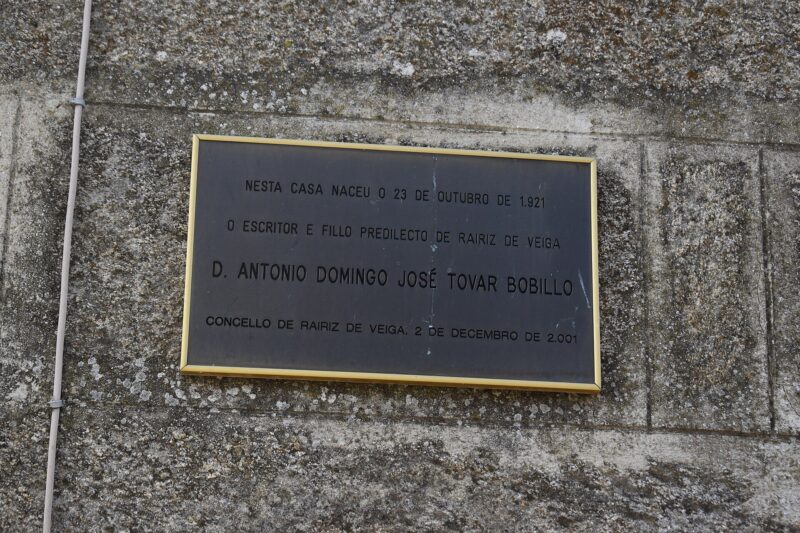 Notable personAntón Tovar, the Poet of A Pereira (Rairiz de Veiga)Antón Tovar Bobillo (A Pereira, Rairiz de Veiga, 1921 – Ourense, 2004) was an existentialist poet in Galician and Spanish, honorary member…
 Notable personCarlos Casares, the Writer Who Grew Up in Xinzo de LimiaCarlos Casares (Ourense, 1941 – Vigo, 2002) spent his childhood in Xinzo de Limia, between Lamas and Sabucedo; he was a novelist, RAG…
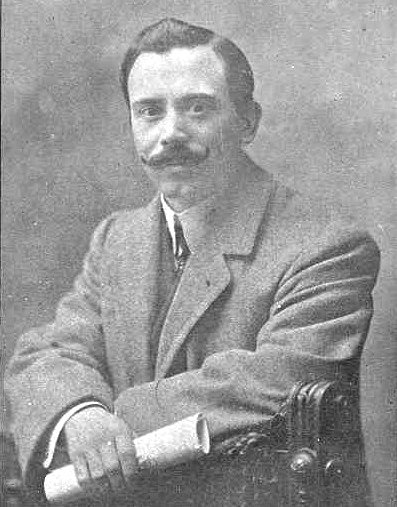 Notable personAlfredo Nan de Allariz, Poet and Playwright from Xinzo in HavanaAlfredo Fernández, «Nan de Allariz», was born in Xinzo de Limia (1874 or 1875) and died in Madrid in 1927; poet, playwright and composer,…
 People of A LimiaHistorical Figures of A Limia: A TimelineTimeline of historical figures linked to A Limia, from Roman times to the 20th century: Limicians of Rome, Hidatius, counts, medieval…
 Notable personCástor Méndez Brandón, Baritone and Folk-Song Poet Born in XinzoCástor Méndez Brandón (Xinzo de Limia, 1864 – Celanova, 1920) was a lawyer, baritone at the Teatro Real in Madrid, poet and mayor of…
People of A LimiaFamous People and Sportspeople of A LimiaDirectory of well-known Limians by occupation: sportspeople, actors, musicians, advertising people, models, bishops, writers, researchers…
