
Lagoa de Antela
Galicia's largest wetland until 1958: the history of the Lagoa de Antela, life around its waters, the draining, the memory and the restoration projects.
- What it was
- Galicia's largest wetland
- Area
- Between 3,244 and 3,600 ha, depending on the source
- Concellos
- Xinzo de Limia, Sandiás, Vilar de Barrio, Sarreaus, Xunqueira de Ambía and Vilar de Santos
- Draining
- Law of 1956, works from 1958
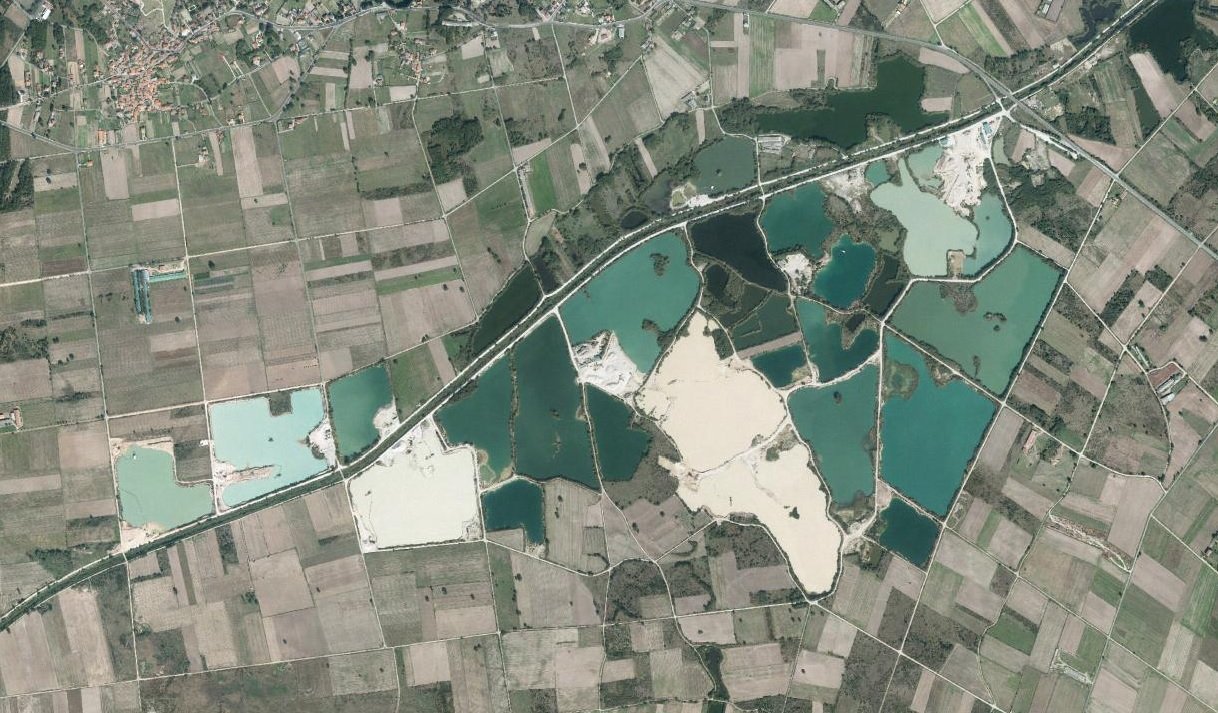
The Lagoa de Antela, once also called Lake Beón, was the largest wetland in Galicia and one of the great freshwater lagoons of the Iberian Peninsula until the Instituto Nacional de Colonización drained it from 1958 [1][2]. It occupied the floor of the plain of A Limia, in the south of the province of Ourense, between the concellos of Xinzo de Limia, Sandiás, Vilar de Barrio, Sarreaus, Xunqueira de Ambía and Vilar de Santos, and in floods reached lands of Rairiz de Veiga and Porqueira [2][3][14]. This page summarises its history and links to the pages that tell it in detail.
A lagoon that grew in winter
The lagoon had no fixed limits. In rainy winters it became a lake about 7 kilometres long by 6 wide, with a perimeter of about 35 kilometres, and in summer it broke up into ponds and rush beds [1][2][14]. It was very shallow: between half a metre and two metres, with some pools up to 3 metres [2]. The plain on which it lay is at about 610–615 metres altitude and is so flat that technicians measured only 84 centimetres of height difference across all of it, as the historian Edelmiro Martínez Cerredelo records [1][3].
The area attributed to it varies greatly by source. The study by geographers at the University of Oviedo published in the Boletín de la Asociación de Geógrafos Españoles speaks of about 3,600 hectares [2]; Greenpeace estimates about 3,500 ha in floods and 1,400 in summer, and recalls that Decree 2336/1962 set the official area at 3,244 ha [4]; the eldiario.es report gives about 4,000 ha [5]. If the surrounding floodable meadows are added, the Limia-Antela wetland complex reached about 7,700 ha in winter [4].
The name: Antela, Beón and oblivion
The old name Lake Beón is related to the Belionis that, according to Strabo, the natives called it; from it would derive Oblivionis and, by folk etymology, the belief that anyone who drank its waters forgot their homeland [1]. In A Limia, bión or beón is also the name of a rush that grew in the lagoon [1]. The place name Antela is explained as a diminutive of anta (‘dolmen’), and since the late 20th century it has been used as a woman’s name: in January 2023 there were 30 women named Antela in Galicia [13]. Xinzo’s football club, Antela F.C., also bears the lagoon’s name [15].
Life around the lagoon
Around the water lived some fifty villages and towns, which used the bión as bedding for the stables, hunted ducks, gathered eggs and caught fish, leeches and frogs [1]. Leeches became a business: in 1855 the provincial government temporarily banned their catching because of over-exploitation, given the demand from hospitals [15]. For livestock keepers, the lagoon’s meadows were summer pasture. All of this is told in The original lagoon.
Two centuries of projects
Since Pedro González de Ulloa’s report for the Real Academia de Agricultura de Galicia in 1765 there was project after project to drain the lagoon [3][15]. In 1827 the magistrate of Xinzo, Julián Toubes, opened a first canal; later came Justo Pelayo Cuesta (1850), the Mugártegui brothers (1854), Toribio Iscar (1864–1868) and the Englishmen John H. Stone and Richard H. Freeman (1874) [7]. The local people opposed it with petitions and even riots, such as those at Sandiás in 1868 and A Forxa in 1873 [7]. The full story is in The draining of the Lagoa de Antela.
The draining (1956–1963)
The Law of 27 December 1956 declared the drainage and colonisation of the lagoon of "high national interest" [4][9]. The works began in September 1958 at Ponte Liñares, with the channelling of 6.6 kilometres of the Limia river and 7.5 of the lagoon’s outlet; from 1962 the internal drainage canals were opened [8][9]. The first phase ended in 1963 [2].
The result was much debated. According to the BAGE, the planned irrigation was never built, the planned colonisation village was not constructed and the land, of poor quality, ended up sold to local farmers for a small fraction of the cost [2]. The ecological loss was enormous: the greylag goose, the last in the peninsula, disappeared as a breeding bird, and ten other birds stopped breeding in Galicia [4].
The lagoon today
Remains of the lagoon survive: the ponds born from the sand pits opened in Sandiás since 1972, the canal declared part of the A Limia SPA and meadows such as Gomareite, in Vilar de Barrio, which the Sociedade Galega de Historia Natural has been recovering since 2014 [2][4][16]. In Sandiás, the Casa da Lagoa explains its history [3]. Several organisations demand that the commitment in the 2030 Strategic Wetlands Plan to restore at least 500 ha be met [11][12]. See The Lagoa de Antela today.
Memory and legends
The draining divided the neighbours: some remember the plots and the work it brought; others, the birds, flowers and pastures lost [6]. Ramón Otero Pedrayo bade the lagoon farewell in 1958 with an article titled "Se quiebra el mágico cristal" [8]. Testimonies are gathered in Memory and testimonies. The lagoon is also the setting of the legend of the drowned city of Antioquía, told in the section on legends of A Limia.
Pages in this section
- The original lagoon: extent, canals, ponds and life around the water.
- The draining of the Lagoa de Antela: from the 19th-century projects to the works of the Instituto Nacional de Colonización.
- The 1956 Law and the drainage project: thirteen articles, three phases, works, delimitation decree and costs.
- The Lagoa de Antela in figures: areas according to each author, seasonal flooding, water and habitats.
- The SGHN Antela Section: the Antonio Villarino Wetland, the Veiga de Gomareite, the conícora and the water lilies.
- Legislation on the Lagoa de Antela: concessions, laws and decrees from 1868 to 2002.
- Bibliography on the Lagoa de Antela: reference works on the lagoon and its draining.
- The leeches of the Lagoa de Antela: the factory, trade with France and the lost breeding ground.
- Memory and testimonies: what the neighbours say.
- The Lagoa de Antela today: sand pits, SPA, Casa da Lagoa and restoration.
- Related: Nature of A Limia and Gastronomy and economy.
FAQ
Where was the Lagoa de Antela?
In the centre of the plain of A Limia, in Ourense, mainly between Xinzo de Limia, Sandiás, Vilar de Barrio, Sarreaus and Xunqueira de Ambía [3]. The best place to grasp its extent is around the Sandiás sand pits and the Casa da Lagoa.
How big was it?
About 7 by 6 kilometres in floods [2]. The official area set in 1962 was 3,244 hectares, although other sources speak of 3,600 or 4,000 [4][5].
When was it drained?
The law is of 27 December 1956, but the works began in September 1958 and the main phase lasted until 1963 [2][9].
Why was it drained?
To gain farmland and because it was regarded as a source of disease, although it was never shown that the lagoon caused the malaria or fevers of the area [2][3].
Can it be recovered?
The 2030 Strategic Wetlands Plan envisages restoring at least 500 hectares, and the SGHN showed at Gomareite that part of it can become wetland again, compatible with livestock [10][11].
Sources
- Edelmiro Martínez Cerredelo, «A lagoa de Antela ou lago Beón na Limia», Historia de Xinzo, 22-02-2014. https://historiadexinzo.wordpress.com/2014/02/22/a-lagoa-de-antela/
- Manuel Fernández Soto, Aladino Fernández García, Gaspar Fernández Cuesta e José Ramón Fernández Prieto, «La desecación de la laguna de Antela», Boletín de la Asociación de Geógrafos Españoles, n.º 57, 2011, pp. 295–312. https://bage.age-geografia.es/ojs/index.php/bage/article/download/1385/1308/1374
- «Lagoa de Antela», Galipedia (CC BY-SA 4.0). https://gl.wikipedia.org/wiki/Lagoa_de_Antela
- Greenpeace España, dossier «Tres lagunas», marzo de 2026. https://es.greenpeace.org/es/wp-content/uploads/sites/3/2026/03/dossier-tres-lagunas_.pdf
- Marcos Pérez Pena, «Las obras que hicieron desaparecer la laguna de Antela», eldiario.es, 27-04-2018. https://www.eldiario.es/galicia/obras-hicieron-desaparecer-laguna-antela_1_2150862.html
- lagoadeantela.es, «Lagoa de Antela, un trabajo sobre su historia» e «Testimonios sobre la desecación» (2014). https://lagoadeantela.es/ · https://lagoadeantela.es/testimonios-sobre-la-desecacion-de-la-laguna/
- Edelmiro Martínez Cerredelo, «Os sete malogrados intentos de desecamento da Lagoa de Antela no século XIX», Historia de Xinzo, 31-08-2018. https://historiadexinzo.wordpress.com/2018/08/31/os-sete-malogrados-intentos-de-desecamento-da-lagoa-de-antela-no-seculo-xix/
- Edelmiro Martínez Cerredelo, «Se quiebra el mágico cristal. Desaugamento da lagoa de Antela, por R. Otero Pedrayo», Historia de Xinzo, 02-05-2014. https://historiadexinzo.wordpress.com/2014/05/02/se-quiebra-el-magico-cristal-desaugamento-da-lagoa-de-antela-por-r-otero-pedrayo/
- Edelmiro Martínez Cerredelo, «Obras de desaugamento da lagoa de Antela (1958–1964)», Historia de Xinzo, 22-09-2016 (datos do Instituto Nacional de Colonización). https://historiadexinzo.wordpress.com/2016/09/22/obras-de-desaugamento-da-lagoa-de-antela-19581964-46-fotos/
- El País, «Antela, la gran laguna excomulgada y aniquilada, recobra vida con ayuda de las vacas de Samuel», 14-09-2025. https://elpais.com/espana/galicia/2025-09-14/antela-la-gran-laguna-excomulgada-y-aniquilada-recobra-vida-con-ayuda-de-las-vacas-de-samuel.html — Wayback (09-08-2026): https://web.archive.org/web/20260809085817/https://elpais.com/espana/galicia/2025-09-14/antela-la-gran-laguna-excomulgada-y-aniquilada-recobra-vida-con-ayuda-de-las-vacas-de-samuel.html
- Vía Lethes, «SEO/BirdLife reivindica en Sandiás a restauración da Lagoa de Antela», 04-02-2025. https://vialethes.es/seo-birdlife-reivindica-sandias-restauracion-lagoa-antela
- Vía Lethes, «A sociedade civil demanda ás administracións a restauración da Lagoa de Antela», 02-12-2025. https://vialethes.es/sociedade-civil-demanda-administracions-restauracion-lagoa-antela
- «Antela (nome)», Galipedia (CC BY-SA 4.0). https://gl.wikipedia.org/wiki/Antela_(nome)
- xinzodelimia.eu, «A Lagoa de Antela: o lago Beón» e «Concellos que pertencen á Lagoa de Antela». Sitio caído; Wayback (31-12-2007): https://web.archive.org/web/20071231071143/http://www.xinzodelimia.eu:80/lagoa_de_antela.htm · https://web.archive.org/web/20080101020354/http://www.xinzodelimia.eu:80/concellos_da_lagoa_de_antela.htm
- Artigo sobre a Lagoa de Antela, Wikipedia en español (CC BY-SA 4.0). https://es.wikipedia.org/wiki/Laguna_de_Antela
- BOE-A-2011-9725, Resolución do 18 de maio de 2011 sobre o aeródromo da base de Antela (Sandiás). https://www.boe.es/diario_boe/txt.php?id=BOE-A-2011-9725
In this topic
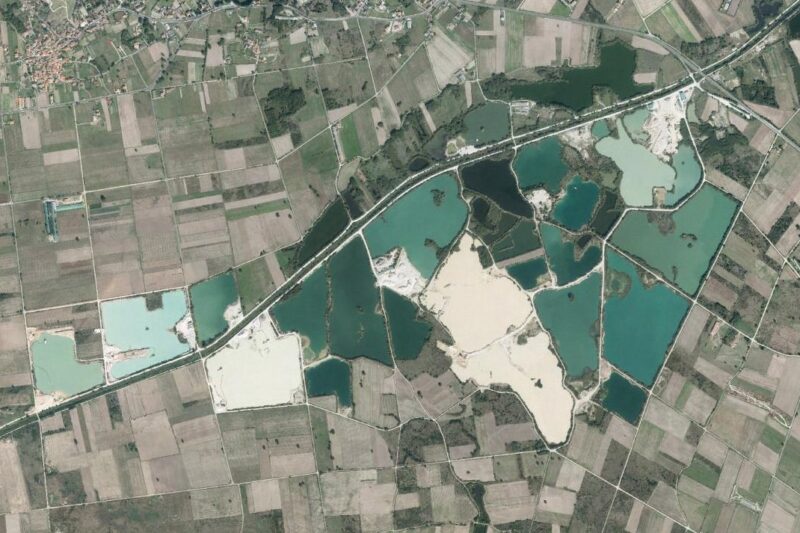 Lagoa de AntelaThe original lagoon: extent, canals, ponds, fauna and flora of the Lagoa de AntelaWhat the Lagoa de Antela was like before 1958: a shallow sheet of water 7 by 6 kilometres, with canals and ponds, water birds, leeches,…
Lagoa de AntelaThe draining of the Lagoa de Antela: from the 18th-century projects to the works of 1958A documented chronology of the attempts to drain the Lagoa de Antela: Toubes (1827), Pelayo Cuesta, the Mugártegui, Iscar, Stone and…
Lagoa de AntelaThe Lagoa de Antela in figures: area, water and habitatsSources give very different areas for the Lagoa de Antela, from 2,630 to 5,870 ha. This page gathers the estimates, the seasonal flooding…
Lagoa de AntelaThe 1956 Law and the drainage project of AntelaHow the Law of 27 December 1956 and Francisco Zapata Tejedor's project led to the draining of Antela: phases, works from 1958, the 1962…
Lagoa de AntelaLegislation on the Lagoa de Antela (1868–2002)Chronology of the rules of the Gaceta de Madrid, BOE and DOG on the draining of Antela: concessions from 1868 to 1907, the 1918 law, the…
Lagoa de AntelaThe leeches of the Lagoa de AntelaIn the 19th century the Lagoa de Antela was a leech breeding ground famous in Spain: a factory exported to France, catching ended up…
Lagoa de AntelaThe SGHN Antela Section: wetlands, lapwings and water liliesSince 2011 the SGHN Antela Section has been restoring meadows and ponds in A Limia: the Antonio Villarino Wetland at Vilaseca, the Veiga de…
Lagoa de AntelaBibliography on the Lagoa de AntelaReference works on the Lagoa de Antela cited by the Sociedade Galega de Historia Natural: memoirs by Bedoya and Mugártegui, studies by…
Lagoa de AntelaMemory and testimonies of the draining of the Lagoa de AntelaWhat the people of A Limia say about the draining of the Lagoa de Antela: who gained plots and work, who lost pasture, bión and birds, and…
Lagoa de AntelaAntela in photography and in memory: “A memoria asolagada” and the “Cadernos da Limia”How photography and oral memory told the loss of the Lagoa de Antela: the book "Antela. A memoria asolagada" (1997), its exhibitions at the…
Lagoa de AntelaAntela: the 1956 Plan and why the drainage was a hydraulic failureThe analysis by geographers of the University of Oviedo on Antela's drainage: the 1958-1963 works, the Arnoia irrigation never built,…
Lagoa de AntelaThe Lagoa de Antela today: sand pits, Gomareite, Casa da Lagoa and restorationWhat is left of the Lagoa de Antela: sand-pit ponds, the Veiga de Gomareite recovered by the SGHN, the Casa da Lagoa in Sandiás and the…
You may also like
 FestivalEntroido of Xinzo de LimiaThe Entroido of Xinzo de Limia lasts five weeks, has the Pantalla as its emblematic mask and has been a Festival of International Tourist…
 A Limia, a district of OurenseXinzo de LimiaThe capital of A Limia, in southern Ourense: home of the Entroido carnival, the Festa do Esquecemento, the Torre da Pena and the Bon Xesús…
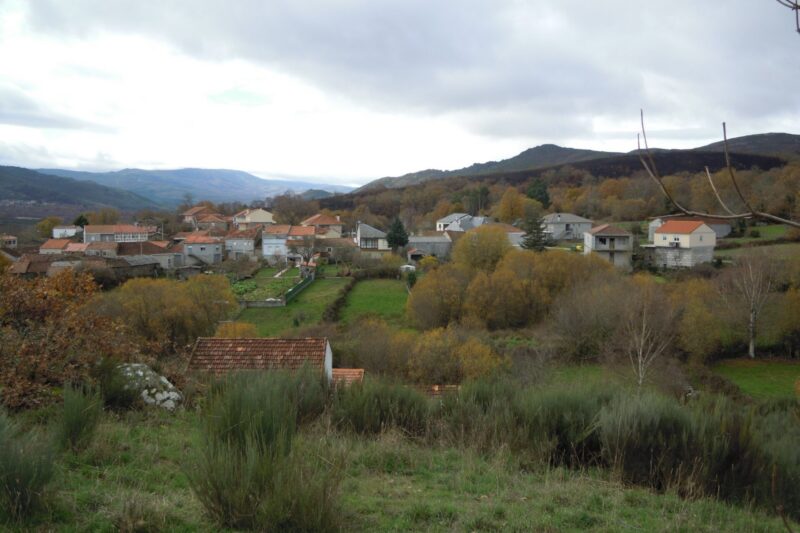 A Limia, a district of OurenseBaltarA concello on the 'dry border' with Portugal, between the plain of A Limia and the Larouco range: heir to part of the Couto Mixto, with…
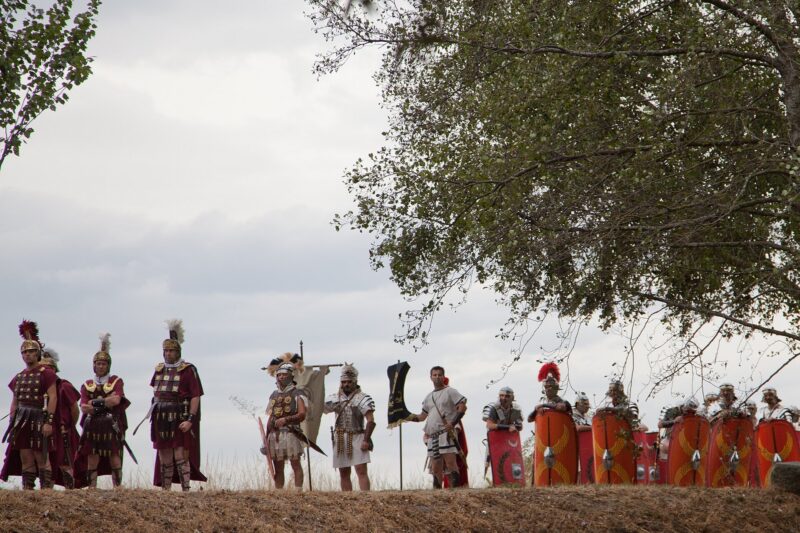 FestivalFesta do EsquecementoEvery August Xinzo de Limia relives the arrival of Decimus Junius Brutus's legions at the river Limia, the Lethes that, legend said, made…
 A Limia, a district of OurenseOs BlancosA small concello between the plain of A Limia and the southern hills, home to the 4th–5th century Christian oratory of Ouvigo and,…
 FestivalRomaría da SaínzaAround 24 September, thousands of pilgrims fill the field of A Saínza, in Rairiz de Veiga, to watch the Christians storm the castle held by…
