


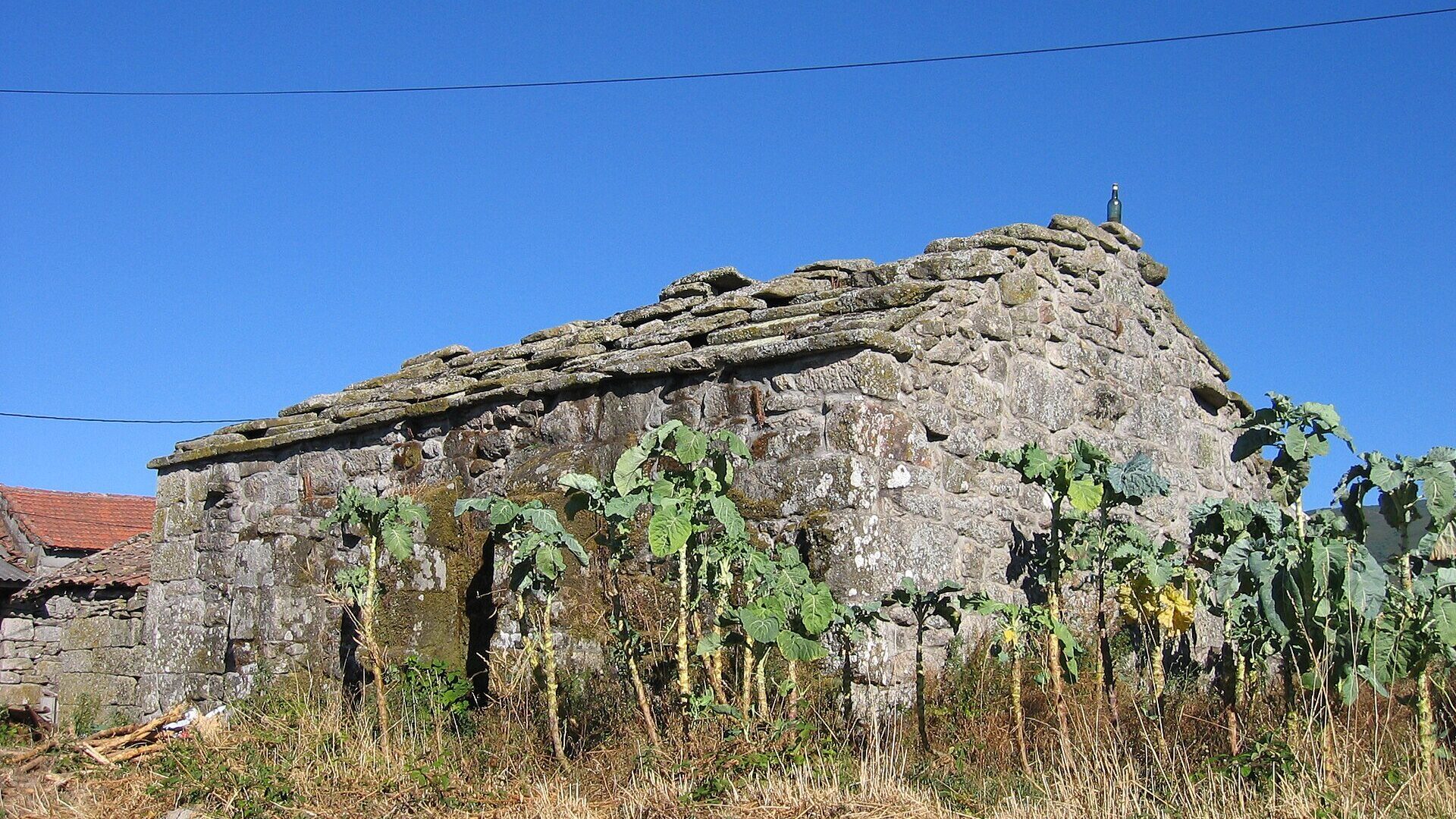
Gastronomy of A Limia
The gastronomy of A Limia: the potato as the star product and its designation, the bread from Xinzo's ovens, the pig slaughter and the products that sustain the comarca's cooking.
- Star product
- Potato (Pataca de Galicia PGI)
- Weight in Galicia
- About 90 % of Galician potatoes
- Traditions
- Pig slaughter, oven and bread
The cooking of A Limia is that of a farming and livestock land with cold winters: potatoes, rye, pork, chestnuts and slaughter products. Its best-known product, the potato, is the economic base of the comarca and its protected designation [1][2].
What there is
- The potato of A Limia: the Pataca de Galicia PGI, A Limia’s weight in the Galician total and the producers’ debate.
- Xinzo’s ovens and the bread cycle: sourdough starter, tendas (resting stages) and home delivery.
- The pig slaughter: the ritual from morning to sausages.
- The potato industry in Xinzo has its own entry in Propasi, AGA and the Feculera.
Bread, ovens and the slaughter
Edelmiro Martínez Cerredelo described on his blog Historia de Xinzo how bread was made in traditional ovens (A Limia, the "granary of Galicia", cooks wheat and rye) and what the ritual of the pig slaughter was, on which the pantry of many homes depended all year. These are the two foundations of traditional cooking told in this section: rye bread, baked in communal parish ovens, and meat cured and smoked over the hearth, with chorizos, blood sausages and hams.
FAQ
Which potato is grown in A Limia?
The one protected by the Pataca de Galicia PGI: Kennebec, Agria and Fina de Carballo varieties, on between 1,500 and 1,800 hectares a year in Galicia [1].
How much Galician potato comes from A Limia?
According to participants at the 3rd Conversas na Taberna (2018) at the Museo da Limia, the comarca produces 90 % of Galician potatoes [2].
How was bread baked in A Limia?
In communal or wood-fired ovens, with wheat flour, rye or a mixture, kneaded in the trough with sourdough starter, salt and water, with two or three resting stages (tendas) and two hours of baking [3].
Links
Sources
- «Pataca de Galicia», Wikipedia en galego (CC BY-SA 4.0). https://gl.wikipedia.org/wiki/Pataca_de_Galicia
- «A nosa pataca ten unha excelente calidade. Cómpre dicilo porque é a verdade», Museo da Limia, 09/04/2018. https://museodalimia.com/a-nosa-pataca-ten-unha-excelente-calidade-compre-dicilo-porque-e-a-verdade/
- Edelmiro Martínez Cerredelo, «Os fornos de Xinzo. O ciclo da elaboración e venda do pan», Historia de Xinzo, 06/06/2016. https://historiadexinzo.wordpress.com/2016/06/06/os-fornos-de-xinzo-o-ciclo-da-elaboracion-e-venda-do-pan/
In this topic
 Gastronomy of A LimiaThe potato of A Limia: cultivation, seed and marketThe potato is A Limia's most representative crop, the comarca supplying 90 % of Galician potatoes; the Pataca de Galicia PGI and the 2018…
 Gastronomy of A LimiaXinzo’s ovens and the bread cycleHow bread was made in the traditional ovens of Xinzo de Limia, from the sourdough starter to home delivery in DKW vans and Land Rovers, and…
 Gastronomy of A LimiaThe pig slaughter in A LimiaThe ritual of the pig slaughter in A Limia told step by step: the preparation, the matachín, blood for filloas, singeing, butchering, the…
You may also like
 Economy of A LimiaPropasi, AGA and the Feculera of Xinzo: the potato industry in the 20th centuryThe history of Propasi and Agrícola Ganadera Antelana (seed potatoes, from the late 1940s) and the Feculera of Xinzo (starch, c.…
 Economy of A LimiaGasosas Berardo Méndez (Sandiás): 80 years of a Limia factoryGasosas Berardo Méndez, a soft-drinks factory in Sandiás founded in 1945, honoured in 2025 at the Museo da Limia: a talk, a collection of…
 Economy of A LimiaFlax in A Limia in the 18th and 19th centuries: land, weavers and tradeFlax growing and industry in A Limia according to the Ensenada Cadastre and Madoz: the best land, rotations, weavers by concello, the linen…
 Economy of A LimiaThe traditional fairs of A LimiaThe traditional fairs of A Limia and the Arnoia valley: their origin in a Civitas Limicorum of barter, the fame of Xinzo's oxen, the fairs…
