


The Alto do Furriolo, a place of memory of Francoist repression
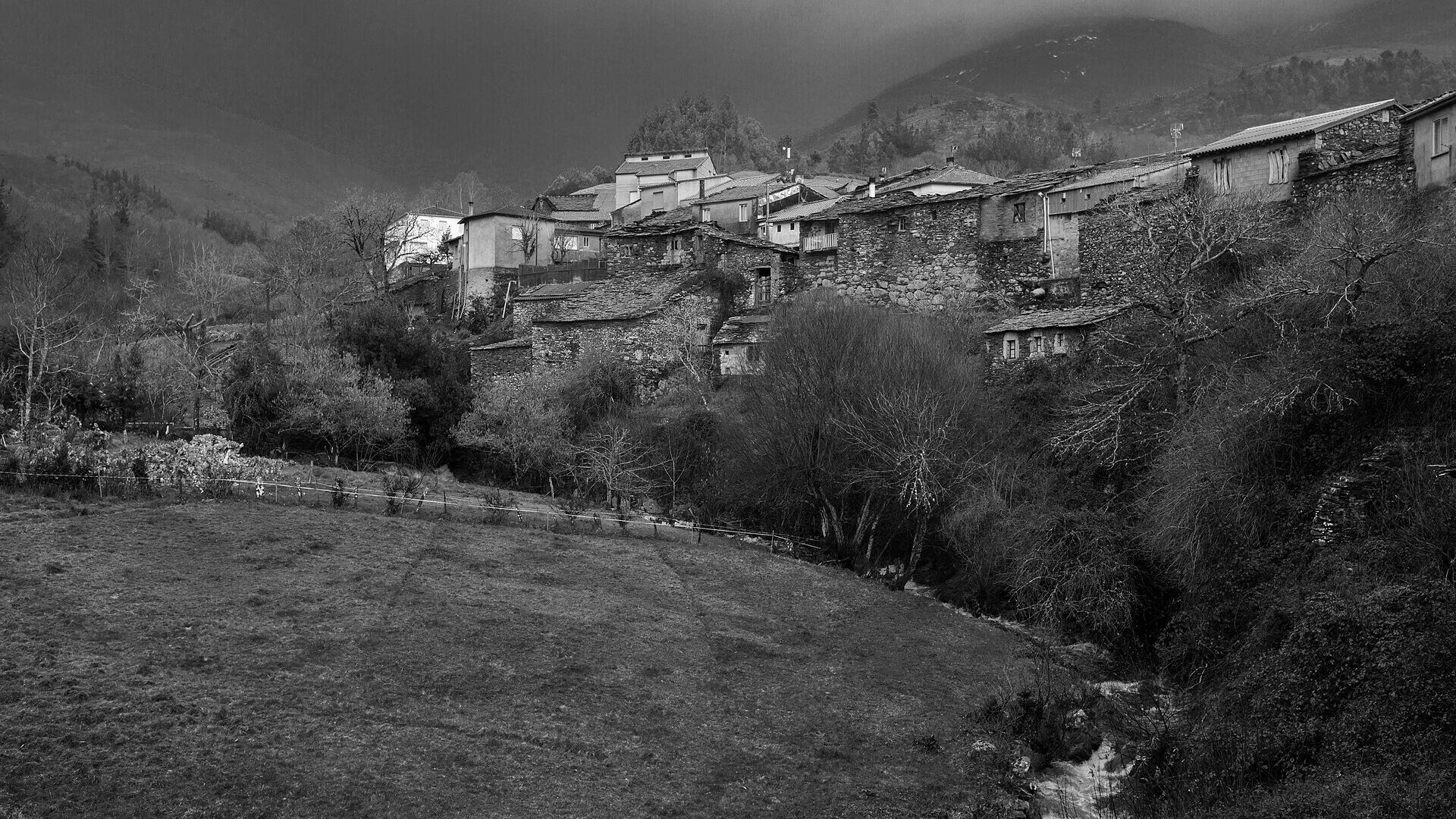
The Alto do Furriolo, on the Celanova–Xinzo road (boundary of A Bola and Rairiz de Veiga), was from 1936 the scene of 'paseos' of prisoners from Celanova; today it has a mural by Xosé Vizoso and tribute recitals for the victims.
- Altitude
- 858 m
- Location
- boundary between San Martiño de Berredo (A Bola) and A Lampaza (Rairiz de Veiga)
- Road
- Celanova–Xinzo de Limia (OU-531)
- Mural
- Xosé Vizoso (2006)
The Alto do Furriolo is a summit 858 metres high, beside the road from Celanova to Xinzo de Limia (OU-531), on the boundary between the parishes of San Martiño de Berredo (A Bola) and A Lampaza (Rairiz de Veiga); its surroundings are open, rounded hills with small villages and few inhabitants [1]. The historian Julio Prada places it at the meeting of the concellos of A Bola, Verea and Rairiz de Veiga [2]. Today it is one of the best-known places of memory of Francoist repression in Galicia.
The paseos from the Celanova convent
Since the monastery of San Rosendo was converted, in late July 1936, to hold the many prisoners, the Furriolo became, according to Prada, the favourite spot for the "sacas" carried out in the province, and the vast majority of the dead found there came from prisoners of the convent [2]. There is no single grave, but a more or less defined area on the old road line [1]. The historian Domingo Rodríguez Teijeiro, a specialist in Celanova prison, maintains that it is impossible to know the number of bodies: civil registers record fewer than thirty victims, while oral testimonies speak of many more and of mass graves [1][2].
The writer Elixio Rodríguez, in his autobiographical novel Matádeo mañá, tells that every day between ten and fifteen detainees arrived at Celanova but the prison population stayed stable because as many were "taken for a walk" each night with a release order that the Falangists turned into a death sentence; he himself was saved from being taken to the Furriolo because a Carabineros lieutenant, Adolfo Pousa, stopped the transport with these words: "A este matádelo mañá" (kill this one tomorrow) [2].
Documented victims
The Galipedia cites, among others, the following documented victims at the Furriolo [1]:
- Eduardo Villot Canal and Celso Pérez Enríquez, murdered on 18 August 1936 after being taken from Celanova jail, along with seven other unidentified people.
- Modesto López Teijeiro, member of the organising committee of the Ateneo de Ourense, arrested in July 1936 and executed on 27 September 1937 in the roadside ditch of the Xinzo–Celanova road, near Lampaza.
- On 15 October 1937 a murdered woman appeared on the hill whom Edelmiro Martínez Cerredelo identifies as Delfina Lamas Clemente, from As Pegas (Sandiás) [3]. See Women victims of repression in A Limia.
Tributes
On 27 August 2006 an event in memory of the victims was held at the site, with a poetry-and-music recital and the unveiling of a mural by the artist Xosé Vizoso, depicting the shootings; the mural, considered by some the "Galician Guernica", was restored in 2014 and in September 2021 by the artist himself [1]. Since then tributes have been repeated with greater or lesser frequency [1].
Links
- History of A Limia
- The repression of 1936 in A Limia
- Historical memory of A Limia, 1931–1953
- Rairiz de Veiga
Sources
- «Alto do Furriolo», Galipedia (CC BY-SA 4.0). https://gl.wikipedia.org/wiki/Alto_do_Furriolo
- Julio Prada, «Levárono o Furriolo e non se volveu saber del», Memoria de Celanova, 19-12-2020. https://memoriacelanova.fala.gal/2020/12/19/levarono-o-furriolo-e-non-se-volveu-saber-del/
- Edelmiro Martínez Cerredelo, «Mulleres represaliadas da Limia. Delfina Lamas Clemente das Pegas (Sandiás)», Historia de Xinzo, 12-02-2020. https://historiadexinzo.wordpress.com/2020/02/12/mulleres-represaliadas-da-limia-delfina-lamas-clemente-das-pegas-sandias/
You may also like
 History of A LimiaPrehistory and castros of A LimiaFrom the Pedra Alta de Antela to the castro of Bóveda: megaliths, the Roufeiro weapons, the Outeiro de Baltar and the gold earring of Vilar…
 History of A LimiaThe Limici in Roman inscriptions: Celer’s gladiatorial tessera and Corellius LimicusTwo epigraphic pieces outside A Limia that mention a "Limicus": the bronze gladiatorial tessera from Niebla (Huelva), of the 1st century,…
 History of A LimiaThe battle of the Xinzo bridge (23 February 1809)On 23 February 1809 farmers, abbots and friars of A Limia, poorly armed, tried to stop Soult's French vanguard at the Xinzo bridge; they…
History of A LimiaThe Limici and Romanisation: Civitas, Forum Limicorum and Via NovaWhat is known of the Limici and Roman Limia: the Civitas Limicorum, the debate over where the Forum Limicorum stood (A Cidá of Nocelo da…
 History of A LimiaThe Praza Maior, the Ladeira and the Toural: history of Xinzo’s central placesHistory of the Praza Maior (fairs since the 16th century, the 1907 Espolón, the fountain), the Ladeira and the Toural (the lagoon, the…
History of A LimiaLight, chocolate, fizzy drinks and roads: the industrial and service Xinzo of the 20th centuryHow electricity (1911), the printing press, chocolate and soda factories, the Rubio Cold-Storage Slaughterhouse and buses to Ourense and…
