


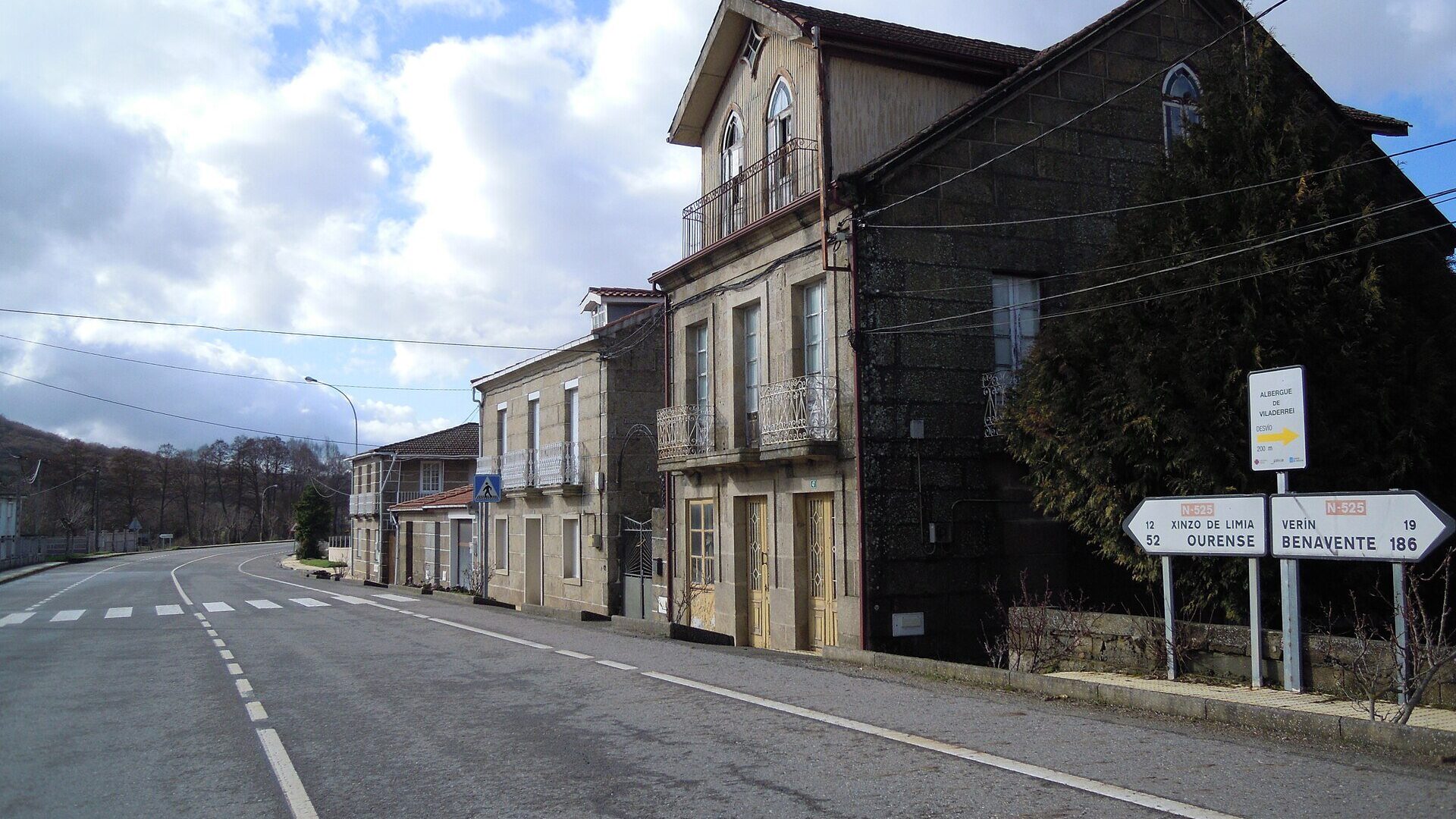
The Way of St James through A Limia: Vía de la Plata, history and Jacobean heritage
A Limia lies on the branch of the Sanabrés Way of St James (Vía de la Plata, Mozarabic Way) that links Verín with Ourense via Xinzo de Limia and Allariz; Xinzo is a starting point for many pilgrims and Sandiás is 129 km from Santiago.
- Route
- Sanabrés Way (Vía de la Plata, Mozarabic Way)
- Limia alternative
- Verín – Xinzo de Limia – Allariz – Ourense
- Distance to Santiago from Sandiás
- 129 km
- Concellos crossed
- Trasmiras, Xinzo de Limia, Sandiás and Vilar de Barrio
- Pilgrim hostels
- Viladerrei, Xinzo and Sandiás
The Way of St James does not cross A Limia by chance: the comarca lies on the natural corridor linking the Castilian plateau with Ourense and, since Roman times, it has been a passage for roads, muleteers and pilgrims. Today A Limia forms part of the Sanabrés Way, also called the Vía de la Plata or Mozarabic Way and, in Galicia, the Southern Galician Way [2]. This page explains what route it is, where it crosses the comarca, what Jacobean heritage it has left and how the stretch is walked. The kilometre-by-kilometre detail is in The Vía de la Plata through A Limia: from Viladerrei to Allariz.
What route it is
The Sanabrés Way began as a shortcut within the pilgrimages along the Vía de la Plata: pilgrims arriving at Granja de Moreruela, in Zamora, instead of continuing towards Astorga and the French Way, took the Sanabria comarca towards Santiago, until joining the inland route of the Portuguese Way at Verín or Ourense [2]. It also receives pilgrims from the southern Iberian routes that converged on the Vía de la Plata, such as the one starting in Huelva [2].
A Limia lies on one of the two alternatives from Verín to Ourense: one goes by Laza and the other by Xinzo de Limia and Allariz, and both are part of the Sanabrés itinerary according to Jacobean documentation and the official mapping of the Instituto Geográfico Nacional [1]. Pilgrims on the Portuguese Mozarabic Way, who join those on the Southeast Way at Verín, also reach the Limia branch; Xacopedia notes that everyone who chooses the southernmost itinerary passes through Xinzo de Limia [3].
A practical point: to obtain the Compostela you must walk the minimum distance and enter the final stretch on a recognised route, which here is the Sanabrés Way; so anyone who walks the Portuguese section and joins the official route at Verín can obtain it [1].
Where it crosses the comarca
The itinerary enters A Limia from Verín and Viladerrei and crosses four concellos from south to north:
- Trasmiras: the route passes through Viladerrei and Trasmiras and, after a farm track running alongside the A-52 motorway, through Zos and Boado [12].
- Xinzo de Limia: the stage town and the best-known point. Xacopedia says Xinzo is now the starting point for many pilgrims and has a marker with the Jacobean symbol and the yellow scallop shell showing kilometre zero [3]. It is 136 km from Santiago [5].
- Sandiás: the municipal capital (650 m) is 129 km from Santiago [4]. From here the route continues through the parish of Piñeira de Arcos (San Xoán) towards Allariz [4].
- Vilar de Barrio: part of the Vía de la Plata path crosses the west of the concello through the parishes of Vilar de Barrio and Padreda and the hamlets of A Seara and Penouzos, as an alternative for pilgrims [6].
The most commonly used stages are Viladerrei–Xinzo (15.7 km) and Xinzo–Allariz (20.5 km) [12][13].
A road older than the pilgrimage
The Roman Via Nova
Before the pilgrims, the corridor was a Roman road. During Romanisation the Via XVIII or Via Nova was built, one of the most important Roman roads in the north-west of the peninsula, linking Bracara Augusta (Braga) and Asturica Augusta (Astorga) [4]. Milestones survive at Vilariño das Poldras and Zadagós, along with remains of drainage channels in the dried-up Antela lagoon [4]. See The Limici and Romanisation.
Medieval pilgrims
Xacopedia records that in the Middle Ages pilgrims from the south of Spain following the Vía de la Plata already passed through these lands, as did travellers from Chaves and Vila Real on the Portuguese Way [4]. This Limia of passage appears in a legend collected by Edelmiro Martínez Cerredelo, in which a long-bearded pilgrim in a monk’s habit, on his way to Compostela, reaches the heights of Sandiás and the farmers tell him the story of the Civitas Limicorum and the river of oblivion [10]. See The Torre do Castro of Sandiás.
The royal road from Castile to Santiago
The road that is now the N-525 was the traditional royal road from Ourense towards Castile through the Sanabria comarca, and in several stretches it runs parallel to the Vía de la Plata of the Way of St James [7]. In November 2011 the Casa da Cultura of Xinzo hosted the exhibition O camiño real de Castela a Santiago por Ourense, base do camiño de peregrinación Vía da Prata, curated by the historian Yolanda Barriocanal López, with 30 panels on the history of this infrastructure that structured Galicia in the 18th century [9]. See also The Villacastín–Vigo road and the judicial district.
Jacobean heritage of A Limia
- Old Church of Xinzo. Xacopedia highlights its 1516 doorway, with a capital bearing a scallop shell, and a relief of Saint James as a pilgrim [5]. See Churches and religious life in Xinzo.
- Convent of Bo Xesús de Trandeiras. Founded by Alonso de Piña in the 16th century, it overlooks what was once the Antela lagoon [5].
- Church of Santiago de Coedo (Sandiás). About 4 km from the centre of Sandiás, along the Jacobean route, it is an example of Galician popular Romanesque; its tympanum stands out, showing Saint James the Moor-slayer (Matamoros) whose horse tramples the bellies of the Muslims [4]. See Heritage of Sandiás.
- Torre do Castro of Sandiás. Built on a hillfort, perhaps in the first half of the 12th century, it was attacked in 1386 by the Duke of Lancaster, John of Gaunt, who that same year travelled to Compostela at the head of a large expedition [4].
- Commandery of Santiago. Vilar de Santos, Saa and As Casas da Veiga belonged to the Order of Santiago, perhaps with a pilgrims’ hospital; the source does not confirm it, so it cannot be stated as fact [11].
Elixio Rivas and the recovery of the southern route
The ethnolinguist Elixio Rivas Quintas, linked to A Limia, worked from the 1970s to restore the southern route of the Way of St James and spread knowledge of the Ourense land of A Limia; he was the first president of the Association of Friends of the Way of St James [8]. See Elixio Rivas Quintas.
Pilgrim hostels and rest
There are pilgrim hostels at Viladerrei [12], Xinzo de Limia [5] and Sandiás [14]. The one in Xinzo, promoted by the Xunta since 2017, is in the old town [5]. Bed numbers and opening hours change, so check them in the official guides before travelling.
Frequently asked questions
Does the Way of St James pass through A Limia?
Yes. The Limia branch of the Sanabrés Way runs from Verín to Ourense via Xinzo de Limia and Allariz, crossing the concellos of Trasmiras, Xinzo de Limia, Sandiás and Vilar de Barrio [1][4][6].
How many kilometres is it from A Limia to Santiago?
According to Xacopedia, 136 km from Xinzo de Limia and 129 km from Sandiás [4][5].
Is the Sanabrés Way the same as the Vía de la Plata?
The Sanabrés Way is a branch of the Vía de la Plata that splits off at Granja de Moreruela; it is also known as the Mozarabic Way [2].
What is the longest stage in A Limia?
Xinzo to Allariz, at 20.5 km, against 15.7 km from Viladerrei to Xinzo [12][13].
Links
- The Vía de la Plata through A Limia: from Viladerrei to Allariz
- Routes and trails through A Limia
- Xinzo de Limia
- Sandiás
- Vilar de Barrio
- Trasmiras
Sources
- Wikipedia en castelán, «Camino Portugués de la Vía de la Plata». https://es.wikipedia.org/wiki/Camino_Portugués_de_la_Vía_de_la_Plata
- Wikipedia en castelán, «Camino de Santiago Sanabrés». https://es.wikipedia.org/wiki/Camino_de_Santiago_Sanabrés
- Xacopedia, «Portugués, Camino Mozárabe». https://xacopedia.com/Portugu%C3%A9s_Camino_Moz%C3%A1rabe
- Xacopedia, «Sandiás». https://xacopedia.com/Sandi%C3%A1s
- Xacopedia, «Xinzo de Limia». https://www.xacopedia.com/Xinzo_de_Limia
- Wikipedia en castelán, sobre Vilar de Barrio (sección Camino de Santiago). https://es.wikipedia.org/wiki/Villar_de_Barrio
- Wikipedia en galego, «N-525». https://gl.wikipedia.org/wiki/N-525
- Wikipedia en galego, «Elixio Rivas». https://gl.wikipedia.org/wiki/Elixio_Rivas
- Museo Arqueolóxico Provincial de Ourense, «Exposición en Xinzo de Limia: O camiño real de Castela a Santiago por Ourense, base do camiño de peregrinación Vía da Prata». https://musarqourense.xunta.gal/gl/actualidade/actividades/exposicion-en-xinzo-de-limia-o-camino-real-de-castela-santiago-por-ourense
- Edelmiro Martínez Cerredelo, «O peregrino e a lenda da torre do Castro», Historia de Xinzo, 5-4-2016. https://historiadexinzo.wordpress.com/2016/04/05/o-peregrino-e-a-lenda-da-torre-do-castro/
- Concello de Vilar de Santos, «Historia». https://vilardesantos.gal/historia/
- Gronze.com, «Etapa Viladerrei–Xinzo de Limia, Vía de la Plata». https://www.gronze.com/etapa/viladerrei/xinzo-limia
- Gronze.com, «Etapa Xinzo de Limia–Allariz, Vía de la Plata». https://www.gronze.com/etapa/xinzo-limia/allariz
- Gronze.com, «Albergue de peregrinos de Sandiás». https://www.gronze.com/galicia/orense/sandias/albergue-peregrinos-sandias
You may also like
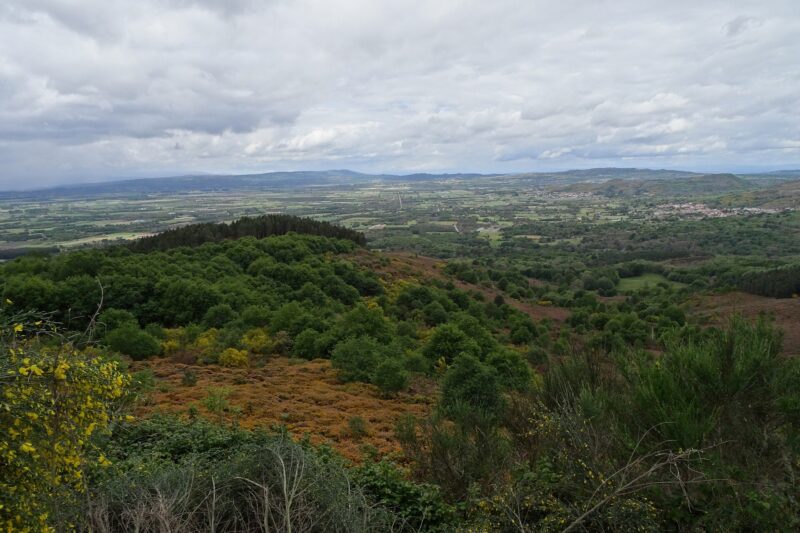 Routes and trails through A LimiaViewpoints of A Limia: lookouts over the plain and the mountainsThe natural and heritage viewpoints of A Limia listed by the 25 Motivos network: towers, castles and chapels above the plain of the former…
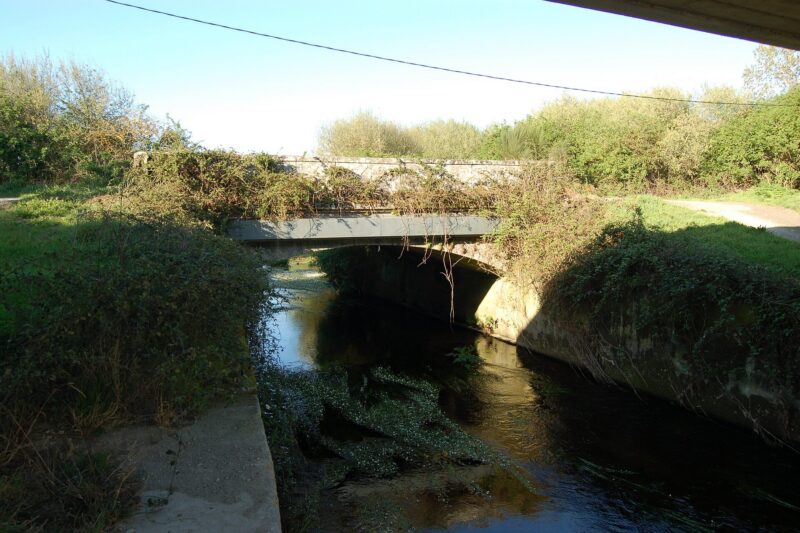 Routes and trails through A LimiaThe Vía de la Plata through A Limia: from Viladerrei to AllarizThe branch of the Vía de la Plata crossing A Limia runs from Viladerrei to Xinzo (15.7 km) and from Xinzo to Allariz (20.5 km), via…
