


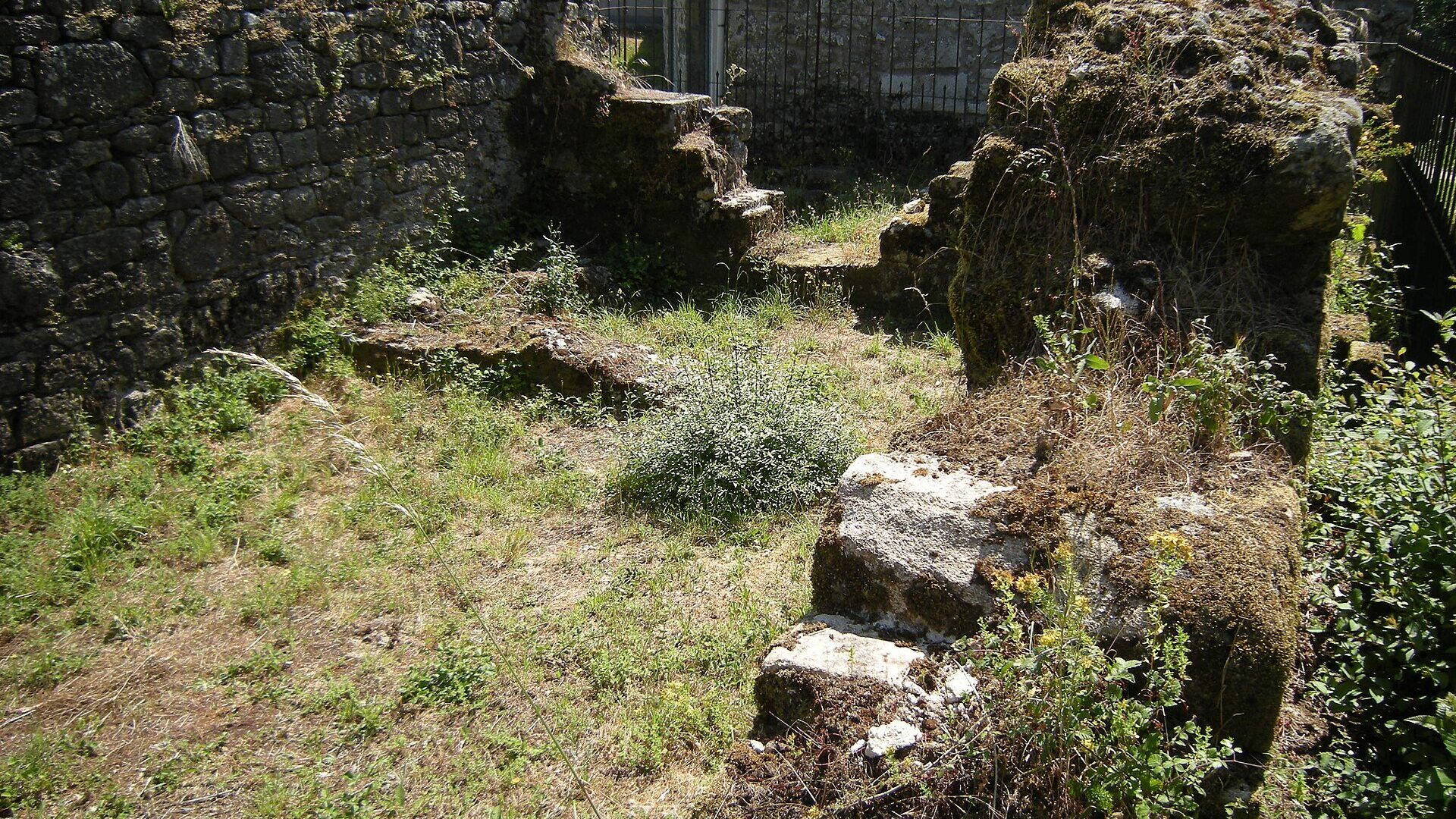
The early Christian oratory of Ouvigo (Os Blancos) and the landscape of the Lagoa de Antela
The early Christian oratory and necropolis of San Breixo at Ouvigo (Os Blancos): found in 1971, its four phases from the 4th to the 11th century, the surrounding heritage, the Begica gravestone of AD 907 and a landscape tied to Roman Xinzo.
- Where
- Ouvigo (Os Blancos)
- Discovery
- summer 1971, Antonio Rodríguez Colmenero
- Phases
- 4th to 11th century
- Dedication
- San Breixo or San Verísimo
Ouvigo, the seat of the municipality of Os Blancos, holds the early Christian oratory and necropolis of San Breixo (or San Verísimo), a site of the highest value for understanding the end of the Roman world and the birth of the medieval one. An article by Óscar Penín Romero, a native of Ouvigo, published in Minius in December 2024, proposes viewing the oratory within a wider landscape, that of the Lagoa de Antela and its relationship with Roman Xinzo [1]. For the Christian context of Late Antiquity see also Idade Media e torres.
The municipality of Os Blancos and its name
The author recalls that the choice of Os Blancos as municipal seat was not made on historical criteria: the first municipality, in 1821, was called Pegeiros (today’s Pexeiros); in 1836 it appears as «Blancos y Mouril», in 1845 as «Cobelas» and from 1847, definitively, as «Blancos». The origin of the name is uncertain: it could refer to a limestone crag, to a Germanic nickname linked to a pale skin and hair tone, or to butchers and their white marble counters, as in a street in Ourense [1].
The discovery and the campaigns
Ouvigo was one of the last field interventions associated with the Seminario de Estudos Galegos, through Ferro Couselo. Antonio Rodríguez Colmenero discovered it in the summer of 1971 while carrying out the artistic inventory of A Limia; in 1972 there was an emergency excavation directed by Ferro Couselo, then director of the Archaeological Museum of Ourense, and four campaigns between 1977 and 1981 directed by Colmenero, which unearthed a necropolis and a building of origin attributed to the Roman period. The author points to the paradox of its relative neglect: Ouvigo’s isolation and the fact that it is regarded as an exhausted space for research, since the archaeological levels have been used up and the site lies under private homes [1].
The four phases of the site
- Second half of the 4th century – early 5th. The original building is constructed reusing materials from earlier structures, with an apse and narthex, suggesting community Christian use. Tesserae, mosaics, painted stucco and coins turned up. It coincides with the time of the changes recorded by Bishop Hydatius, who ends his chronicle in AD 469.
- After the Germanic invasions. The building is rebuilt keeping its plan and walls, but its orientation changes; it lasts until the invasions of the 8th century.
- 10th century, repopulation under Alfonso III. A new flourishing, shown by pottery and numerous graves.
- 11th century, after Almanzor. Religious function is fully recovered; the church, by now Romanesque, sees intense activity, with many burials and liturgical objects, such as a pyx kept in the Provincial Archaeological Museum of Ourense [1].
Colmenero also noted a poorly defined earlier phase (post-holes, slots, Doric columns, ashlars and pottery beneath the natural floor of the oratory), whose extent is unknown [1].
The surrounding heritage
According to the list of assets of Galicia’s cultural heritage (2024) cited by the author, in the surroundings there are the Roman site of A Abilleira (tegula and brick on the surface), the site of O Touzal, do Castelo or do Castro (an Iron Age hill-fort split between Os Blancos and Xinzo de Limia, with a small truncated-heel axe), the hill-fort of the Llanada do Castelo, the hill-fort of Parada de Ribeira (oval, at 140 m altitude) and the former priory of Mosteiro de Ribeira, founded in the 10th century, which passed to the monastery of Celanova in the 11th and lost its monastic life in the 15th. Colmenero also identified a Roman road from Chaves to Ourense. According to the Tombo de Celanova, there was a castle and a church of San Xurxo above the priory, beneath the church of San Verísimo. Among the movable assets, three Roman inscriptions from Mosteiro de Ribeira stand out (two votive to indigenous gods, Reve Eisuto and Crougin Toudadigoe, and a gravestone of a Roman citizen of the Quirina tribe) and several early medieval gravestones from Ouvigo, one with an orant figure [1].
The Begica gravestone and the place name
Hidden in a straw-loft that shares a wall with the oratory, a stole-type gravestone dated AD 907 was preserved, whose inscription reads «ic iacet famulus dei begica obiit era dccccxxxxiv». Begica would be a medieval male name of Germanic origin, with a root that would relate to ouwe («wet land») and ultimately to veiga. The author looks for a link with the place name Ouvigo, which Colmenero first explained by vicus and later by a Roman landowner Ovanicus; in the Tombo de Celanova he found the medieval forms Oveneiigo and Ovuenico. The conclusion is cautious: it cannot be proved that Ouvigo derives from Begica, but the name is a hydronym, which strengthens the idea of the Lagoa de Antela’s influence on settlement [1].
A landscape around Xinzo
Penín proposes studying Ouvigo as part of an archaeological landscape organised around a Roman road, centred on Monte do Castelo, connected with the former capital of the Limici. He relies on the gravestone of Marcus Junius Robustus of the Quirina tribe, from Mosteiro de Ribeira, which Father Fita linked to the Civitas Limicorum at Nocelo da Pena; the author thinks that, now that the extent of Roman Xinzo is known, Fita would qualify his conclusion, and recalls that epigraphy confirms that the people of the Limici were organised with municipal magistracies (duumuiri) and that its citizens were enrolled in the Quirina tribe under Flavian policy, indicating early Romanisation. He calls for a process of socialising the heritage that reconnects the local population with its legacy, and recalls that assets have been lost: the altar of Ouvigo in the 20th century and the inscriptions of Mosteiro de Ribeira in the 19th [1].
Links
- Patrimonio da Limia
- Patrimonio de Os Blancos
- Os límicos e a romanización
- O Monte do Viso e A Cidá
- Ouvigo e Os Blancos
Sources
- Penín Romero, Óscar: «Vivir e orar en Ouvigo (Os Blancos)», Minius, 2024 (published 17/12/2024). https://revistas.uvigo.es/index.php/mns/article/view/5871
You may also like
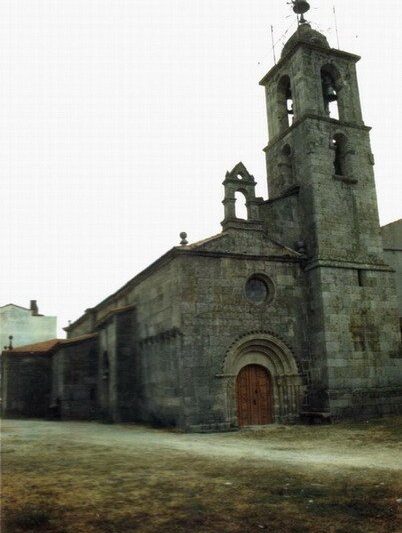 Heritage of A Limia: towers, convents, mills and ethnographic villagesA tour of the historic heritage of the municipality of Xinzo de LimiaA summary of the historic heritage of Xinzo de Limia: the Romanesque old church, the churches of Novás and Morgade, Torre da Pena, the Bon…
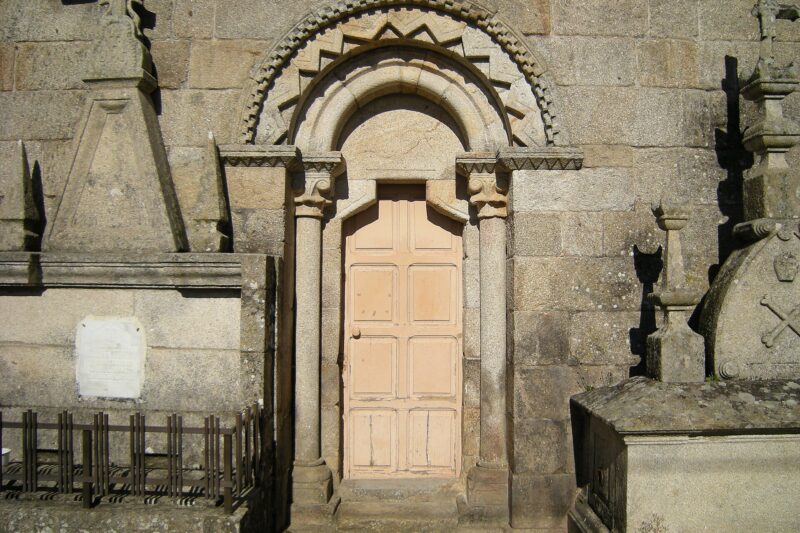 Heritage of A Limia: towers, convents, mills and ethnographic villagesEthnographic heritage of Rairiz de Veiga: Congostro, mills, ovens and springsThe ethnographic heritage of Rairiz de Veiga: the restored village of Congostro, the San Miguel mills route, 17 mills, 5 communal ovens and…
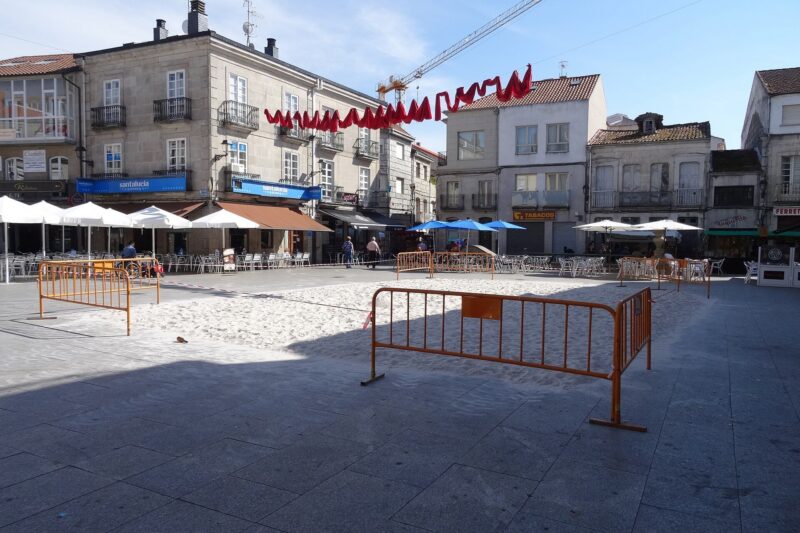 Heritage of A Limia: towers, convents, mills and ethnographic villagesXinzo de Limia in a day: a route through heritage, water and the lagoonA suggested one-day visit to Xinzo de Limia: Museo Galego do Entroido, the church and square of the town, Torre da Pena, the Bon Xesús…
Heritage of A Limia: towers, convents, mills and ethnographic villagesChurches and chapels of the parishes of Xinzo de LimiaIndex of the parish churches and chapels recorded in each of the 20 parishes of Xinzo de Limia, with their dedication, according to…
 Heritage of A Limia: towers, convents, mills and ethnographic villagesMills and ethnographic heritage of Calvos de RandínCalvos de Randín has 18 mills catalogued in Galicia Nomeada, plus the Oratorio, tied to the rivers and streams of the Salas valley and the…
 Heritage of A Limia: towers, convents, mills and ethnographic villagesConvento do Bon Xesús da Limia (Trandeiras): the BIC fileThe Convento do Bon Xesús da Limia, in Trandeiras (Xinzo de Limia), was built in the early 16th century; the Xunta has opened the procedure…
