

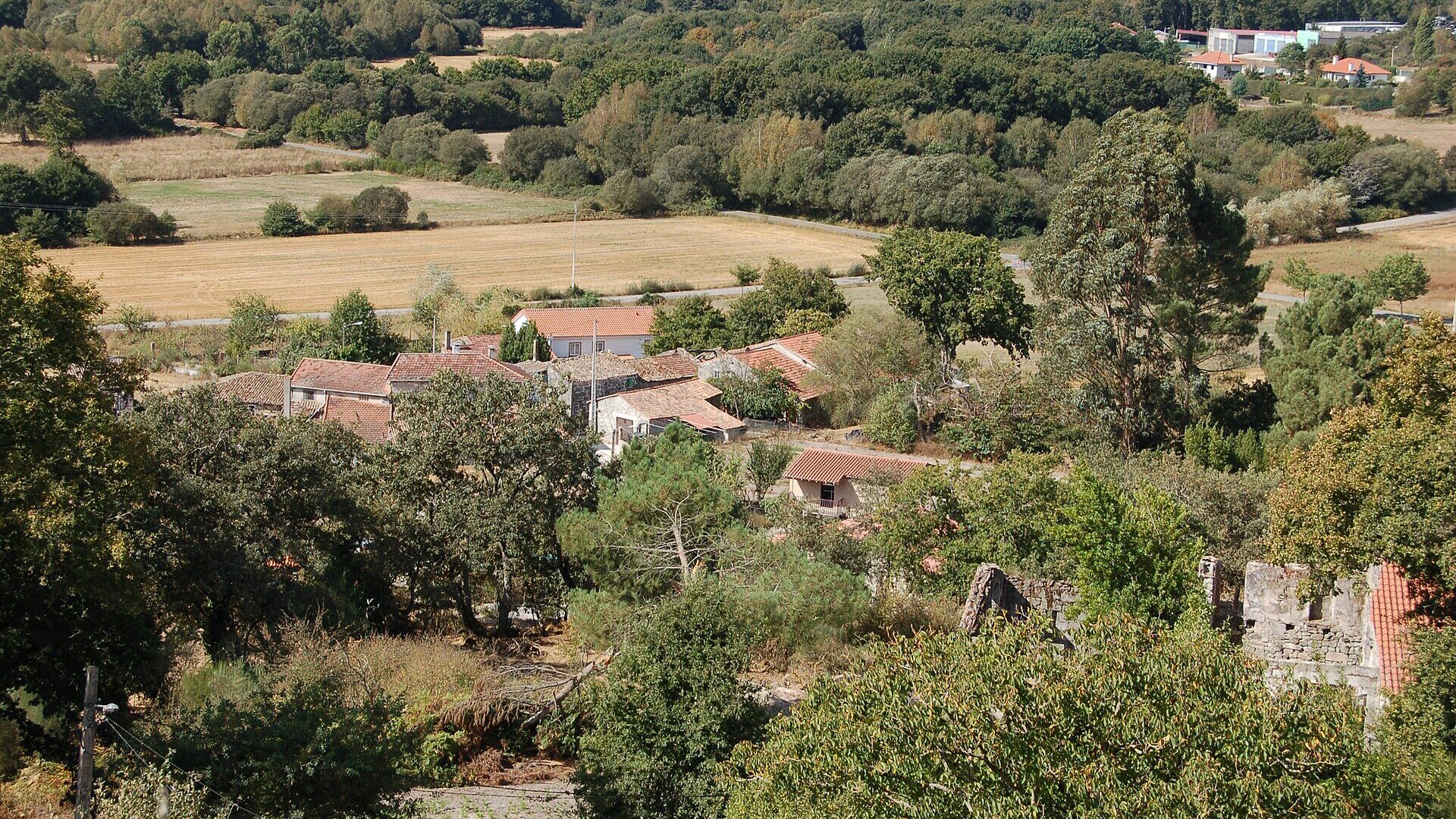
Luis Otero Bobillo, Teacher and Writer from Sandiás, and His Son Luis Otero Quintas
Luis Otero Bobillo (Sandiás – Piñeira de Arcos, 1981) was a teacher, short-story writer and mayor of Sandiás; his son Luis Otero Quintas (Piñeira de Arcos, 1942 – 2026) was a journalist and writer in Madrid.
Luis Otero Bobillo was born in Sandiás and died in Piñeira de Arcos in March 1981. He was a teacher, short-story writer and mayor, and is the father of Luis Otero Quintas [1].
Luis Otero Bobillo
He was acting teacher at Mosteiro (Xinzo de Limia) in 1936. Mobilised, he fought in the war and on its end returned as a teacher to the school of Lamas. He passed the teaching examinations in 1942, in 1946 was posted to Vilar de Santos and in 1954 moved to Oímbra, where he was mayor in the 1950s. Teacher at A Corga, he was appointed mayor of Sandiás on 11 August 1969 and held the post until the first democratic elections [1].
He wrote short stories, contributed to Sonata Gallega, was La Región‘s correspondent in Sandiás and in 1961 received the national Luis María Sobredo prize. He published Cinco cuentos y nada más (1947) and Vida de Santa Marina en romances (1950) [1]. He married Benita Quintas Santana [1].
According to Wikipedia, Otero Bobillo, Ben Cho Sey and the Toponymy Commission of the Agrupación Cultural Auriense were decisive in changing the Castilianised form of the place name to the Galician Sandiás [1].
Luis Otero Quintas
He was born in Piñeira de Arcos (Sandiás) on 24 February 1942 and died in May 2026. He was a journalist and writer. He worked in Madrid at La Actualidad Española, Arriba, Personas and Interviú, and contributed to humour magazines such as El Jueves, Hermano Lobo, A las Barricadas and El Virus Mutante [2]. His books, almost all in Spanish, include Animales sagrados (1976), El logaritmo binario de la esposa de don Nicomedas (1992), Al paso alegre de la paz (1996), Gris marengo (1997), La Sección Femenina (1999), Flechas y Pelayos (2000) and En el nombre de Franco, del Hijo y del Espíritu Santo (2003) [2]. The Museo da Limia keeps his work in the Biblioteca da Limia (Vilar de Santos) and, on 8 May 2026, published the notice of his death: it recalls his work as a «renewer of journalistic language» during the Transition, the autobiographical novel Gris marengo (1997) and other titles that are an «erudite and satirical chronicle of the Francoist post-war period» [3].
Links
Sources
- «Luis Otero Bobillo», Galician Wikipedia (CC BY-SA 4.0). https://gl.wikipedia.org/wiki/Luis_Otero_Bobillo
- «Luis Otero Quintas», Galician Wikipedia (CC BY-SA 4.0). https://gl.wikipedia.org/wiki/Luis_Otero_Quintas
- «Pasamento de Luis Otero», Museo da Limia, 08/05/2026. https://museodalimia.com/publicacion-nota-pasamento-luis-otero-7-05-2026/
You may also like
 Notable personOlimpia Valencia López, the First Woman in Galicia to Graduate in MedicineBorn in Baltar in 1898, Olimpia Valencia was the first Galician woman to graduate in Medicine (1925) and in 1928 opened a general medicine…
 Notable personAntón Tovar, the Poet of A Pereira (Rairiz de Veiga)Antón Tovar Bobillo (A Pereira, Rairiz de Veiga, 1921 – Ourense, 2004) was an existentialist poet in Galician and Spanish, honorary member…
 Notable personCarlos Casares, the Writer Who Grew Up in Xinzo de LimiaCarlos Casares (Ourense, 1941 – Vigo, 2002) spent his childhood in Xinzo de Limia, between Lamas and Sabucedo; he was a novelist, RAG…
 Notable personAlfredo Nan de Allariz, Poet and Playwright from Xinzo in HavanaAlfredo Fernández, «Nan de Allariz», was born in Xinzo de Limia (1874 or 1875) and died in Madrid in 1927; poet, playwright and composer,…
 People of A LimiaHistorical Figures of A Limia: A TimelineTimeline of historical figures linked to A Limia, from Roman times to the 20th century: Limicians of Rome, Hidatius, counts, medieval…
 Notable personCástor Méndez Brandón, Baritone and Folk-Song Poet Born in XinzoCástor Méndez Brandón (Xinzo de Limia, 1864 – Celanova, 1920) was a lawyer, baritone at the Teatro Real in Madrid, poet and mayor of…
