


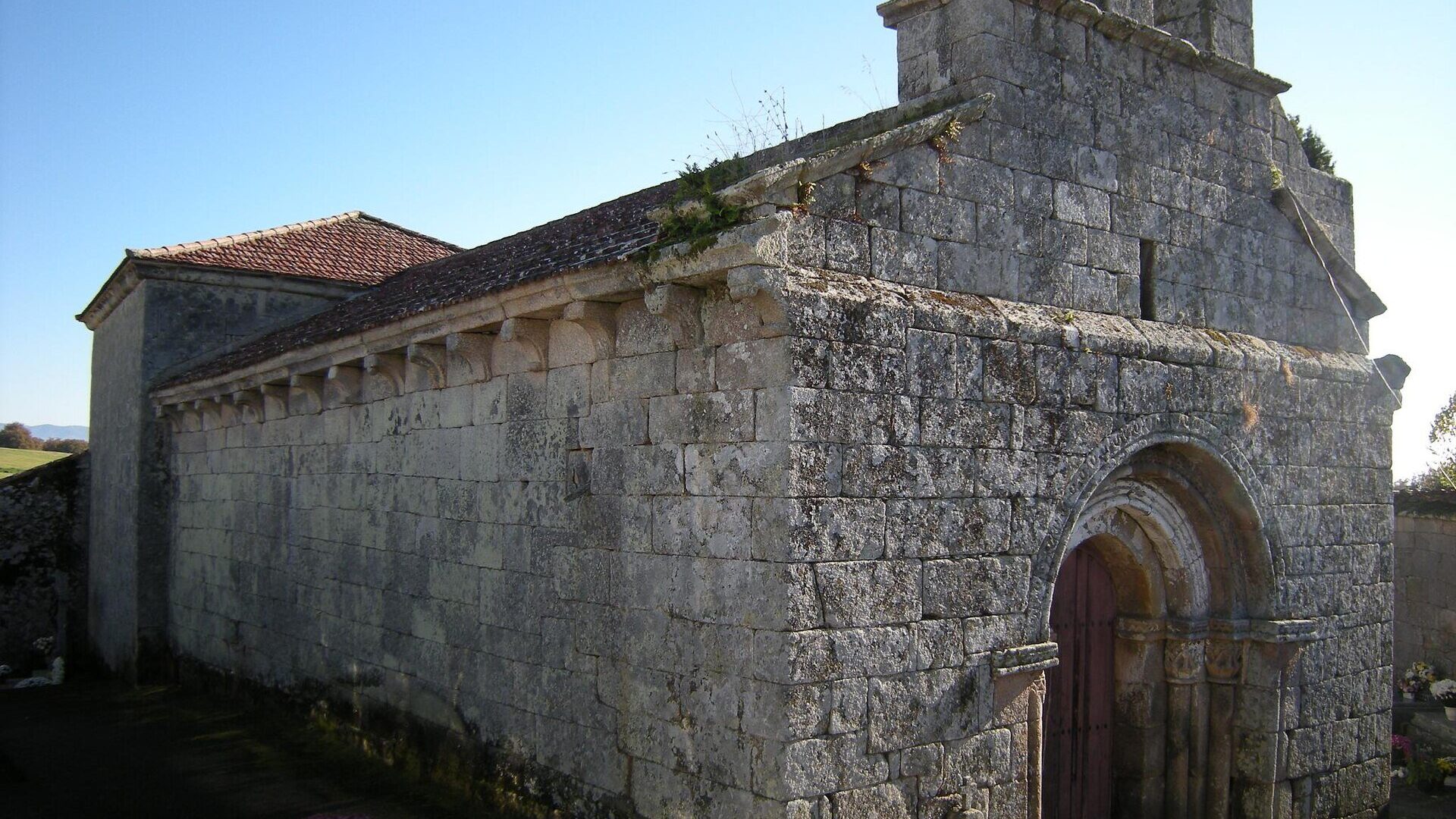
The Pazo do Telleiro, in Couso de Limia (Sandiás)
History of the Pazo do Telleiro, in Couso de Limia (Sandiás): founded in the 17th century by the Añel family, it passed to the Cea, hosted Paiva Couceiro, became a warehouse after Antela was drained and is now private.
- Municipality
- Sandiás (Couso de Limia)
- Oldest part
- 17th century
- Plan
- «U»-shaped, with inner courtyard
- First owners
- Tomé Añel and Catalina Rodríguez
- Last owner of the Cea line
- Eduardo de Cea Naharro, Baron of Casa Goda
The Pazo do Telleiro stands in Couso de Limia, in the municipality of Sandiás, near the area where the Lagoa de Antela once lay and now surrounded by farmland. It has also been called «As Casas do Telleiro» or «Fortaleza do Telleyro». The information on this page comes mainly from a study by Beatriz Gutiérrez Caneda published in Historia de Xinzo in 2016, which incorporates the memory of the owning family; what follows refers to the state of the pazo at that date [1].
Origins and lineages
The oldest part dates from the 17th century and was built by Tomé Añel, a native of Vilariño de Couso, and Catalina Rodríguez, of Sandiás. The pazo remained for a long time in the Añel line; with the marriage of Xoana Añel y Arce to José de Cea y Avalle it passed to the Cea family. Eduardo de Cea y Naharro, Baron of Casa Goda, was the last owner of this line, and then the property passed to a neighbouring family, the Cabreras [1].
The building
It is a sober, imposing granite construction with a «U»-shaped plan that leaves an inner courtyard, formerly reached through an open passage. It underwent extensions and alterations between the 18th and 20th centuries. On the side it keeps the «mazadoiro», a bench that served for mounting pack animals and later for beating flax. On the main façade it displays an 18th-century coat of arms, crowned with a marquis’s coronet, with a shield divided into six fields: the arms of the Inquisition (an ancestor of the Avalle family was a familiar of the Holy Office), of the Suárez de Deza, the Salgado, the Ibáñez Mondragón, the Romay and the Falcón, with three fleurs-de-lis of Avalle at the bottom; it is bordered with plant motifs and Baroque volutes. On the right side there is another, smaller shield of the Pereira family [1].
It was also an estate with land, a spring that fed the three wash-houses in the lower part of the property, a chapel and a dovecote. The chapel, dedicated to the Child Jesus of Prague and which held a lead image, was demolished in the 1950s for agricultural purposes; the dovecote and the spring are still standing [1].
A century of change
The Cea family used the pazo as a country residence: Eduardo de Cea lived in Madrid and the estate was looked after by administrators and servants. According to local tradition, this conservative politician hid the Portuguese monarchist officer Paiva Couceiro at the Telleiro, exiled during the Portuguese First Republic; see Os monárquicos portugueses na Limia [1]. At the end of the 19th century, the pazo and some land were expropriated for the draining of the Lagoa de Antela and it was used as a crop warehouse [1]. At the beginning of the 20th century half passed to the Cabrera family and the other half to another neighbour, who would emigrate to Argentina; during the Civil War, the owner of the first half was conscripted and spent two years away from the house [1].
Legends and mysteries
The cellar and the old stables are linked to two oral versions: that people fleeing to the hills hid there during the war and bombs lie buried under the flagstones, or that the weapons belong to Paiva Couceiro’s companions. What can be observed is that the flagstones are out of place. It is also told that one night in the 20th century all the tools in the wine cellar were found scattered with the door locked, and this was attributed to the devil; and that footsteps were heard along the wooden passage [1]. These are oral testimonies, not documented facts.
Present condition
When the 2016 study was written, the pazo was habitable but unused, one half in the hands of heirs of the Cabrera family and the other half lived in by its owners; opening it to the public would require refurbishment. It is advisable to check its current condition before visiting, because it is private property [1].
Frequently asked questions
Where is the Pazo do Telleiro? In Couso de Limia, in the municipality of Sandiás [1].
Can it be visited? It is private property and not equipped for public visits, according to the 2016 source [1].
Links
Sources
- Beatriz Gutiérrez Caneda, «O Pazo do Telleiro, unha ollada ao pasado. Couso de Limia (Sandiás)», Historia de Xinzo, 13/05/2016. https://historiadexinzo.wordpress.com/2016/05/13/o-pazo-do-telleiro-unha-ollada-ao-pasado-couso-de-limia-sandias/
You may also like
 Heritage of A Limia: towers, convents, mills and ethnographic villagesA tour of the historic heritage of the municipality of Xinzo de LimiaA summary of the historic heritage of Xinzo de Limia: the Romanesque old church, the churches of Novás and Morgade, Torre da Pena, the Bon…
 Heritage of A Limia: towers, convents, mills and ethnographic villagesEthnographic heritage of Rairiz de Veiga: Congostro, mills, ovens and springsThe ethnographic heritage of Rairiz de Veiga: the restored village of Congostro, the San Miguel mills route, 17 mills, 5 communal ovens and…
 Heritage of A Limia: towers, convents, mills and ethnographic villagesXinzo de Limia in a day: a route through heritage, water and the lagoonA suggested one-day visit to Xinzo de Limia: Museo Galego do Entroido, the church and square of the town, Torre da Pena, the Bon Xesús…
Heritage of A Limia: towers, convents, mills and ethnographic villagesChurches and chapels of the parishes of Xinzo de LimiaIndex of the parish churches and chapels recorded in each of the 20 parishes of Xinzo de Limia, with their dedication, according to…
 Heritage of A Limia: towers, convents, mills and ethnographic villagesMills and ethnographic heritage of Calvos de RandínCalvos de Randín has 18 mills catalogued in Galicia Nomeada, plus the Oratorio, tied to the rivers and streams of the Salas valley and the…
 Heritage of A Limia: towers, convents, mills and ethnographic villagesConvento do Bon Xesús da Limia (Trandeiras): the BIC fileThe Convento do Bon Xesús da Limia, in Trandeiras (Xinzo de Limia), was built in the early 16th century; the Xunta has opened the procedure…
