

The Escornabois plague (1598-1599): 118 dead in a Limia parish
Between September 1598 and 1599 the plague killed 118 people in Santa Mariña de Escornabois (Trasmiras); the priest Francisco Rodríguez wrote down the count and the story, and the chapel of San Roque marks the end of the outbreak.
Between September 1598 and summer 1599 the bubonic plague killed 118 people in the parish of Santa Mariña de Escornabois (Trasmiras), possibly as many as all the deaths of the previous three or four decades [1]. We know because the priest, Francisco Rodríguez, wrote in the parish books the name of each victim and an account of what happened: "Los que esto leyeren pueden lo creer por cosa muy cierta porque yo lo escribo, lo he visto pasar así todo al pie de la letra" ("Those who read this may believe it as most certain, for I write it, having seen it all happen exactly so") [1].
The plague in Galicia
The plague, in its different forms (bubonic, pneumonic and septicaemic), recurred cyclically from the Black Death of the 14th century and had one of its peaks between 1598 and 1601. It reached Galicia by the Atlantic and advanced inland; in April 1598 the governor warned that there was plague in the corregimiento of Ourense and in August the city was already affected, with many residents having fled [1].
The Escornabois books
Parish books began to be used after the Council of Trent (1563). The Diocesan Archive of Ourense holds that of Santa Mariña de Escornabois, begun in July 1558. The annual average of baptisms was double that of deaths in the second half of the 16th century, so the population was growing; in the last decade the gap narrowed, but still favoured baptisms [1].
How the outbreak went
The plague arrived in September 1598: on the 20th Teresa Fernández, of the place of Rabal, died. Three weeks later it passed to the Barrio de Abaixo (Isabel da Barreada, on 8 October) and, in early November, to the Barrio de Arriba [1]. Of the victims whose age is given, 61 were children and youths, 39 adult women and only 18 adult men [1]. Of the babies born during the outbreak only one girl survived, Inés, daughter of Salvador Palanca and Inés da Barreada, baptised on 6 July 1599 [1].
Hunger, fear and division
There was "great hunger" and no bread could be found for money. Grain prices doubled and the plague did not distinguish classes: Estebo Díez, of Rabal, lost both maids and his wife [1]. The strongest social effect was tension: those of the Barrio de Arriba raised "walls" against the Barrio de Abaixo and, when the plague reached them too, "había grandes riñas de unos para los otros y no había quien se llegase uno a otro, aunque fuesen padres e hijos" ("there were great quarrels among them and nobody would approach another, even if they were parents and children") [1].
Remedies
Treatment was in the hands of barber-bleeders, who purged or drew blood from the buboes; in Escornabois there were at least two, Juan and Antonio Rodríguez, and they used leeches like those of the Lagoa de Antela. On 22 December 1598 two children of the bleeder Juan Rodríguez and Leonor de Novoa died. The treatise writers’ main advice was to appease divine wrath with prayers; the priest kept saying Mass daily, on a platform set up at the church door, so that parishioners could see and hear from outside, some from the Otero and Penamaior, a long way off [1].
Burials
The dead were taken to the grave on carts, two or three together, because there was nobody to carry them on a bier. The first victim, Isabel da Barreada, was buried outside consecrated ground, in the ferrado fields, because nobody dared go near her; María Afonso, Pérez’s wife, likewise had nobody to carry her to consecrated ground, not even for money [1].
The chapel of San Roque
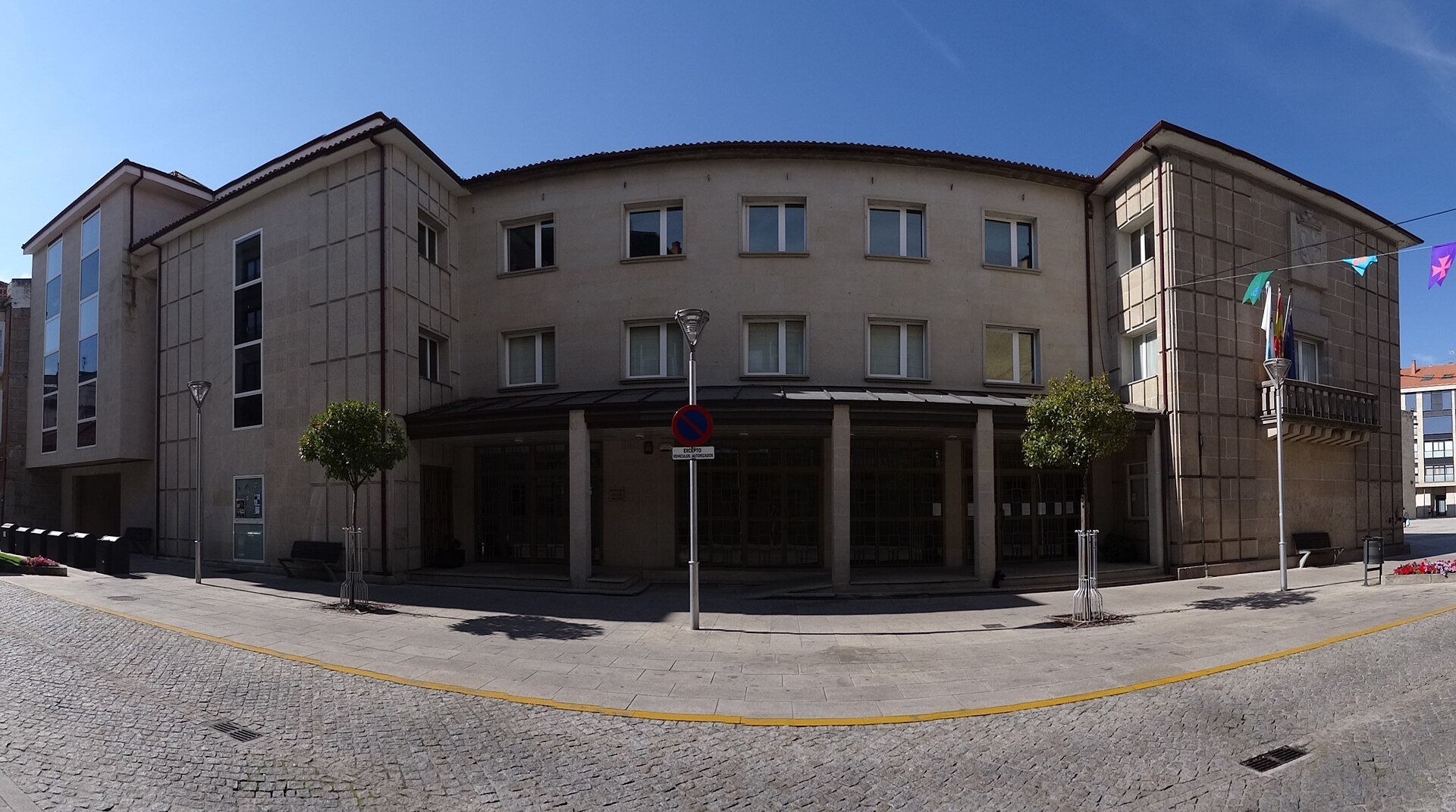
Against the plague people invoked St Sebastian and St Roch. The priest says deaths always happened at new moon, and that when construction of the hermitage of San Roque on the Otero began, on 1 August 1599, the plague ceased: in one night and day fifteen people fell ill and only one died. He also noted that when the plague began there were great fires on the hills. The chapel of San Roque at Escornabois was one of many raised in Galicia in the late 16th century [1].
Assessment
The mortality was especially cruel to children and youths. There is no census from the time, but today the parish has 237 inhabitants, according to INE as cited by the source [1]. Alexander de los Ríos Conde studied the case in Diversarum Rerum (no. 10, 2015) [1].
Links
Sources
- Alexander de los Ríos Conde, «La peste que exterminó a 118 personas en Escornabois (Trasmiras, Ourense) a finales del siglo XVI», Vía Lethes, 11/05/2020. https://vialethes.es/peste-escornabois-trasmiras (do mesmo autor: «La peste de 1598-1599 en una parroquia rural de la Galicia interior: Santa Mariña de Escornabois», Diversarum Rerum 10, 2015)
- «[Ss. XVI–XX / etnografía] A peste de Escornabois e os Zarramunqueiros: dise que a finais do s. XVI unha epidemia de peste matou 118 persoas en Escornabois. Os Z». https://www.festivalesdeespana.com/festival/entroido-escornabois-trasmiras.
You may also like
 Curiosities of A LimiaThe miser of Xinzo: José Oterino’s hidden fortune (1891)In November 1891 José Oterino, aged 43, died in Xinzo and the judge found 432 gold ounces in his house: the "miser of Xinzo" appeared in…
Curiosities of A LimiaXinzo at the 1878 Paris Universal Exhibition: the soap and linen of A LimiaIn 1878 José Romero took Xinzo's linen and soaps to the Paris Universal Exhibition: he won a gold medal for the linen and an honourable…
 Curiosities of A LimiaThe great Randín fire (1889) and the solidarity that followedOn 20 November 1889 a fire left Randín (Calvos de Randín) almost in ashes, with straw roofs and strong wind; press figures vary, and aid…
 Curiosities of A LimiaFair traders, cinzarradas and proxy weddings: customs of old XinzoThree customs of 20th-century Xinzo told by Edelmiro Martínez Cerredelo: the traders at the fairs of the 14th and 27th and Remy of the…
 Curiosities of A LimiaThe 1918 flu in Xinzo de Limia and MoreirasIn autumn 1918 the flu killed 60 people in the concello of Xinzo and 56 in that of Moreiras, which had far fewer inhabitants; Xinzo's first…
Curiosities of A LimiaArchive stories: the trees of 1755, the three-key chest, the union of 1061 and the 1932 revoltFour documented episodes from A Limia: the royal order to plant trees on common land (1755), the three-key chest of the Xinzo jurisdiction,…
