

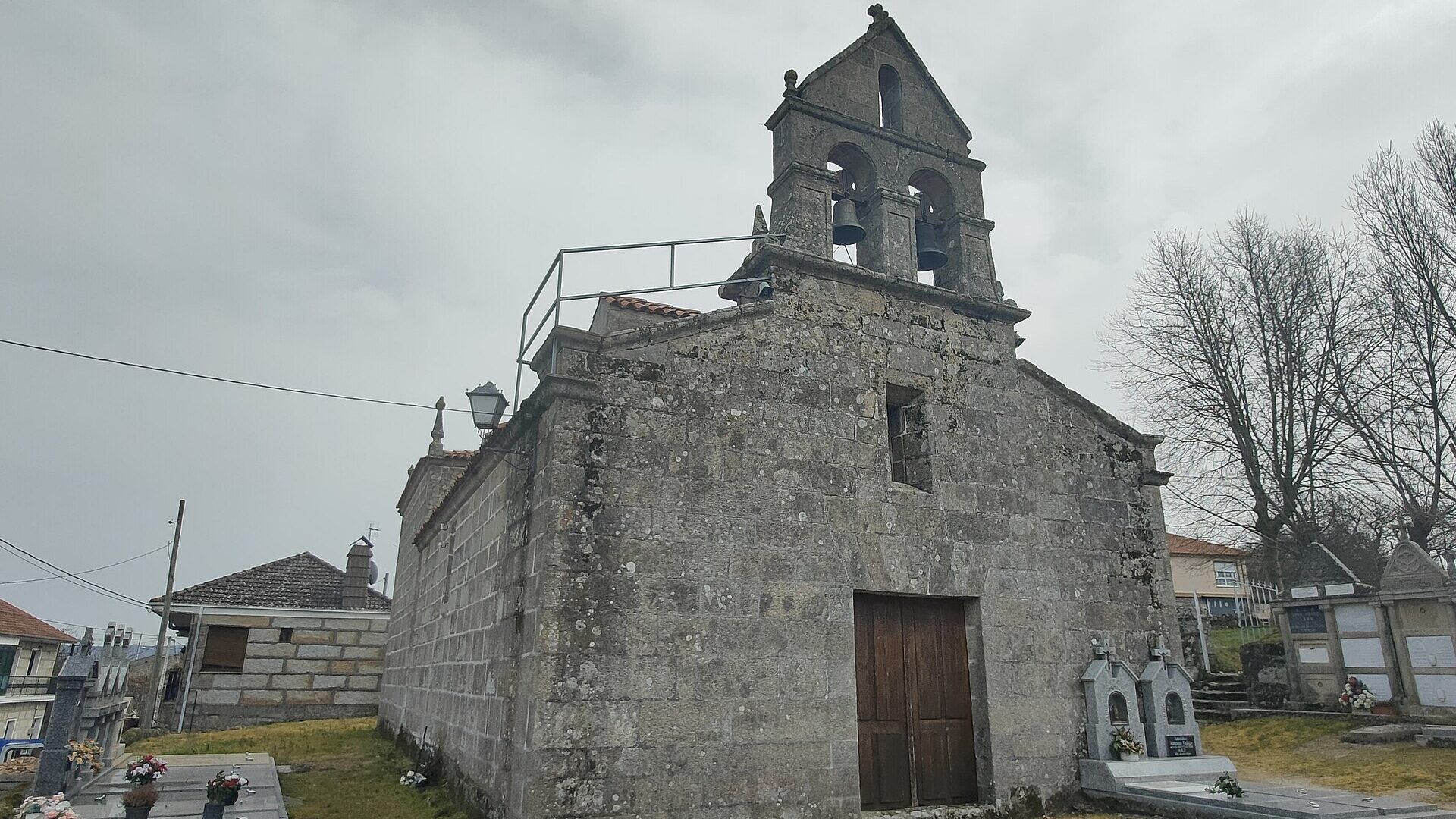
The 1918 flu in Xinzo de Limia and Moreiras
In autumn 1918 the flu killed 60 people in the concello of Xinzo and 56 in that of Moreiras, which had far fewer inhabitants; Xinzo's first death was on 16 October and the doctor Leopoldo Álvarez gave his name to a street for his work.
In autumn 1918 the flu pandemic reached Xinzo de Limia and Moreiras, then two separate concellos. In both it lasted until spring 1919 and was especially virulent in October, November and December 1918 [1].
The context
The epidemic began in March 1918 at a military camp in Kansas and reached the European front; in Spain it probably entered by train from France, with Spanish and Portuguese labourers returning. It was called the "Spanish flu" only because Spain, a neutral country, reported on it without censorship. In Spain 40 % of the population was infected and nearly 300,000 people died [1]. In Ourense there were 16,412 deaths in 1918, double the average of the five years before or after, and between August 1918 and April 1919 144.9 people per 10,000 inhabitants died in the province. The governor suspended the monthly fair in September and the visits to cemeteries on All Souls’ Day, and banned visiting houses with deaths; in some towns the bells were not rung "so as not to frighten" [1].
In Xinzo and Moreiras
- On 8 October the Xinzo authorities said there were no cases, but closed the schools as a precaution. The first death was on 16 October, the young Francisco Vidal Gallego, aged 22 [1].
- In Moreiras the first victim was on 6 November, the young Carolina Colmenero Pérez, aged 28 [1].
- Xinzo had about 7,000 inhabitants in 1918 and Moreiras between 1,100 and 1,200 (1,460 in the year of the merger, 1927). Sixty people died in Xinzo and 56 in Moreiras, nearly as many with far fewer inhabitants. The pandemic affected mainly those under 50 [1].
- In 1919 there were almost no deaths; the last victims died in March and April [1].
The author took the data from the death registers of the Xinzo and Moreiras Civil Registry and publishes a table of deaths by settlement [1].
Who cared for the sick
Xinzo had seven doctors (Leopoldo Álvarez, Teodoro Colmenero, Matías González, Eladio Izquierdo —oculist—, Lorenzo Mathé, Emilio Núñez and Marcial Velasco) and three pharmacies (widow of Arturo Álvarez, Constantino Elices and Manuel Saa). In Moreiras there was probably no doctor or pharmacy [1]. Leopoldo Álvarez did outstanding humanitarian work and the Republican town council decided, for his merits, to dedicate to him the street then called Estrella: Leopoldo Álvarez street, which starts from Avenida de Madrid, at the corner of the Praza Maior, and ends in the churchyard of the old church of Santa Mariña [1].
Links
Sources
- Edelmiro Martínez Cerredelo, «Outono de 1918: a epidemia de gripe nos concellos de Xinzo de Limia e Moreiras», Historia de Xinzo, 08/11/2018. https://historiadexinzo.wordpress.com/2018/11/08/outono-de-1918-a-epidemia-de-gripe-nos-concellos-de-xinzo-de-limia-e-moreiras/
You may also like
 Curiosities of A LimiaThe miser of Xinzo: José Oterino’s hidden fortune (1891)In November 1891 José Oterino, aged 43, died in Xinzo and the judge found 432 gold ounces in his house: the "miser of Xinzo" appeared in…
Curiosities of A LimiaXinzo at the 1878 Paris Universal Exhibition: the soap and linen of A LimiaIn 1878 José Romero took Xinzo's linen and soaps to the Paris Universal Exhibition: he won a gold medal for the linen and an honourable…
Curiosities of A LimiaThe Escornabois plague (1598-1599): 118 dead in a Limia parishBetween September 1598 and 1599 the plague killed 118 people in Santa Mariña de Escornabois (Trasmiras); the priest Francisco Rodríguez…
 Curiosities of A LimiaThe great Randín fire (1889) and the solidarity that followedOn 20 November 1889 a fire left Randín (Calvos de Randín) almost in ashes, with straw roofs and strong wind; press figures vary, and aid…
 Curiosities of A LimiaFair traders, cinzarradas and proxy weddings: customs of old XinzoThree customs of 20th-century Xinzo told by Edelmiro Martínez Cerredelo: the traders at the fairs of the 14th and 27th and Remy of the…
Curiosities of A LimiaArchive stories: the trees of 1755, the three-key chest, the union of 1061 and the 1932 revoltFour documented episodes from A Limia: the royal order to plant trees on common land (1755), the three-key chest of the Xinzo jurisdiction,…
