


Our Lady of Mercy at A Saínza
The devotion behind the A Saínza pilgrimage: the chapel, the processions, the Mass on the battlefield and the date rule, around 24 September, the feast of Mercy.
The A Saínza pilgrimage is held in honour of Our Lady of Mercy. The Moors and Christians battle is the most spectacular part, but the festival began as a religious devotion: Mass and procession have been held since 1721, more than a century before the first battle [1][2]. This page tells the religious side of the Romaría da Saínza. Its origin is explained on the history page, and the battle on the Moors and Christians page.
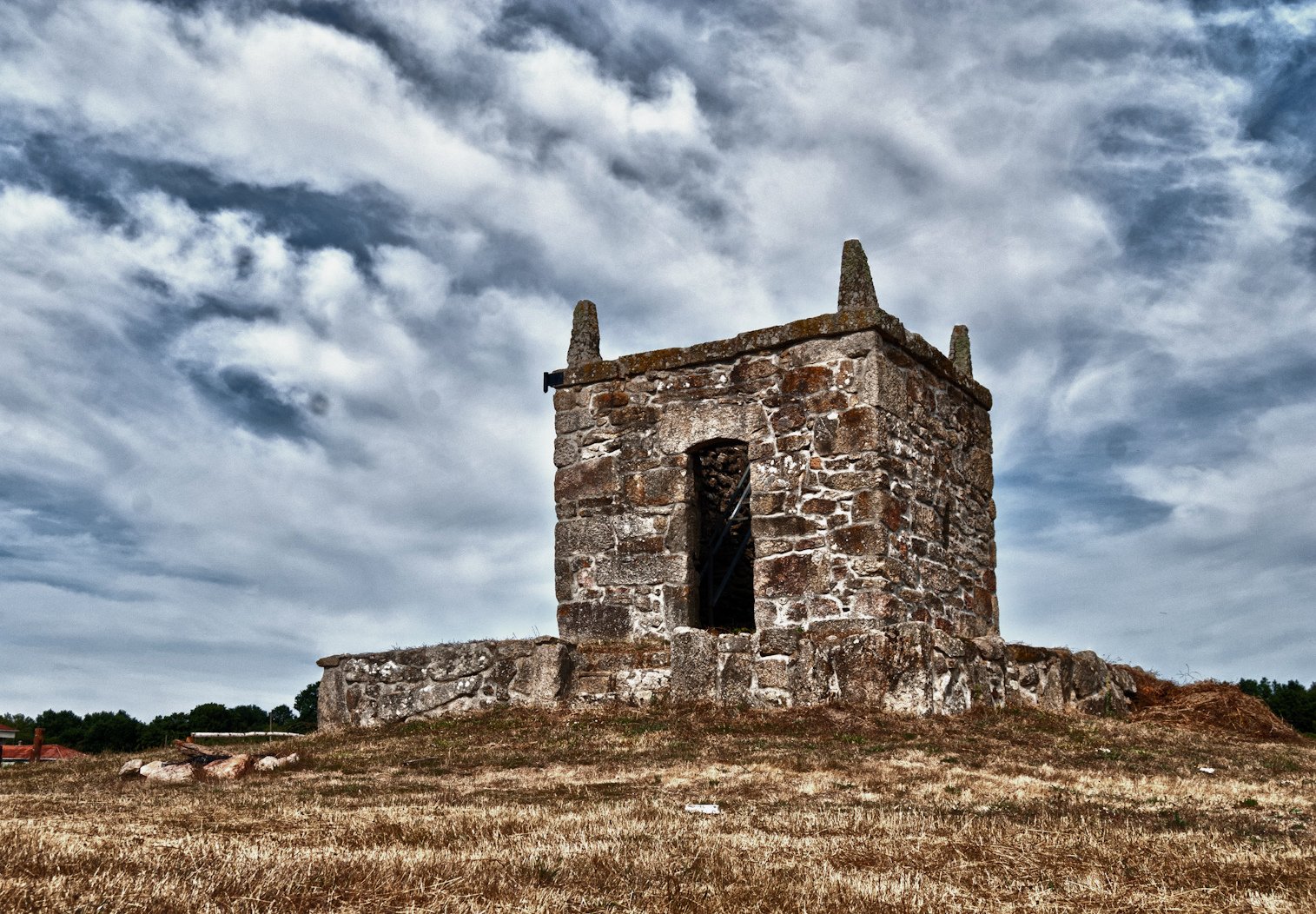
The chapel of Mercy
In 1721 Pedro González Gándara, abbot and parish priest of San Bartolomé de Ganade, built the shrine at A Saínza [1]. More than a century later, the priest Manuel Alonso Dorado rebuilt it and promoted the pilgrimage [1]. The catalogue of the General Municipal Plan of Rairiz de Veiga lists the Capela da Virxe da Mercede in A Saínza de Arriba, with artistic interest and full protection [7].
The processions
The procession is the thread joining the religious festival and the battle. While the battle is staged, the procession leaves the chapel and stops beside the field [1][4]. In 1929 the image left the parish church of Santa Baia and travelled to the castle in a «blanco y alegre carrito» (a white, cheerful little cart) decorated with garlands [3][4]. When the fighting ended, the victorious Christian captain stood before the Virgin to thank her for her intercession [4].
In recent editions there are several processions. In the 2026 programme the Virgin left the A Saínza chapel on Thursday and, on Saturday, went in procession from the chapel to the church of San Xoán. On Sunday she returned from San Xoán to the castle, accompanied by the Municipal Bagpipe School (Escola de Gaitas Municipal) [2]. That Sunday there was a solemn Mass on the battlefield itself, before the battle [2]. Tradition closes the day with sermons, songs, dances and fireworks [1].
The date rule
The Church celebrates the Virgin of Mercy on 24 September, and that is the reference date for the pilgrimage. The sources, however, do not agree on the exact day:
- The town council places the gathering of pilgrims on the Sunday closest to 24 September [5].
- Antonio Doval Adán gives 24 September itself [6].
- In 1929 Jaime Solá wrote that the festival was «el día 23 de Septiembre» (23 September) [4].
- In recent editions the festival lasts four days, with a programme that includes the 24th, and the main battle is held on the Sunday [2][9].
In short, the pilgrimage is held around 24 September, and the Moors and Christians battle on the Sunday closest to that date.
Mercy in tradition
The ethnographer Antón Fraguas devoted a section to Our Lady of Mercy of A Saínza in his book Romarías e Santuarios (1988) [8]. The title of the Virgin also explains the meaning of the battle. According to Solá, at A Saínza people remembered the times when the Order of Mercy helped Christian captives in Algiers [4]. Local tradition says the victory of the Reconquista was attributed to the Virgin of Mercy [1]. This religious reading of the battle is on the page about the Hundred Maidens and the legends.
Sources
- Fronteira Esquecida, «Romaría da Saínza» (bibliography: Delfín Caseiro Nogueiras, A Romaría da Saínza: mouros e cristiáns, Ourense, 2003). https://fronteiraesquecida.eu/gl/fichas/romaria-da-sainza/
- Páxinas Galegas, «Romería da Saínza e Nosa Señora da Mercé» (2026 programme). https://www.paxinasgalegas.es/fiestas/romeria-da-sainza-e-nosa-señora-da-merce-rairiz-de-veiga-574.html
- Alexander de los Ríos Conde, «La romería de A Saínza en un reportaje de 1929 (Primera Parte)», Vía Lethes, 25-09-2016. https://vialethes.es/romeria-sainza-1929
- Alexander de los Ríos Conde, «La romería de A Saínza en un reportaje de 1929 (Segunda Parte)», Vía Lethes, 02-10-2016. https://vialethes.es/romeria-sainza-1929-ii
- Concello de Rairiz de Veiga, «Romaría da Sainza». https://rairizdeveiga.es/gl/feiras-festas/romaria-da-sainza
- Antonio Doval Adán, «Rairiz de Veiga», in Galicia pueblo a pueblo (dir. Andrés Precedo Ledo), pp. 1167–1168. Digital copy in Minerva (USC). https://minerva.usc.gal/bitstreams/f7db627e-8867-4e17-b14c-f908758002ab/download
- Xunta de Galicia, PXOM of Rairiz de Veiga, heritage catalogue, entry A-025 «Capela da Virxe da Mercede». http://www.planeamentourbanistico.xunta.es/siotuga/documentos/urbanismo/RAIRIZDEVEIGA/documents/27187ca010.pdf
- Museo da Limia, «Fraguas e A Limia». https://museodalimia.com/fraguas-e-a-limia/
- Festivales de España, «Romaría da Saínza e Nosa Señora da Mercé» (accessed 22-10-2026). https://www.festivalesdeespana.com/festival/romaria-da-sainza-e-nosa-senora-da-merce-rairiz-de-veiga
You may also like
 Romaría da SaínzaHistory of the Romaría da SaínzaFrom the church of 1721 to the first battle of Moors and Christians around 1840 and the tourist-interest declaration of 2001: the…
Romaría da SaínzaMoors and Christians at A SaínzaThe Attack: the captains' parley, the cavalry charge, the gunpowder and the burning of the castle in one of the few Moors and Christians…
Romaría da SaínzaThe Hundred Maidens and the legends of A SaínzaThe tribute of the Hundred Maidens, the Reconquista, a miracle of the Virgin and the ransom of captives: the legends that explain the Moors…
Romaría da SaínzaThe castle and oak grove of A SaínzaThe castle of A Saínza, an Asset of Cultural Interest, and the oak grove with the Carballa da Rocha, a natural monument: the setting of the…
