

Fareleiro Sunday: the flour battle that opens the Xinzo Entroido
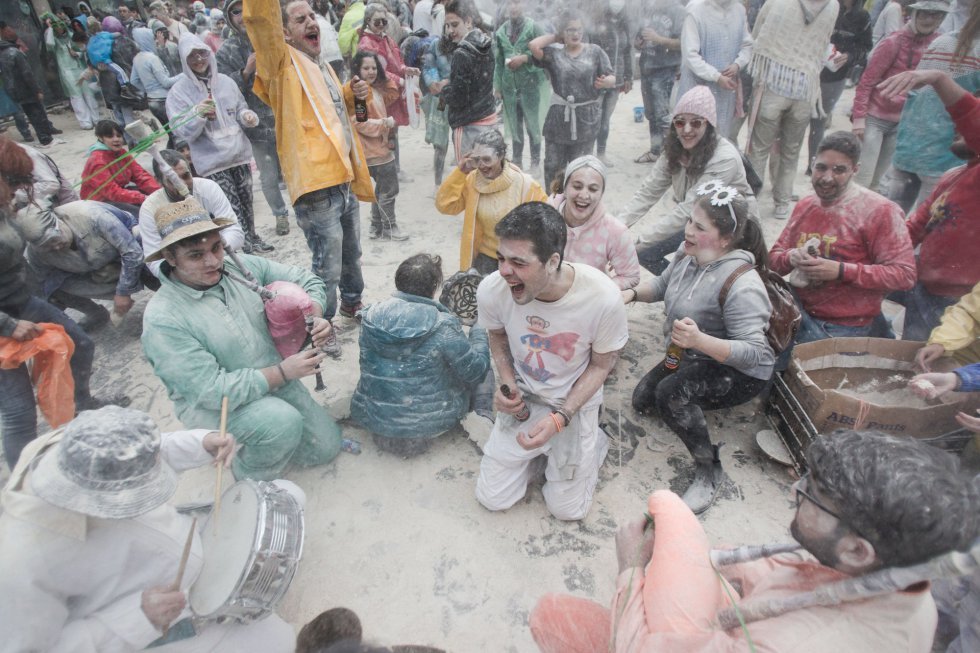
Fareleiro Sunday opens the traditional cycle of the Xinzo Entroido with a bran and flour battle in the Praza Maior; it is a day designed mainly for children and dyes the square and nearby streets white.
- When
- first Sunday of the traditional cycle
- Where
- Praza Maior and nearby streets
- What is thrown
- bran and flour
- Designed for
- mainly children
Fareleiro Sunday is the day on which the traditional cycle of the Xinzo de Limia Entroido begins. According to the Town Council, the traditional cycle starts long before the big days with the Fareleiro, Oleiro and Corredoiro Sundays and even extends to Piñata Sunday [1]. Fareleiro is the first of them and, in a town where the Entroido lasts five weeks, it serves as the starting gun for families and children.
What it involves
Kilos of bran and flour are "the perfect ammunition" for a bloodless battle that leaves the Praza Maior, the nearby streets and everyone brave enough to take part dyed an unmistakable white [2]. The comarca’s 2007 website said that more than 2000 kilos of flour can be used and that the streets end up painted white [3]. The Town Council presents Fareleiro as a tradition aimed especially at the little ones, although in the end everyone enjoys the day [2].
An origin in the milling
To find its antecedents you have to go back decades, when young men and women played at throwing bran at each other on the way to the milling, that is, taking the grain to the mill and collecting the flour [2]. The same 2007 website recalled another reading of the festival: in the past it was a very sexist day, because only the men fled from the women, and the name comes from the fun battle in which flour is thrown at one another [3]. That reading is that of the person writing at the time, not an official explanation, and today the Town Council stresses the family and children’s character of the day [2].
After the fun
The 2008 report on the same website recorded what is left when the party ends: the streets of Xinzo full of bran, the footprints of children and young people, and the promise to return next year to leave a bigger "snowfall of flour", but less cold than the winter kind [4].
Tips for visiting
The Town Council asks that you do not come just any way: it is best to wear the oldest clothes in your wardrobe, because bran and flour spare no one [2].
Frequently asked questions
What is Fareleiro Sunday?
The bran and flour battle in the Praza Maior that opens the traditional cycle of the Xinzo Entroido [1][2].
Why is it called Fareleiro?
Because of the bran (farelo) and flour thrown; its antecedents lie in the game of throwing bran on the way to the milling [2].
What clothes should I wear?
The oldest, because flour dyes everything it touches white [2].
Links
- The Xinzo Entroido cycle, day by day
- Oleiro Sunday and the Game of the Pots
- Entroido of Xinzo
- Praza Maior, Ladeira and Toural
- Xinzo de Limia
Sources
- Entroido de Xinzo, un sentimento (Concello de Xinzo). http://xinzo.gal/entroido/
- Fareleiro (Concello de Xinzo). http://xinzo.gal/entroido/info/fareleiro/
- Fareleiro 2007 (xinzodelimia.eu). http://www.xinzodelimia.eu:80/fareleiro_2007.htm
- Fareleiro 2008 (xinzodelimia.eu). http://www.xinzodelimia.eu:80/fareleiro_2008.htm
You may also like
 Entroido of Xinzo de LimiaHistory of the Entroido of Xinzo de Limia: from the name to the international designationFrom the name "entroido" (documented in Galician since 1251) to the 1889 chronicle, the A Pantalla Association of 1996, the Museo Galego do…
Entroido of Xinzo de LimiaThe Xinzo Entroido cycle, day by dayA guide to the days of the Entroido of Xinzo de Limia according to the Town Council's official website: Petardazo, Fareleiro, Oleiro, Meco,…
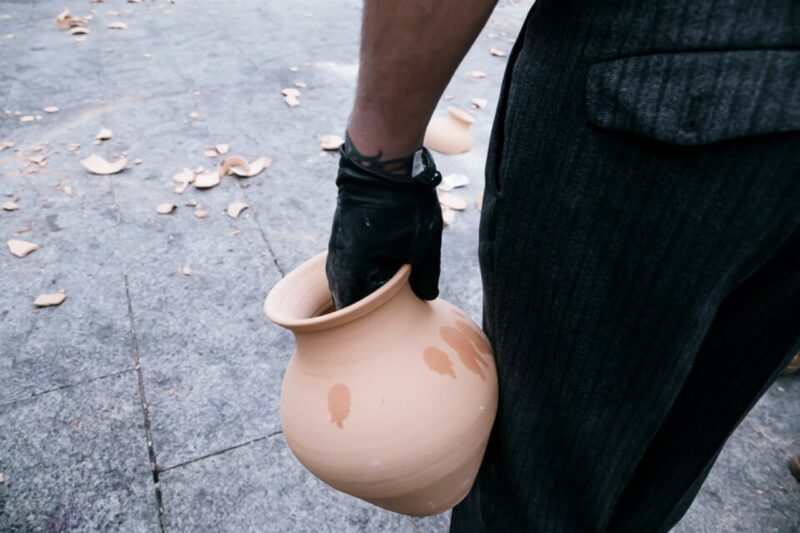 Entroido of Xinzo de LimiaOleiro Sunday and the Game of the Pots of the Xinzo EntroidoOn Oleiro Sunday of the Xinzo Entroido hundreds of clay pots from Niñodaguia fly across the Praza Maior and smash on the ground; whoever…
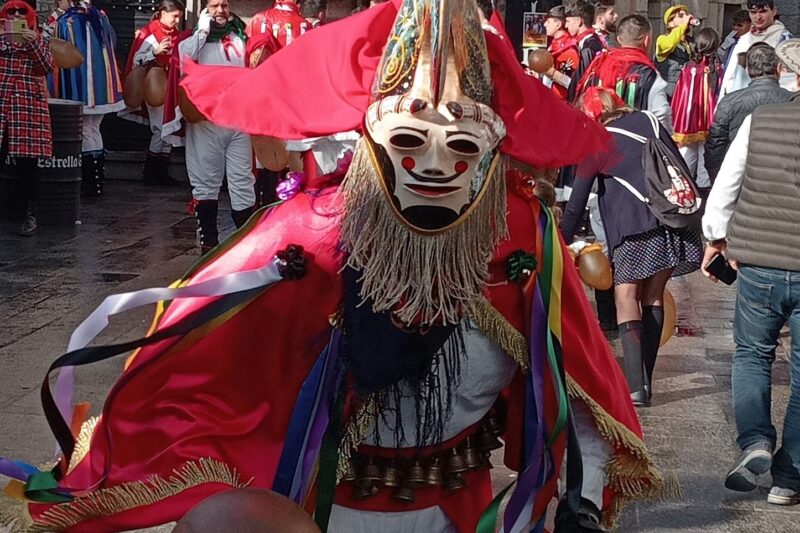 Entroido of Xinzo de LimiaThe Pantalla among the masks of the Galician Entroido: peliqueiros, cigarrones, felos and vergalleirosThe Xinzo Pantalla shares a family with the Ourense masks: the peliqueiro of Laza, the cigarrón of Verín, the felo of Maceda and, in A…
Entroido of Xinzo de LimiaThe FESMOU Entroido Gathering in Xinzo: traditional masks from all over GaliciaThe Xuntanza de Entroidos, known as FESMOU, brings together in Xinzo de Limia more than 30 traditional entroido groups from all over…
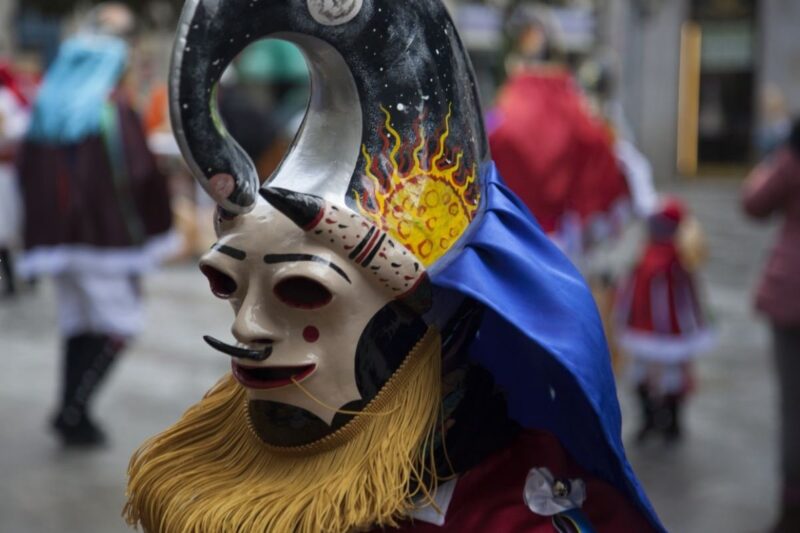 Entroido of Xinzo de LimiaAnatomy of the Pantalla: what the Xinzo Entroido mask looks like and how it is fittedHow a Xinzo Pantalla is made: face perimeter, beard, mouth, eyes, the horn and its dots, the hat and the traditional cut, and how…
