


Waters, springs and the devil’s horses: legends of Porqueira and A Limia
Legends of waters and springs in A Limia: the devil's white horse of Ponte Liñares, the spring of the three rushes, the golden-haired moura of San Lourenzo, the caves of the Fírbeda waterfall and the gold and tar beams of A Forxa.
A Limia, land of the lagoon, the river Lethes and springs, has many legends with water as their protagonist. This page gathers those of Porqueira and Calvos de Randín, and some from waters of the comarca [1][2][3].
The devil’s white horse of Ponte Liñares
It is told by Antón Méndez Gándara, who heard it as a child from his mother and grandmother. Two men from Faramiñás, a place in the parish of San Martiño (Porqueira), had gone to the Ponte Liñares fair on a cold, rainy day. The Limia river swelled so much that it covered the Roman bridge that gives the place its name, and as night fell they could not find a place to cross. They went upstream. One of them, a very foul-mouthed man, though a good person and very devout, began to curse. Suddenly a glow lit up the field and they saw a most beautiful white horse, white as milk, with long manes like threads of silver, approaching them without fear. The foul-mouthed man stroked it, grabbed the mane and leapt onto its back, and helped his companion up too. They asked the animal to gallop in search of a crossing, and the one in front, to urge it on, blasphemed again: the worse the blasphemy, the faster the horse ran. It entered the river without being told to. The one behind sensed that this was not natural, remembered he had a rosary in his pocket and, as he took it out, murmured "Most Holy Virgin Mary". At that instant the horse vanished and they were left sitting on the river’s pebble bed, almost on the far bank, trembling with cold and fear. It was the devil’s horse [1]. The Liñares bridge disappeared in a flood in the 1960s [1].
The same motif recurs in Sandiás (the beast that lengthens) and in Casas da Veiga (Vilar de Santos), where some young men returning from a night out mounted a horse to cross a stream and the animal vanished in the middle of the water [2][4].
The spring of the three rushes
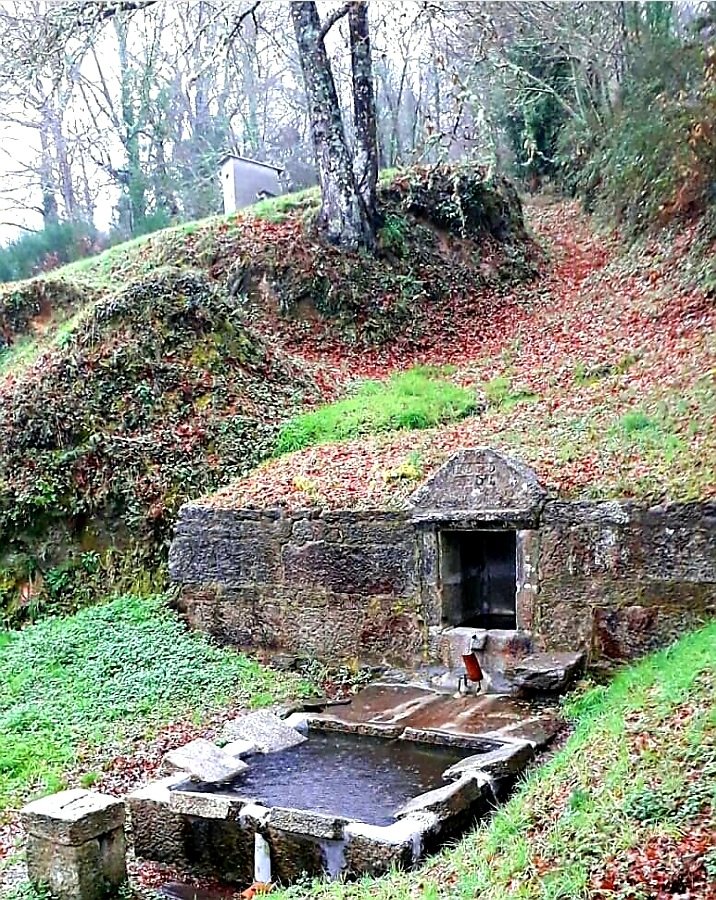
At Rubiás dos Mistos (Santiago de Rubiás, Calvos de Randín), on the monte da Torre, there is a mysterious spring. Only someone not thinking of it sees it; whoever looks for it can pass beside it a thousand times and never see it. At its foot three rushes grow, and depending on which one you pull, fate reserves gold, silver or carrion: gold, rich for life; silver, you stay as you are; carrion, you will be wretched for the rest of your life. José González Rodríguez collected it in January 1994 from Carme Escudero Rodríguez, aged 86 [3].
The moura of San Lourenzo and the Fírbeda waterfall
According to informant B., of San Lourenzo (Porqueira), in a cave near some crags a moura with golden hair appeared, combing it with a silver comb. The saying is preserved: "Moura, mouraza; / dame da túa riqueza / e eu douche da miña pobreza" (Moura, big moura, give me of your wealth and I will give you of my poverty) [2]. In the caves of the Fírbeda river waterfall there are passages whose destination is unknown; perhaps they come out at some spring [2].
The beams of A Forxa
In A Forxa (Porqueira) the famous legend of the two beams was told, one of gold and one of tar: whoever hit the tar one would provoke fire or misfortune. The same legend is collected in Saa (Vilar de Santos) and in Sandiás (Fonte do Mouro) [2]. The Torre da Forxa also has a tradition: Xesús Taboada Chivite recorded that, according to González de Ulloa, King García of Galicia stayed there, pursued by his brother, before passing to the "Moors of Portugal"; the neighbours say the tower was close to disappearing because its ashlars were put up for sale [5].
St John’s springs
On the night or morning of St John, at the Castiñeira spring in Piñeira de Arcos, a very beautiful lady comes out, enchanted and surrounded by serpents [2]. In Arnuíde (Vilar de Barrio), at the Ponte Xidelas, people speak of the xianas, very beautiful water fairies who appear at springs and rivers around St John and guard treasure; whoever sees them falls in love with them but must pass tests before marrying them and enjoying the wealth [2].
Links
Sources
- Antón Méndez Gándara, «O cabalo branco do Demo», Galicia Encantada, marzo de 2008. https://galiciaencantada.com/lenda.asp?cat=4&id=1258
- Rafael José Adalid Rodríguez, «Contos, lendas e mitos da auga na Limia e pequenas achegas», Revista Galicia Encantada 16 (2020). https://galiciaencantada.com/lenda.asp?cat=11&id=2886
- «A fonte dos tres xuncos», recollida por José González Rodríguez (1994), Galicia Encantada. https://galiciaencantada.com/lenda.asp?cat=4&id=572
- «Contos e lendas de Vilar de Santos», Fronteira Esquecida; Adalid (2020).
- «Torre da Forxa», Fronteira Esquecida Limia-Lima; cita Taboada Chivite, Los castillos (1963). https://fronteiraesquecida.eu/gl/fichas/torre-da-forxa-2/
You may also like
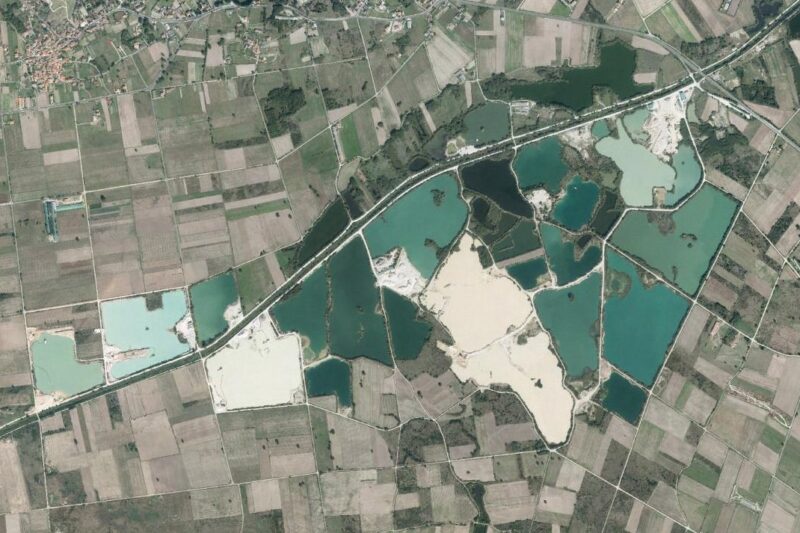 LegendAntioquía, the Drowned City beneath the Lagoa de AntelaBeneath the waters of the Lagoa de Antela would sleep Antioquía, the proud city that God flooded for refusing alms to a beggar. All the…
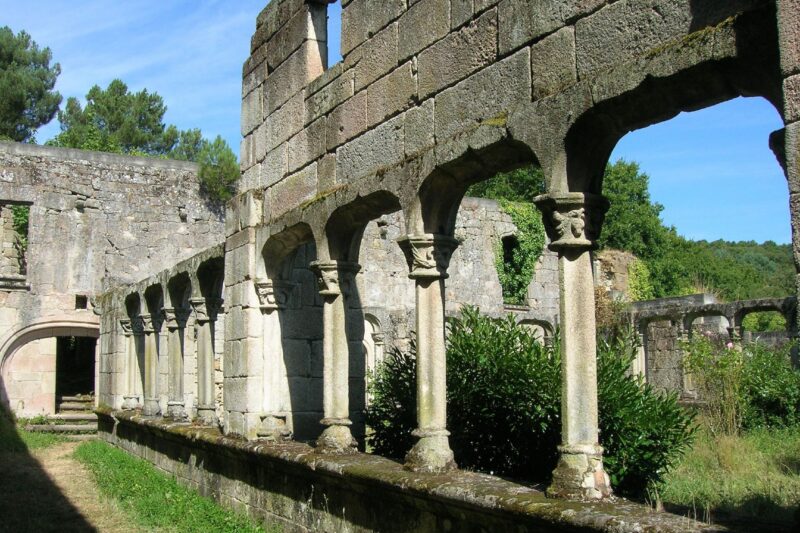 LegendThe Apparition at Trandeiras and the Army of King ArthurThe founding legend of the Bon Xesús of Trandeiras: the Virgin appears to Xoán Folgoso, the white and black knights and King Arthur's…
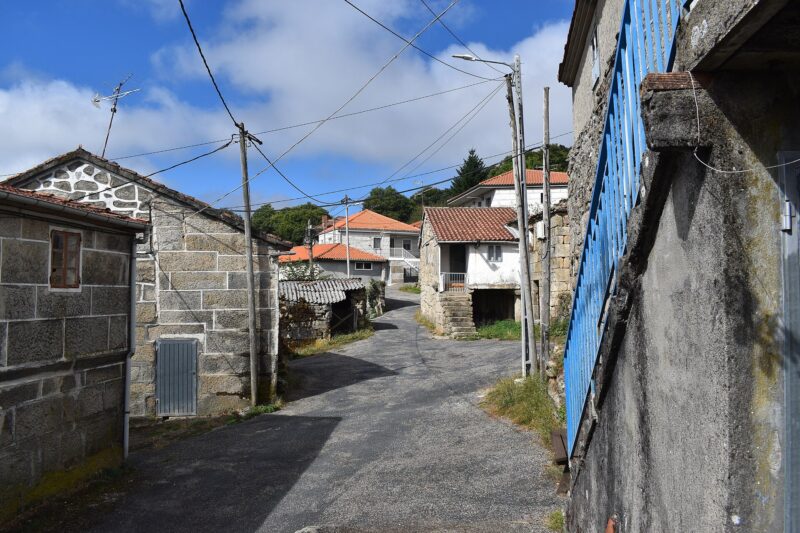 LegendThe Raíña Loba and her castle on the crags of Covas (Os Blancos)On the crags of Covas, at about 1,150 metres, there was a rocky castle where a cruel queen lived who charged a calf, a sheep and a pig…
LegendMoors of A Limia: treasures, broken secrets and enchantmentsThe legends of Moorish men and women in A Limia: the mouras of Treboal, the Covelas mine, the gold cart of A Touza, the Moors' girl, the…
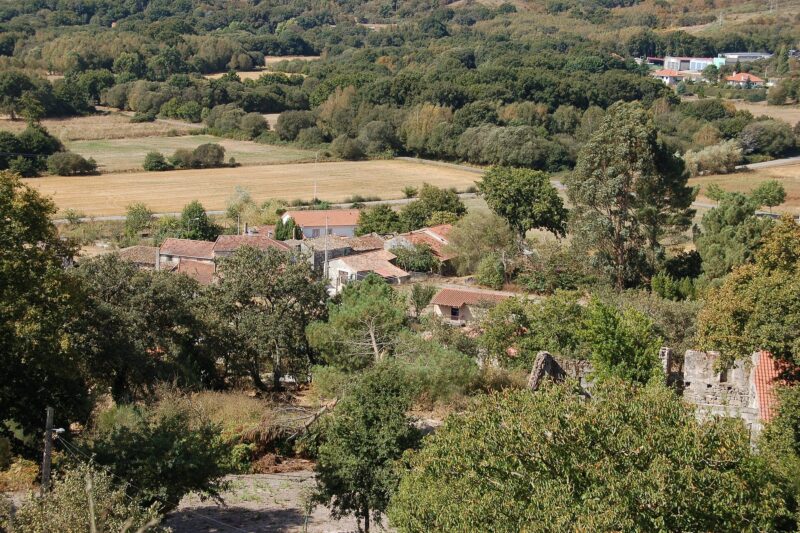 LegendLegends of the Torre do Castro and SandiásThe legends of the Torre do Castro and Sandiás: the Moors' tower and the hammer that made the Lagoa de Antela, the treasure in the well,…
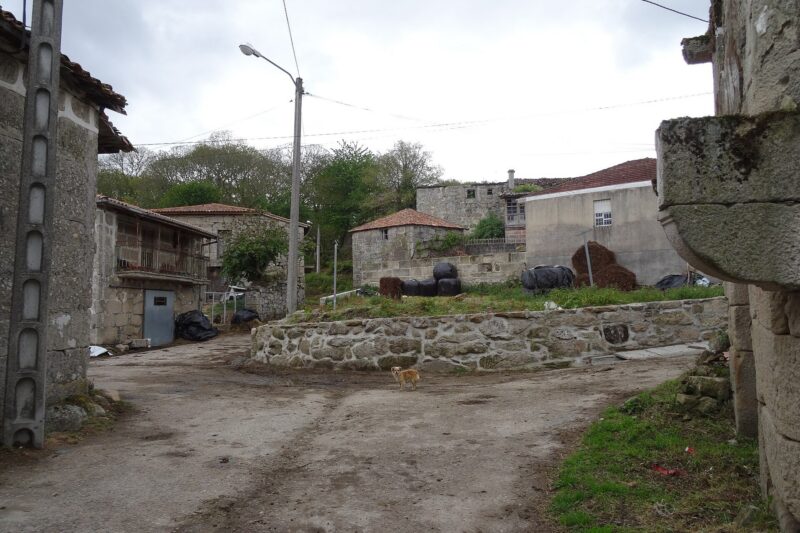 LegendLegends of Vilar de Barrio: xianas, Moors’ holes and the Lagoa de AntelaLegends and tales of Vilar de Barrio: the xianas of Arnuíde, the Moors' holes at Bóveda with the twelve chicks, the Pozo dos Mouros at…
